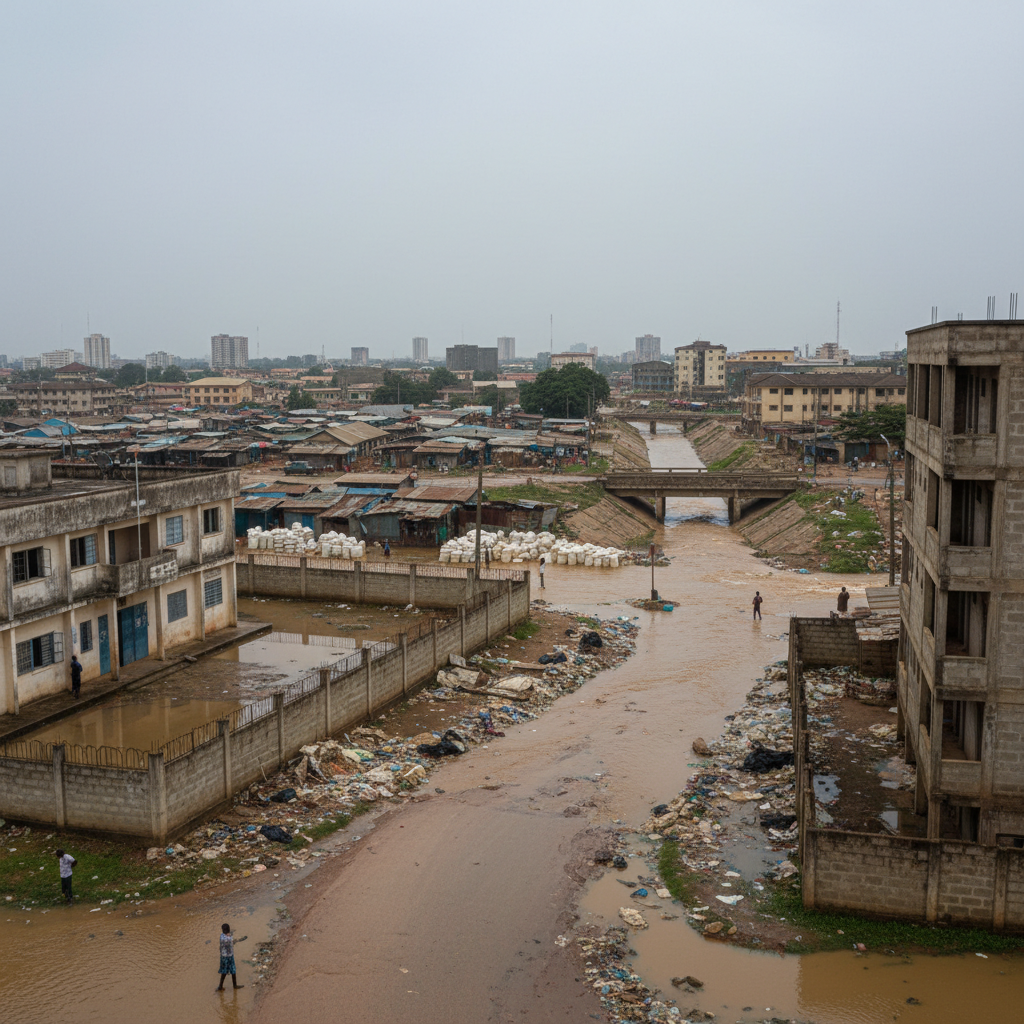
Professor Kwabena Frimpong-Boateng, former Minister of Environment, Science, Technology and Innovation, has attributed Ghana’s recurring flooding challenges to institutional neglect. He also cited poor enforcement of land use regulations as a major contributing factor. Speaking at the 14th Commemorative Lecture for former President John Evans Atta Mills on Wednesday, July 22, Professor Frimpong-Boateng detailed his concerns.
The floods that affected parts of the Greater Accra Region in late June and early July exposed deeper systemic failures. These issues extend beyond public attitudes towards waste disposal, according to the former minister. While calls for residents to stop dumping waste into gutters are necessary, they do not address the broader problems.
This assessment highlights a critical challenge within Ghana's urban development and environmental management. Recurring floods cause significant economic damage and displace thousands of people annually. The issue often strains public finances through disaster relief efforts and infrastructure repairs. This situation also impacts the productivity of businesses and the livelihoods of citizens.
Professor Frimpong-Boateng stated, "The floods that struck Greater Accra in the last week of June and the first week of July this year are a distressing illustration of the same institutional neglect." He added that advice to avoid dumping waste, while well-intentioned, "evades a deeper truth." This statement underscores the need for a more holistic approach to flood mitigation.
Ghana lacks a comprehensive waste management system, Professor Frimpong-Boateng argued. This system would collect waste from communities and direct it towards proper disposal, recycling, or energy generation facilities. The absence of such a system exacerbates the problem of waste accumulation in drainage systems. This directly contributes to blockages and subsequent flooding during heavy rains.
Concerns also exist regarding the continued encroachment on areas designated for flood management and water retention. Ghana’s land use planning framework classifies certain areas as flood-prone and reserves them as protected open spaces. However, these regulations are often ignored or circumvented.
Professor Frimpong-Boateng pointed out that all seven planned flood retention points in Greater Accra have been encroached upon. These critical areas include Papao, Madina, Ashiyie, Adjiringanor, two in Ashaley Botwe, University Farms, and Ashaiman. This widespread encroachment severely reduces the region's capacity to manage excess water.
Waterway buffers and protected areas have also been overtaken by informal developments. This occurs despite the existence of institutions mandated to protect such spaces. He cited developments within Ramsar-protected wetlands as clear examples of failures in environmental governance. Ramsar sites are wetlands of international importance designated under the Ramsar Convention.
A cement factory built in a Ramsar-protected wetland on the western edge of Accra exemplifies this issue. Professor Frimpong-Boateng noted that this factory was sanctioned by various local and national authorities. This included the Member of Parliament (MP), Chiefs, Metropolitan, Municipal, and District Chief Executives (MMDCEs), and even the seat of government. It was classified as part of the 1D1F (One District One Factory) initiative, highlighting a conflict between development goals and environmental protection.
The failure to enforce environmental regulations undermines Ghana’s ability to pursue long-term national development goals. Professor Frimpong-Boateng warned, "A nation that cannot summon the discipline to manage its waste and protect its wetlands cannot, by any stretch of imagination, undertake the disciplined, sustained project of national development that Professor Mills envisioned." This suggests that environmental stewardship is fundamental to economic progress.
Moving forward, decision-makers must address these systemic issues. This includes strengthening regulatory enforcement and investing in robust waste management infrastructure. The government will need to balance development initiatives with environmental protection to prevent future flood disasters. Markets and investors will closely watch how Ghana tackles these challenges, as environmental stability is crucial for sustainable economic growth.