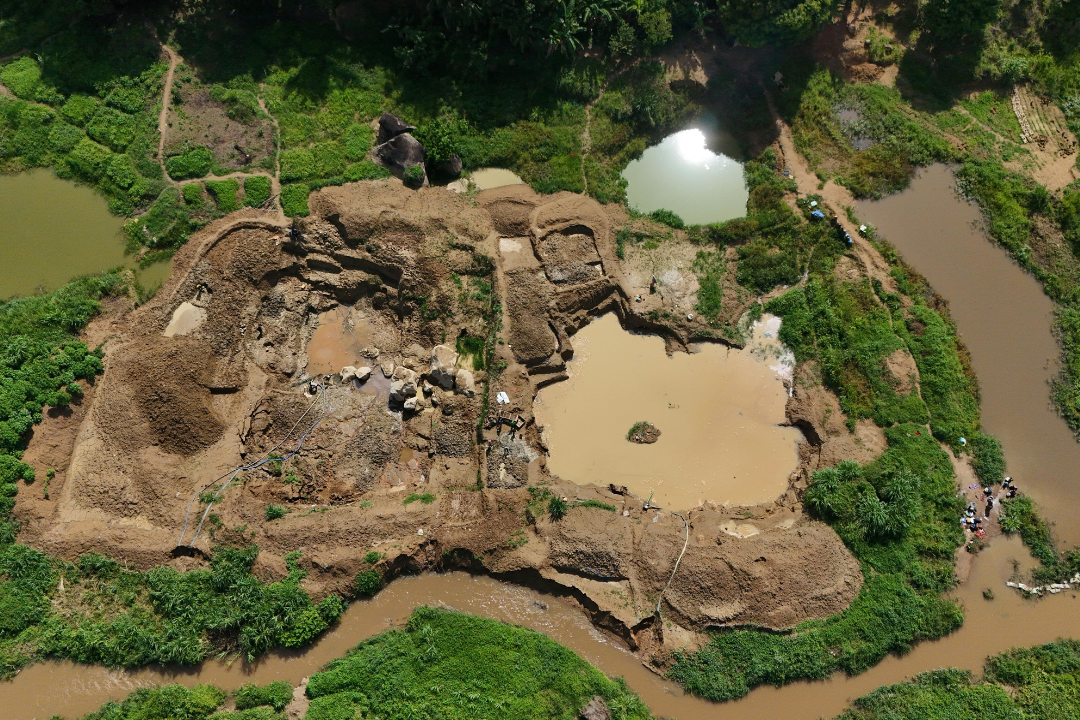
Illegal mining has destroyed approximately 8,900 hectares of Ghana’s forest reserves. The Ministry of Lands and Natural Resources revealed this extensive degradation, primarily caused by illegal mining activities. This figure represents a significant environmental and economic challenge for the nation.
This degraded area is equivalent to about 12,500 football fields, illustrating the massive scale of destruction. The Minister for Lands and Natural Resources, Emmanuel Armah Kofi Buah, disclosed these alarming figures. He presented them during a policy dialogue with the IMANI Centre for Policy and Education in Accra.
The widespread destruction of forest reserves directly impacts Ghana's natural capital and future economic prospects. Forest degradation leads to soil erosion, water pollution, and loss of biodiversity. These environmental issues can harm agriculture, fisheries, and tourism, key sectors of the Ghanaian economy. The updated assessment reflects a more accurate picture of the situation up to 2024, indicating a worsening trend compared to previous estimates.
Minister Kofi Buah stated that the cost of reclaiming these destroyed forest estates would be enormous. He estimated that restoration could require hundreds of millions of dollars. This cost covers reclamation, replanting, and long-term protection efforts. The Minister used vivid photographs to show the devastation, emphasizing that it was not a natural disaster but human-induced destruction.
The implications for Ghana's economy are substantial. The government faces a massive financial burden to restore these lands. This expenditure diverts funds from other critical development projects. Furthermore, the ongoing environmental damage threatens the livelihoods of communities dependent on forest resources. The integrity of Ghana's natural resource base, crucial for sustainable development, is severely compromised.
The Ministry’s updated assessment highlights the persistent challenge of illegal mining, locally known as 'galamsey'. This activity continues despite various government interventions and enforcement operations. The figures underscore the need for more effective strategies to protect Ghana's vital natural resources. The long-term economic stability of the country depends on addressing this crisis.
The Minister explained that the 8,900-hectare figure is an updated assessment. Earlier figures had understated the true extent of degradation, relying on older data. The Ministry arrived at this higher estimate after updating information to reflect the situation up to 2024. This suggests the problem has been more severe than previously understood.
Enforcement data presented by the Ministry as of July 2026 shows significant efforts against illegal mining. Operations resulted in 258 suspects arrested and 200 excavators seized. Additionally, 1,469 pumping machines and 950 changfan machines were seized. These figures demonstrate ongoing attempts to curb illegal activities. However, the critical question remains how much of the 8,900 hectares has been reclaimed and secured.
Franklin Cudjoe, President of IMANI, urged the Minister to consider pathways for legitimate mining investors to correct breaches. He stressed that firm enforcement should not exclude remediation for willing investors. Cudjoe also advocated for equal institutional protection and opportunity for Ghanaian investors. The Minister indicated openness to such an approach for companies showing genuine willingness to comply.
This exchange highlighted the need for rigorous environmental protection alongside predictable and fair regulation. The test for Ghana's forest protection programme extends beyond arrests and seizures. It involves successfully transforming devastated mining pits back into functioning forests. Preventing the return of illegal miners is also crucial for long-term success. The economic and environmental future of Ghana hinges on these efforts.