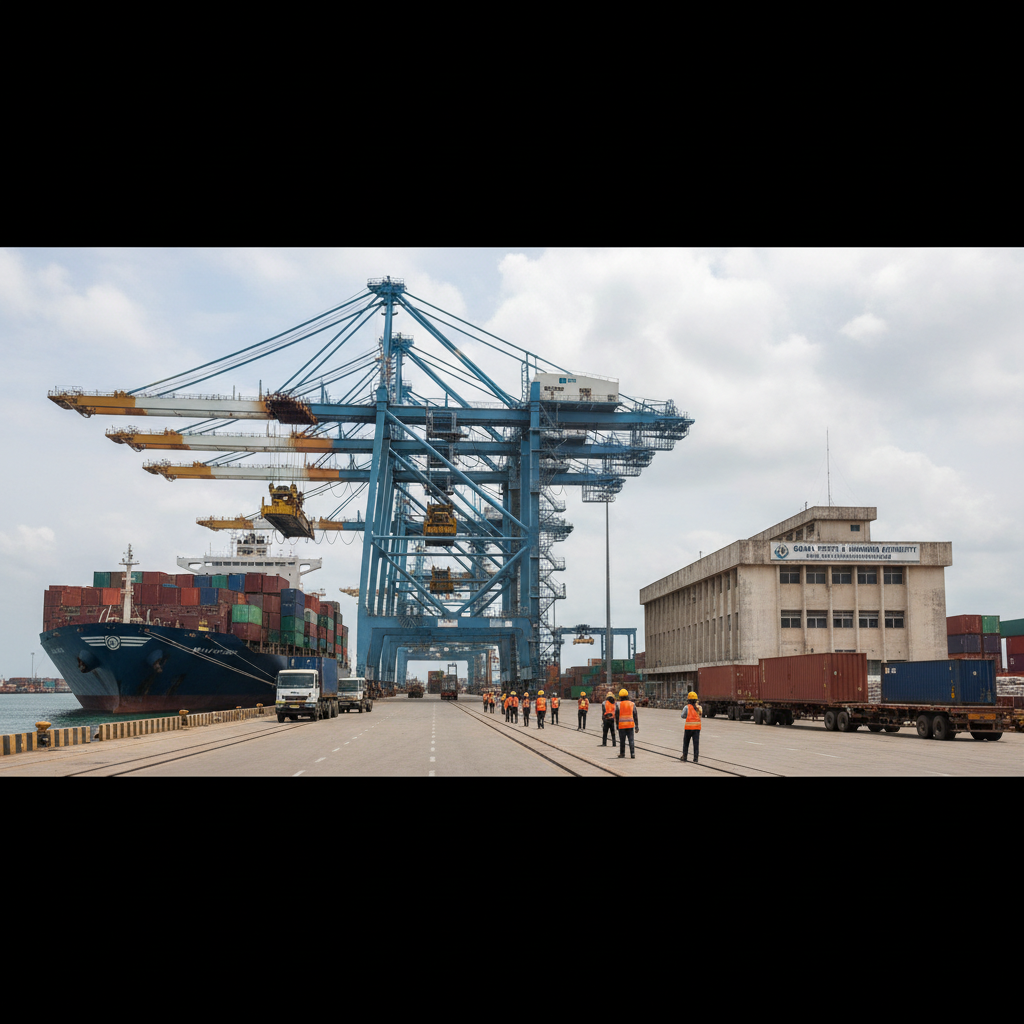
Ghana's High Court has dismissed an application seeking to block the Ghana Shippers' Authority (GSA) from implementing a GHS 720 cap on certain port charges. This ruling enables the GSA to enforce its Regulatory Directive from May 11, 2026, which limits the Container Administrative Charge (CAC) for shipping containers.
The Ship Owners and Agents Association of Ghana (SOAAG) and several shipping agents had filed the application for an interlocutory injunction. They sought to prevent the GSA's directive from taking effect. The court's decision, issued on July 10, 2026, means the GHS 720 cap per Twenty-foot Equivalent Unit (TEU) remains operational. This measure directly impacts the shipping industry and businesses engaged in international trade.
This outcome is significant for Ghana's broader economic narrative, focusing on reducing the cost of doing business. High port charges have often been cited as a barrier to trade competitiveness. The GSA's directive aligns with the government's commitment to creating a more business-friendly environment, as referenced in national economic policies. Lower administrative charges could potentially lead to reduced import and export costs for Ghanaian businesses.
The GSA welcomed the court's decision, stating that the directive had already taken effect upon its issuance. The court noted that granting the injunction would impede the GSA's statutory regulatory mandate. This reflects the judiciary's recognition of the GSA's role, established under the Ghana Shippers’ Authority Act, 2024 (Act 1122), to oversee the commercial shipping industry and protect various stakeholders' interests.
Following the ruling, the GSA has mandated all shipping lines and agents to immediately comply with the GHS 720 cap on Container Administrative Charges. Non-compliance could result in regulatory and enforcement measures under Sections 36 and 47 of the Ghana Shippers’ Authority Act, 2024. The Authority encourages importers, exporters, and freight forwarders to report any instances where the directive is not followed.
The GSA also reassured stakeholders of its dedication to fairness, aiming to protect both shippers and shipping lines. The Authority seeks to foster an environment where businesses can thrive. This ruling underscores its role in promoting transparency in shipping service charges. Ghana's commitment to a democratic process, including dialogue on challenging issues, remains a core tenet of its regulatory approach.
This development will likely be monitored closely by businesses involved in international trade and investors looking at Ghana's logistics sector. Freight costs are a critical component of supply chains, influencing consumer prices and trade volumes. Companies will now adjust their operations to reflect the enforced cap, potentially leading to more competitive pricing for goods moving through Ghana's ports.
The consistent application of this directive could signal a stronger regulatory environment for shipping. This could attract more investment by providing greater cost predictability. The GSA's proactive stance in enforcing its mandate highlights a broader governmental effort to streamline economic activities and improve efficiency across key sectors. This move is a tangible step towards fulfilling the government's promise to reduce trade-related expenses.