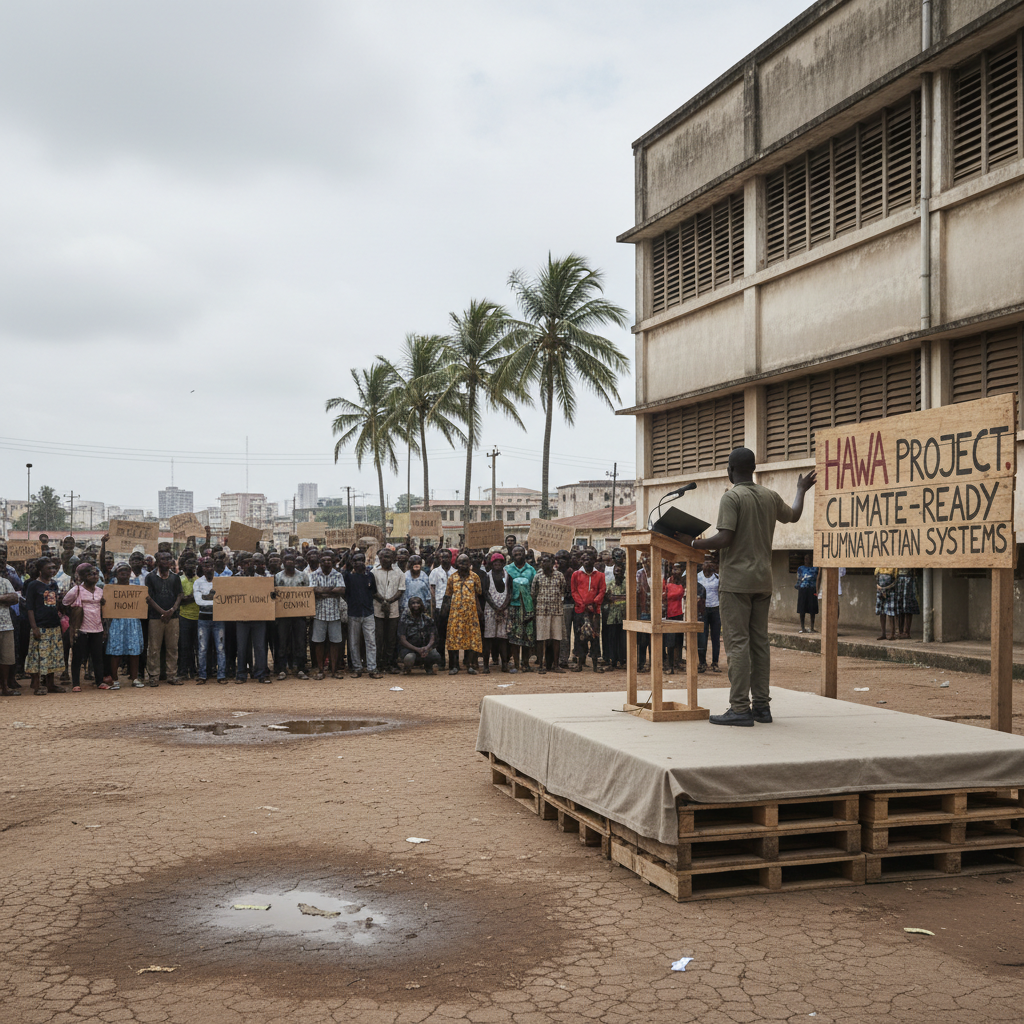
Sophia Stanger, Project Manager of the “Preparedness for Humanitarian Assistance and Peacebuilding in West Africa” (HAWA) programme, called for stronger climate-responsive humanitarian systems. She also urged deeper regional collaboration to address extreme weather events. These events are becoming the “new normal” across both Europe and West Africa, she stated.
Stanger addressed participants at the HAWA Core Course 2026 at the Kofi Annan International Peacekeeping Training Centre (KAIPTC) in Accra on Monday, July 6. The HAWA programme is designed as a long-term platform. It aims to strengthen resilience, peacebuilding, and humanitarian preparedness across the West African region.
Ghana’s economy, like others in West Africa, faces significant risks from climate change. The World Bank estimates that climate change could cost Ghana 2% of its GDP annually by 2050 if unaddressed. Increased floods disrupt agriculture, displace communities, and damage crucial infrastructure. These factors directly impact economic stability and development efforts.
Ms. Stanger highlighted contrasting climate emergencies to underscore the global scale of environmental disruption. Austria recently experienced a severe heatwave with temperatures exceeding 40°C. This resulted in fatalities, transport disruption, and infrastructure damage. Meanwhile, West Africa has been grappling with devastating floods and rainfall-induced emergencies.
She stressed that these extreme weather patterns are no longer isolated incidents. They are increasingly becoming a permanent feature of global climate conditions. The humanitarian sector must adapt by integrating environmental and climate considerations into all aspects of planning and response. This is why the HAWA Core Course curriculum was revised to better integrate climate and environmental components.
The HAWA programme has operated for over a decade and is now in its fifth phase. This new four-year cycle is jointly implemented by three main partners. These partners are the Kofi Annan International Peacekeeping Training Centre (KAIPTC), CARE Austria and CARE International in Ghana, and the Austrian Centre for Peace (ACP).
Ms. Stanger described this collaboration as one built on complementary strengths. Each institution contributes distinct expertise. Their shared goal is strengthening the humanitarian-development-peace (HDP) nexus in West Africa. KAIPTC leads in peace and security training. CARE focuses on humanitarian and development programming, especially for women and girls. The Austrian Centre for Peace contributes mediation, dialogue, research, and capacity building in conflict-affected contexts.
The rising number of applications for the course reflects growing demand for training. This training addresses the intersection of climate change, security, and humanitarian response. The program includes specialized courses, Training of Trainers (ToTs), and field activities. These activities occur in border regions across Ghana, Togo, Côte d’Ivoire, and Burkina Faso. An active alumni platform also sustains collaboration and knowledge exchange.
She expressed gratitude to the Austrian Development Agency and the Austrian Ministry of Defence for their financial support. She described them as key enablers of the programme’s continued success. Strong institutional collaboration from KAIPTC and CARE International also makes the initiative possible. Decision-makers and regional bodies will likely intensify their focus on climate adaptation and disaster preparedness. This emphasis reflects the growing recognition of climate change as a critical economic and security threat.