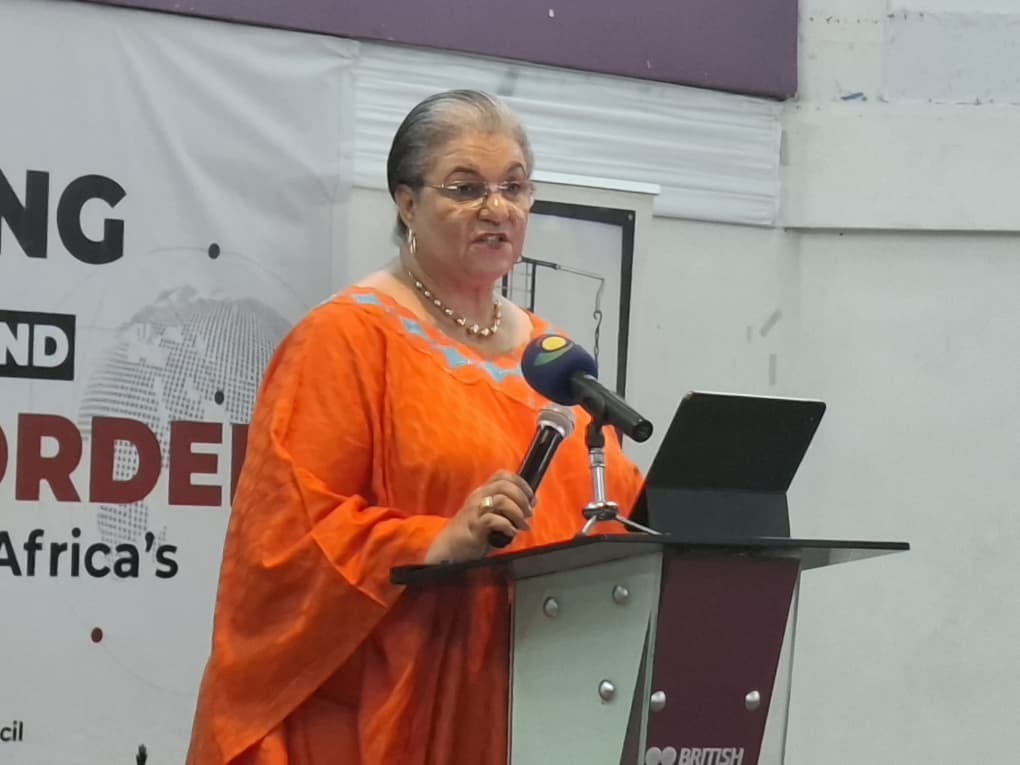
Ghana must urgently strengthen its institutions, deepen regional diplomacy, and build a more resilient economy. This is according to Hanna Serwaa Tetteh, the United Nations Secretary-General's Special Representative for Libya. She stated that these measures are crucial for Ghana to withstand the growing uncertainties of a rapidly changing global order.
Ms. Tetteh delivered her remarks at this year's Kronti ne Akwamu Lectures, organised by the Ghana Centre for Democratic Development (CDD-Ghana). The former Minister of Foreign Affairs cautioned that the post-World War II international order is weakening. Geopolitical rivalry increasingly shapes relations among nations, making the multilateral system less reliable.
Ghana can no longer depend solely on the multilateral system that has underpinned global peace and cooperation for the past 80 years. This shift necessitates a more proactive approach to national and regional affairs. The country's economic stability and political influence depend on its ability to adapt to these global changes.
“The world we are entering will reward resilient states with strong institutions and clear foreign policy priorities,” Ms. Tetteh observed. She stressed that Ghana's security, economic growth, and foreign policy can no longer be treated as separate issues. The changing global environment demands a more integrated national strategy from policymakers.
Ms. Tetteh urged policymakers to shift attention from merely developing policies to ensuring their effective implementation. She also called for monitoring and efficient use of public resources. Building resilient institutions is as important as pursuing economic growth to withstand future geopolitical and economic shocks.
Drawing from her experience leading the United Nations Support Mission in Libya (UNSMIL), Ms. Tetteh warned about the growing migration crisis. She revealed that Libya has become a principal transit route for African migrants attempting to reach Europe. Many perish along this dangerous journey, a tragedy largely unknown to the Ghanaian public.
Officials at Ghana's Embassy in Libya regularly assist in retrieving the bodies of deceased Ghanaian migrants. They also ensure these individuals receive dignified burials. This highlights the severe human cost of irregular migration, which demands urgent government attention.
Ms. Tetteh urged the government to intensify public education on the dangers of irregular migration. She also recommended negotiating legal labour migration opportunities with destination countries to protect Ghanaian workers abroad. Stronger cooperation among African governments is essential to address migration challenges without undermining continental integration.
The UN envoy further stressed that Ghana's interests would be better served through a united Africa. A unified continent can negotiate collectively on major international issues. She cited Africa's success in influencing the United Nations Sustainable Development Goals as an example of its collective power.
Rather than competing against one another for influence and investment, African countries should strengthen regional integration and economic cooperation. “Africa’s cooperation is not a luxury; it is a necessity,” she indicated. This collective approach will enhance the continent's bargaining power on the global stage.
Concluding her lecture, Ms. Tetteh stated that the emerging multipolar world presents both risks and opportunities for Ghana. She urged the country to invest in strong public institutions, effective governance, active diplomacy, and regional partnerships. These investments are vital to remain competitive and safeguard national interests.
“The place Ghana occupies in tomorrow’s world will depend on the choices we make today,” she said. She urged leaders to prepare the country for an era defined by heightened geopolitical competition, technological change, and shifting global alliances.