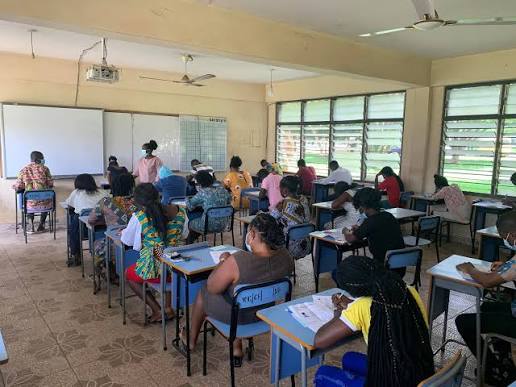
The Ghana Tertiary Education Commission (GTEC) has directed all tertiary institutions to cease mandatory entrance examinations for university admissions. This significant policy shift, announced on July 20, 2026, aims to ensure fairness and equal access to higher education across Ghana.
GTEC stated that requiring entrance examinations as a prerequisite for admission violates Ghana’s established admissions framework. The Commission emphasized that this practice bypasses the nationally recognized minimum entry requirements based on the West African Senior School Certificate Examination (WASSCE). This directive seeks to standardize the admission process and prevent institutions from creating additional barriers for students.
This move by GTEC fits into a broader national effort to streamline educational standards and promote equitable opportunities. Ghana's educational policy has long recognized WASSCE results as the principal qualification for entry into tertiary institutions. The Commission's intervention reinforces this policy, ensuring consistency across the higher education landscape. It also addresses concerns about varying admission practices that could disadvantage certain student populations.
The circular, signed by GTEC’s Director-General, Professor Ahmed Jinapor Abdulai, was distributed to all tertiary institutions. Professor Abdulai noted that some schools had begun requiring entrance examinations, which effectively replaced or bypassed the WASSCE-based criteria. GTEC warned that such practices undermine equitable access to higher education for all Ghanaian students.
Institutions must now admit students based on the prescribed minimum entry requirements, with WASSCE results remaining the primary basis for admission. GTEC clarified that entrance examinations may still serve as supplementary assessment tools for highly competitive programmes. However, these supplementary exams must not replace or override the minimum WASSCE-based admission criteria. This ensures that the core national standard remains paramount.
GTEC also instructed institutions that have issued or intend to issue admission notices requiring compulsory entrance examinations to immediately withdraw them. They must align their admission procedures with the existing regulatory framework. This immediate action is crucial for maintaining the integrity of the admissions process for the upcoming academic year.
The Commission reminded universities and other tertiary institutions of its legal mandate under the Education Regulatory Bodies Act, 2020 (Act 1023). This Act empowers GTEC to formulate and implement policies governing admission requirements for tertiary education in Ghana. This legal backing ensures that GTEC’s directives carry full authority and must be adhered to by all institutions.
GTEC’s directive is expected to have a significant impact on prospective university students and tertiary institutions. It will likely reduce the financial burden and stress associated with multiple entrance exams for applicants. Institutions will need to adjust their admission processes to fully comply with the new guidelines. This policy aims to preserve fairness, consistency, and equal opportunities for all students seeking higher education in Ghana.
The decision underscores the government's commitment to ensuring that access to higher education is based on standardized national assessments. This will help maintain a level playing field for all students, regardless of their background or the specific institution they apply to. The long-term implications include a more unified and transparent tertiary admissions system.