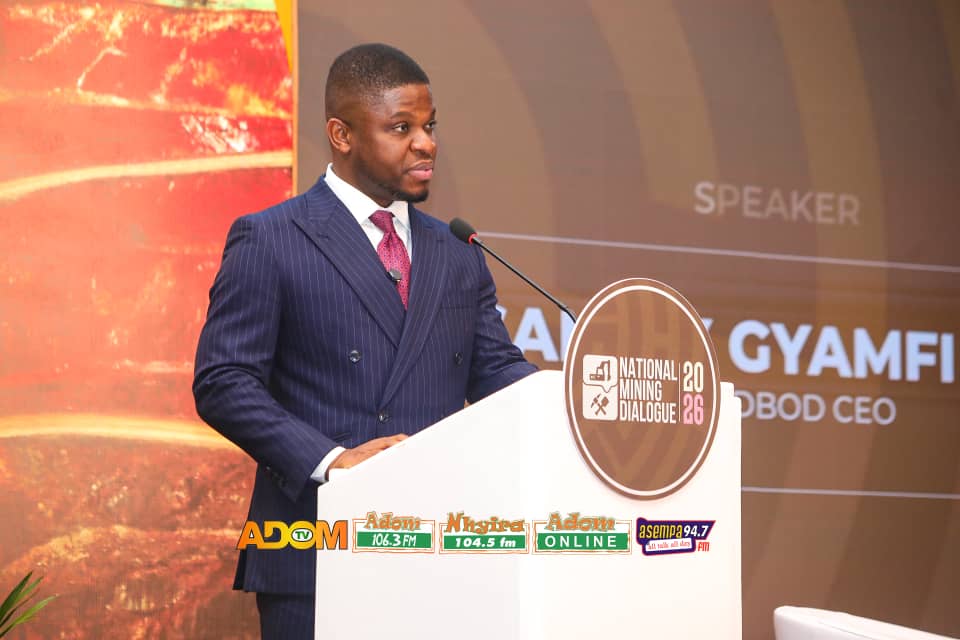
The Chief Executive Officer of the Ghana Gold Board (GoldBod) has called for mining communities to become economic shareholders. This statement signals a significant shift in how Ghana's resource-rich areas should benefit from mineral extraction. The CEO made this declaration at the National Mining Dialogue in Accra on Tuesday, August 18, 2026.
This push for economic shareholding aims to address the persistent underdevelopment in communities hosting valuable mineral resources. Despite over a century of mining activity, these areas continue to grapple with poverty, poor infrastructure, and high youth unemployment. The GoldBod CEO emphasized that communities are custodians of the resource and must be treated as development partners.
This proposal fits into Ghana's broader economic narrative of maximizing returns from its natural resources. Historically, Ghana has struggled to translate its vast mineral wealth into widespread local prosperity. Data from the Ghana Statistical Service often highlights regional disparities, with some mining areas showing lower human development indicators. Previous government initiatives have focused on local content policies, but direct economic shareholding represents a more direct approach to wealth distribution.
Sammy Gyamfi, the GoldBod CEO, stated, “Mining communities must no longer be treated as land donors. They are custodians of the resource hence must be treated as development partners and economic shareholders.” He further elaborated on the current challenges, saying, “We cannot continue to mine gold from the soil of our communities while poverty, lack of access to potable water, poor roads, youth unemployment and weak local economies remain the daily reality of too many mining communities in our country.”
The implications of this call are far-reaching for Ghana's mining sector and its host communities. Policymakers will likely explore new legislative frameworks to facilitate local ownership and direct community benefits. Investors and mining companies will need to adapt their operational models to incorporate these new economic participation structures. This initiative could lead to greater social stability in mining regions, reducing conflicts often associated with resource extraction. It also aligns with global trends towards more equitable resource governance.
The GoldBod CEO also advocated for increased local ownership, refining, and value addition within Ghana. He argued that Ghana must retain more of the wealth generated from its minerals. This strategy aims to create more jobs and strengthen local economies beyond raw material extraction. The current model often sees raw gold exported with minimal processing in Ghana, limiting the economic multiplier effect.
This emphasis on value addition could boost Ghana's industrial capacity and diversify its economy. It would also reduce reliance on global commodity price fluctuations, providing more stable revenue streams. The CEO highlighted that mining would only earn and sustain its social license when host communities directly benefit. He warned that “Production without ownership is limited. Production without value addition is leakage. Production without community transformation is a broken social contract.”
The government's response to this proposal will be critical. Implementing such a policy would require careful planning, stakeholder engagement, and potentially new regulatory bodies. The success of this initiative could serve as a model for other resource-rich nations facing similar challenges. It represents a bold step towards ensuring that Ghana's mineral wealth genuinely contributes to the sustainable development of all its citizens, especially those living closest to the mines.