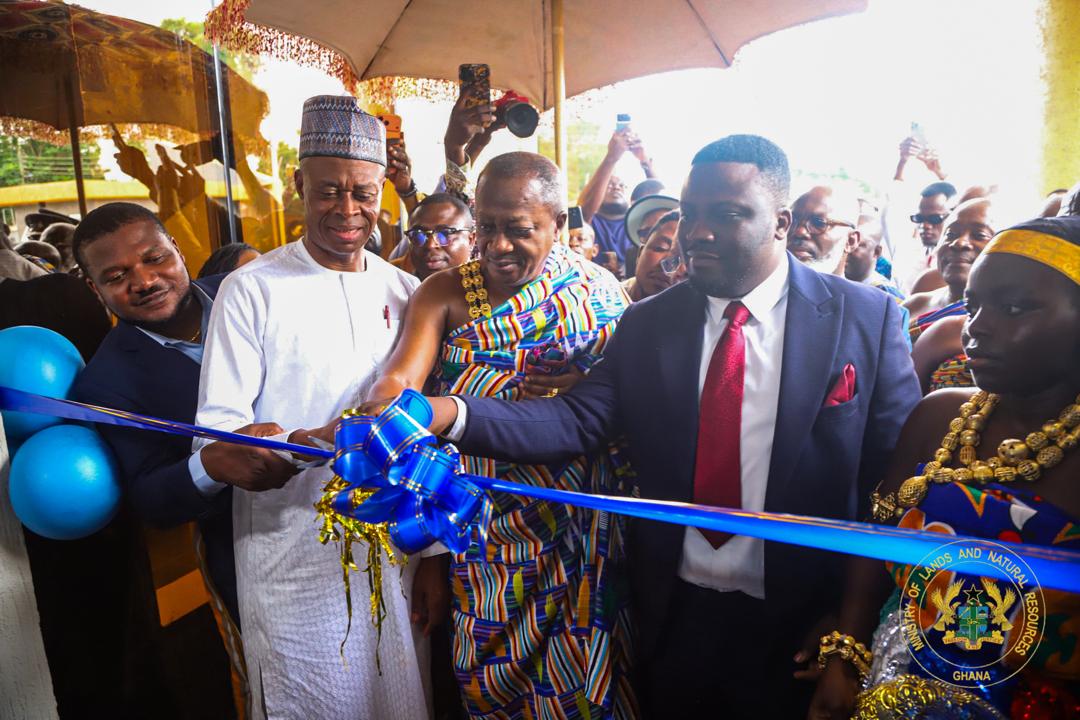
Ghana's government has commissioned an ultra-modern office for the Minerals Commission in Kumasi. This new facility aims to strengthen the country’s mining regulatory institutions and improve service delivery within the sector.
The Ministry of Lands and Natural Resources spearheaded this initiative. Deputy Minister Yusif Sulemana stated the facility represents a significant investment in institutional infrastructure. This infrastructure is crucial for effectively regulating, managing, and developing Ghana’s mineral resources.
Ghana's mining sector is a cornerstone of its economy, contributing significantly to national revenue. The Minerals Commission plays a vital role, overseeing mineral rights, monitoring operations, and advising on policy. This new office in Kumasi brings these critical functions closer to mining operations in the middle belt. It supports broader government efforts to modernise key economic sectors and attract further investment.
Speaking at the commissioning, Deputy Minister Yusif Sulemana emphasised the government's vision. He stated, "We must move beyond an economy where minerals are simply extracted and exported, towards one where mining stimulates infrastructure development, industrialisation, local enterprise, job creation and value addition." This highlights a strategic shift towards maximising economic benefits from Ghana's rich mineral endowment.
This investment signals a commitment to improving the business environment for mining companies and stakeholders. Enhanced regulatory efficiency and transparency could attract more foreign direct investment into the sector. It also aims to ensure that mineral exploitation contributes more meaningfully to national development and job creation. Decision-makers will watch for tangible improvements in regulatory processes and increased value addition within the mining industry.
The Kumasi office will enhance the Commission's operational efficiency and create a better working environment. This directly improves the quality of services for investors, mining companies, and local communities. CEO Isaac Tandoh described the facility as a major milestone in strengthening mineral governance. It reflects the Commission’s commitment to decentralising operations and improving service delivery across Ghana.
Ghana possesses significant mineral resources, including gold, bauxite, manganese, and diamonds. The government's responsibility is to ensure these resources contribute meaningfully to national development. A modern mining industry requires strong regulatory institutions, reliable data systems, and effective inspection facilities. The new office supports these requirements, fostering a more competitive mining economy.
Baffour Owusu Amankwatia VI, representing the Ashantehene, welcomed the new complex. He noted its importance as a symbol of effective mineral governance for Ghana’s development. The facility's strategic location in Kumasi aims to bring sustainable mineral management and policy enforcement closer to regional stakeholders. This decentralisation is expected to streamline processes and reduce delays for mining operators.
The investment forms part of broader efforts to modernise the Minerals Commission. It aims to enhance regulatory effectiveness and ensure responsible and sustainable management of Ghana’s mineral resources. Improved accessibility, efficiency, and transparency in the Commission’s mandate are expected outcomes. This move could also help combat illegal mining by strengthening local oversight and enforcement.