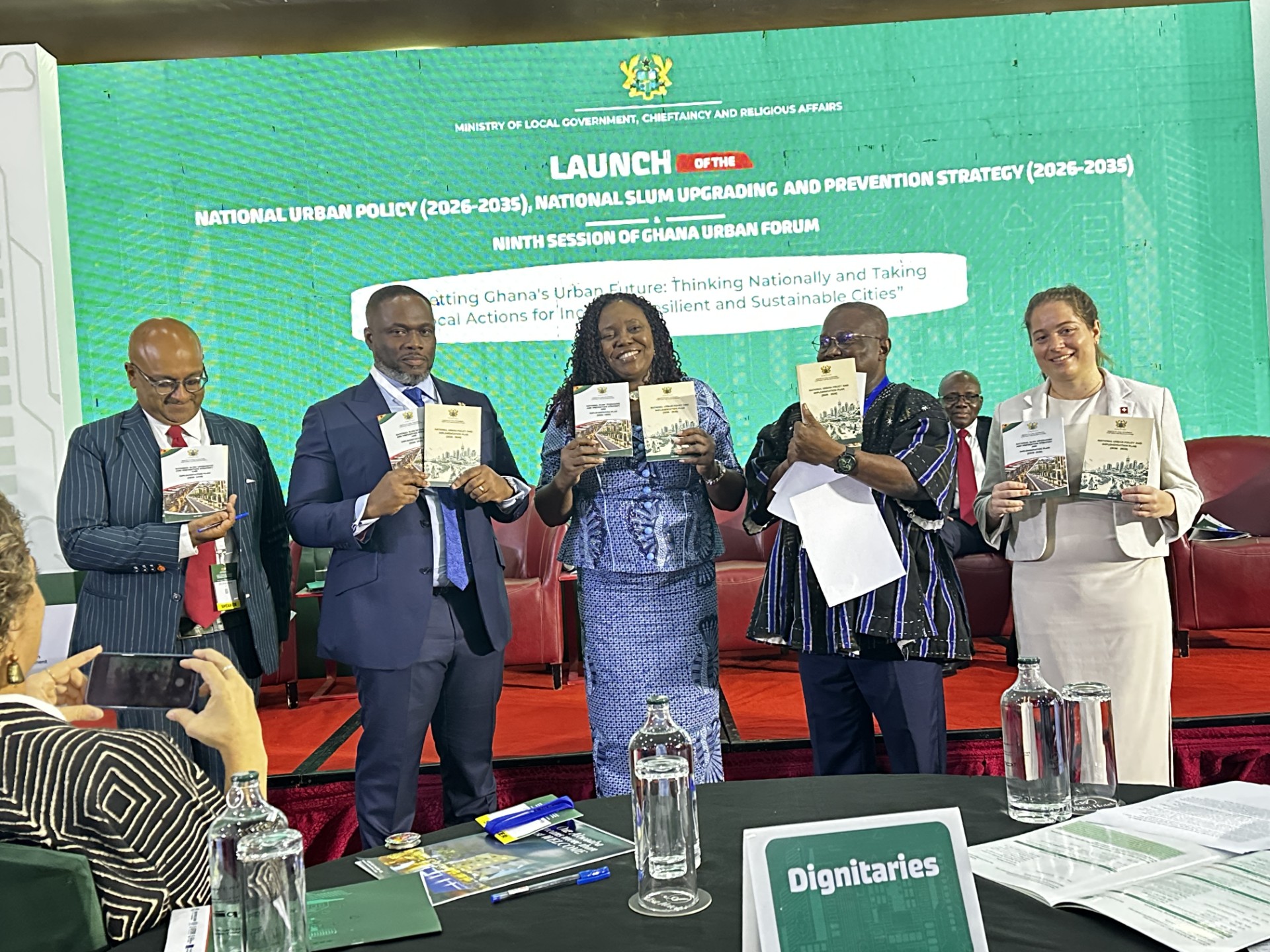
Ghana's government has launched the National Urban Policy (2026–2035) and the National Slum Upgrading and Prevention Strategy (2026–2035). These two policies provide a comprehensive framework for managing the nation's rapid urbanization, promoting inclusive, resilient, and sustainable cities, and improving the quality of life for all citizens.
The Ministry of Local Government, Chieftaincy and Religious Affairs introduced these frameworks to guide Ghana's urban development agenda. They aim to strengthen spatial planning, expand affordable housing, enhance climate resilience, and improve urban governance. The policies also seek to prevent new slums and upgrade existing informal settlements through coordinated interventions.
This initiative fits into Ghana's broader economic and political story of addressing infrastructure deficits and social inequalities. Ghana's urban population grew from about 4 million in the 1980s to nearly 14 million in 2020. This figure is projected to reach 20.4 million in 2026, placing immense pressure on planning and service delivery. Urbanization has contributed to economic growth but also intensified housing shortages, congestion, and sanitation challenges.
Dr. Nii Moi Thompson, Chairman of the National Development Planning Commission (NDPC), launched the documents on behalf of President John Dramani Mahama. He stated that Ghana's urban future is central to the country's national resetting agenda. Dr. Thompson, who is also the Senior Advisor to the President on SDGs, emphasized the need for deliberate planning to ensure cities remain inclusive, resilient, sustainable, and economically productive.
The new National Urban Policy builds on the 2012 framework, which achieved approximately 50 per cent of its intended outcomes. The previous policy succeeded in areas like urban safety and spatial planning but fell short in affordable housing delivery and urban financing. The NDPC Chairman stressed that urban development requires continuity and sustained commitment beyond changes in government.
The new policy aligns with the United Nations Sustainable Development Goals (SDGs), the African Union’s Agenda 2063, and the New Urban Agenda. It envisions economically vibrant, socially inclusive, environmentally sustainable, and well-governed cities. The policy also recognizes the importance of preserving Ghana’s cultural identity and historical sites.
Sustainable financing will be a priority, achieved through stronger local revenue mobilization and greater private sector participation. Digitization is another key pillar, with plans for modern urban management systems, geographic information systems, and intelligent transport systems. These digital tools will improve transparency, efficiency, and accountability in public service delivery.
The government is collaborating with land sector agencies to modernize land administration using digital technologies. It is also working with the Ministry of Works, Housing and Water Resources to increase housing delivery through innovative financing and stronger private sector involvement. Climate resilience will remain a major priority, with investments in preventive infrastructure and stricter enforcement of planning regulations.
Dr. Thompson concluded that Ghana’s future depends on the quality of its cities and the living conditions of its people. Effective implementation of these two frameworks will unlock economic growth, improve living standards, and create more inclusive communities. He called for stronger collaboration, sustained commitment, discipline, and leadership to translate the policies into tangible results across the country.