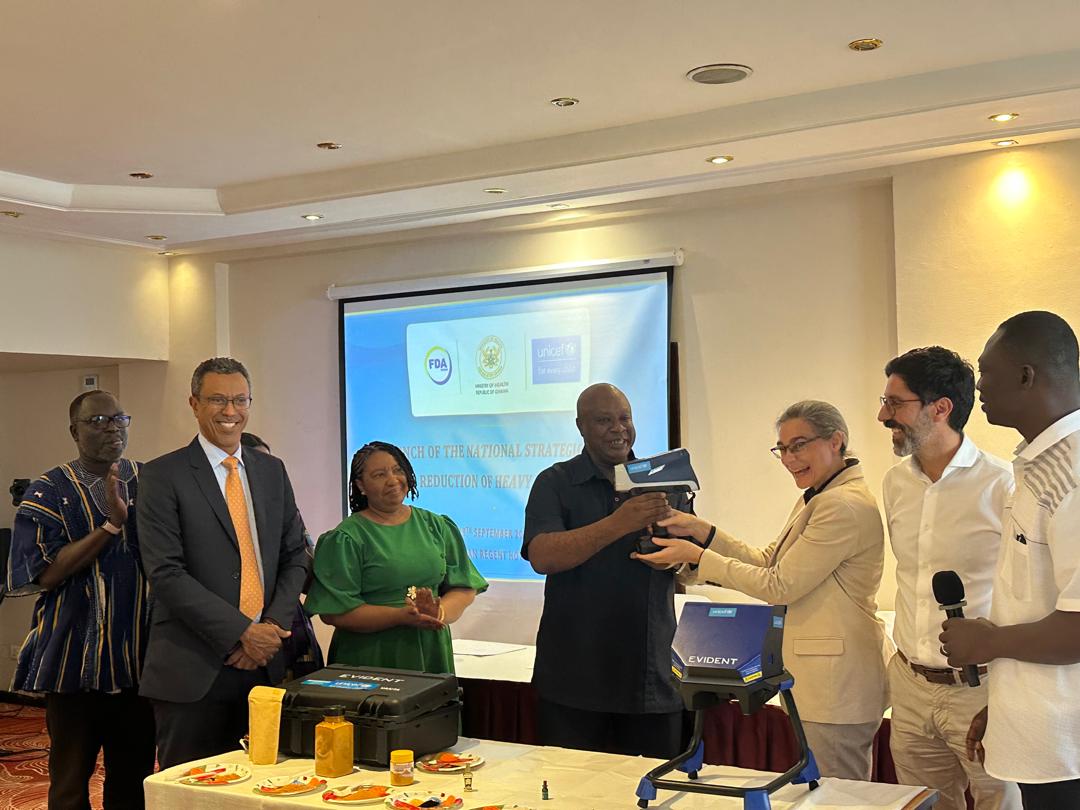
Ghana has launched a National Strategic Plan for the Reduction of Heavy Metals in Food. This initiative aims to strengthen food safety systems and reduce public exposure to toxic substances. These substances include lead, cadmium, mercury, and arsenic.
The plan provides a framework for improved surveillance, laboratory capacity, and regulatory action. It also promotes research and collaboration among institutions. This comprehensive approach seeks to prevent heavy metal contamination across the entire food supply chain.
This new strategy is a significant national policy commitment for Ghana. It underscores the nation's dedication to governing heavy metal risks with seriousness and coordination. Food safety is crucial for Ghana's development, affecting public health, consumer confidence, and international trade. It also impacts the country's industrial growth.
Deputy Minister of Health, Prof. Dr. Grace Ayensu-Danquah, emphasized the plan's importance. She stated, "This is not a routine programme document. It is a national policy commitment." She highlighted that Ghana intends to manage heavy metal risks across its food systems with rigor. This commitment reflects the national interest in protecting its citizens and economy.
Evidence from the Food and Drugs Authority (FDA) and its partners revealed specific contamination issues. Findings showed that 29% of cereal-based mixed food samples exceeded cadmium limits. Additionally, 42.09% of turmeric samples had lead concentrations above the permitted threshold. Bentonite clay products also showed high lead levels, with 24.6% exceeding limits.
These statistics pinpoint commodities needing stronger regulatory attention. They do not support general alarms but rather targeted regulatory actions. Heavy metals can enter the food system through various pathways. These include environmental contamination from mining and industrial activities. Agricultural practices, food processing, and packaging also contribute to contamination.
The FDA's Deputy Chief Executive for the Food Division, Roderick Kwabena Daddey-Adjei, confirmed extensive consultations shaped the plan. Government institutions, development partners, academia, and industry contributed. Civil society organizations and other stakeholders also participated. This broad collaboration ensures a comprehensive approach to the challenge.
Mr. Daddey-Adjei stressed that no single institution can tackle this challenge alone. Effective implementation requires coordinated actions across sectors. It also demands adequate resource mobilization and strong partnerships. The plan represents a shift from reacting to contamination to preventing risks at their source. It focuses on strengthening legal frameworks and building laboratory capacity.
UNICEF highlighted the urgent need to address lead exposure, especially among children. A blood lead-level survey by the Ghana Health Service, Pure Earth, and UNICEF found elevated lead levels in children. Another study identified lead contamination in consumer products like turmeric and bentonite clay. UNICEF Deputy Representative Emmanuele Collet stated, "Too many Ghanaian children are being exposed to lead and are being poisoned."
Ms. Collet stressed that lead exposure is not just an environmental issue. It is also a child rights issue, a health issue, an education issue, and ultimately a development issue. Lead exposure can impair brain development and affect learning abilities. This has long-term consequences for children's future productivity. UNICEF donated an XRF analyser to the FDA to aid rapid detection of heavy metals.
The Global Director of the Partnership for Lead-Free Future, Abdullah Fadil, pledged continued international support. He affirmed that partners would work with the Ghanaian government and civil society. This collaboration aims to provide necessary support to reduce lead exposure. Mr. Fadil urged Ghana to commit its own resources and strengthen domestic actions. He stated, "Whatever the world does, you do tenfold because that is the way things work."
The plan's ultimate objective is to build a robust food safety system. This system will protect public health while supporting Ghana’s economic and trade interests. Its success hinges on sustained implementation, sufficient resources, effective enforcement, and ongoing collaboration among all stakeholders. This strategic commitment marks a critical step for Ghana's public health and economic future.