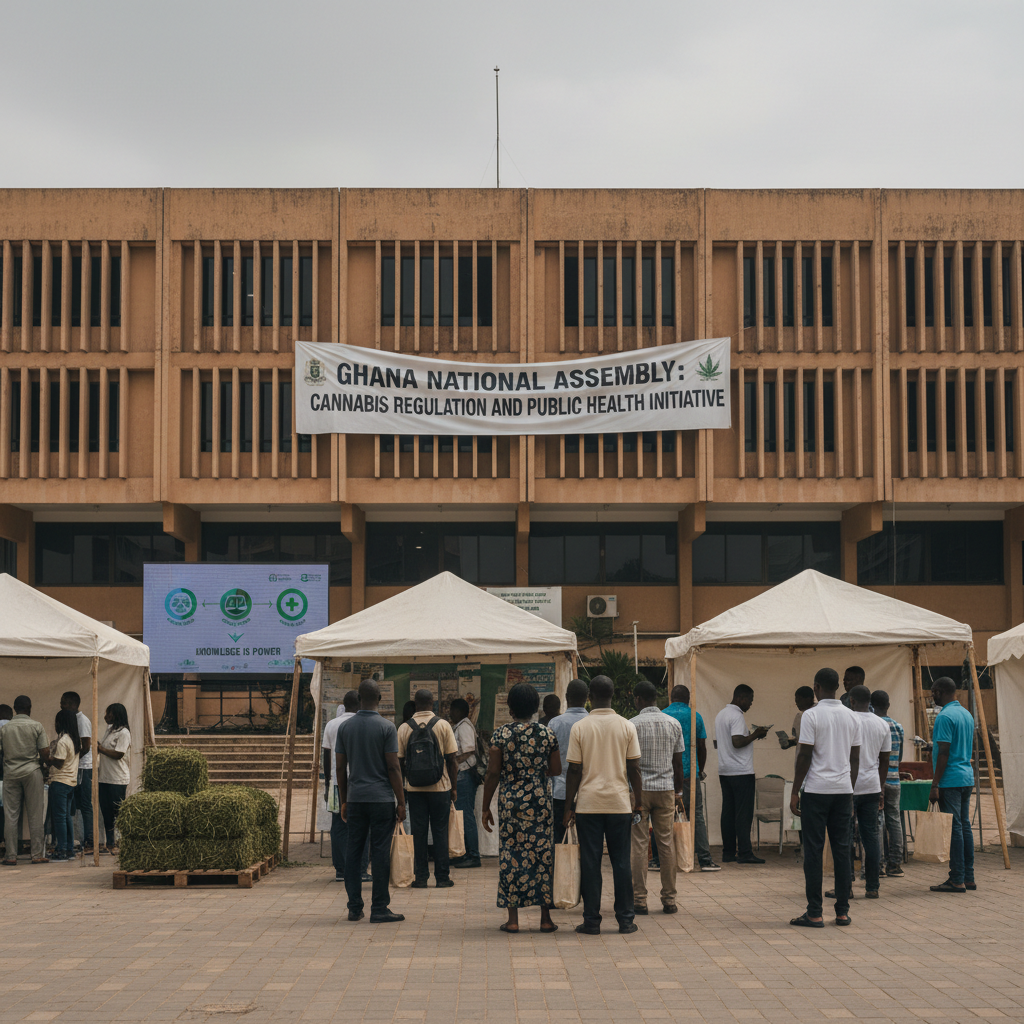
Ghana’s Interior Minister, Muntaka Mohammed-Mubarak, has urged citizens to clearly distinguish between legally approved industrial cannabis cultivation and the illegal production of narcotic substances. The government intensified public education on drug laws, conducting over 2,100 community engagements in 2025.
These educational efforts aimed to address misconceptions surrounding cannabis farming. More than 500,000 students were reached through these programs. The initiatives ensure Ghanaians understand the legal requirements for cultivation and the criminal nature of illicit drug production.
This drive forms part of Ghana’s broader strategy to manage narcotics effectively. The legal framework for industrial cannabis aims to harness its economic benefits under strict regulation. Concurrently, law enforcement agencies are strengthening efforts against the widespread illegal drug trade in the country. This dual approach navigates between promoting economic opportunities and maintaining public safety.
Speaking before Parliament’s Public Assurance Committee, Mr. Muntaka dismissed claims that some farmers remain unaware of cannabis cultivation regulations. “We need to educate our people to understand the difference between industrial cannabis, which is regulated and approved under the law, and illegal narcotic cultivation, which remains a criminal activity,” he stated. He highlighted continuous sensitisation programs educating the public on legal versus criminal activities.
The government’s public awareness campaigns aim to prevent misinterpretation of the legal framework. Decision-makers hope this clarity will reduce illegal drug activities. Investors in industrial cannabis will watch for consistent policy enforcement. This ensures their ventures operate within clear legal boundaries, contributing to economic growth without fostering illicit markets.
The Narcotics Control Commission (NACOC) led significant outreach efforts in 2025. These engagements involved media partnerships, radio programmes, and public awareness campaigns. Activities marking the International Day Against Drug Abuse and Illicit Trafficking also informed the public. These educational drives aim to curb the dangers of illegal drug production and abuse, which present significant public health and safety challenges.
Mr. Muntaka stressed that legal industrial cannabis frameworks do not permit unlawful narcotic production or possession. The government focuses on regulating approved activities while strengthening enforcement. Recent seizures by NACOC underscore the ongoing fight against illegal narcotics. For instance, NACOC seized 2.3 tonnes of suspected cannabis valued at GHS 1.18 million in a Hohoe operation. This demonstrates the scale of illegal drug activities in the country.
In another incident, NACOC arrested five students at Central University campus over cannabis-laced products. This highlights the challenge of domestic drug use among youth. The Minister’s emphasis on public education is crucial for effective drug control. It supports adherence to the law and reduces the social cost associated with drug abuse. Continued vigilance from NACOC and public understanding are key to mitigating these challenges.