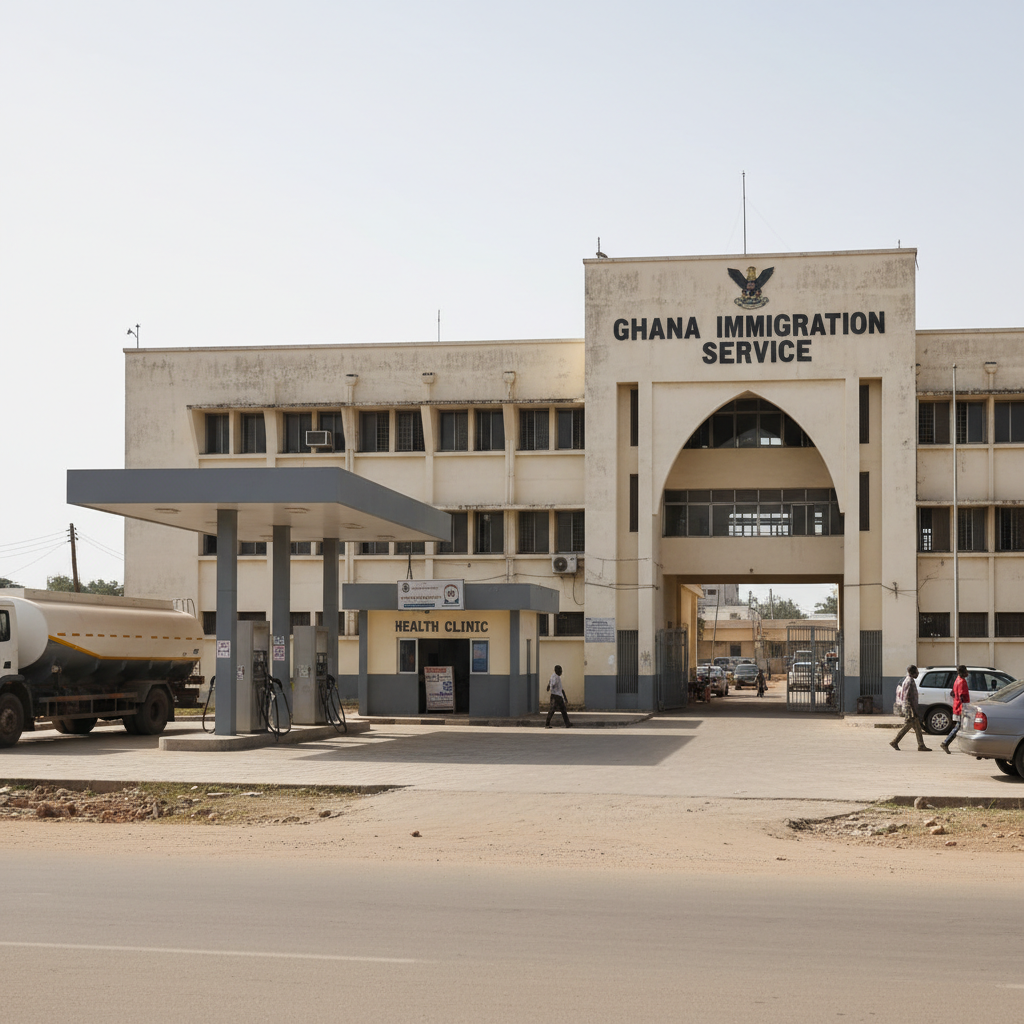
The Ghana Immigration Service (GIS) has approved and will implement key policy proposals, including establishing an Agriculture Department and GIS fuel stations across the regions. These initiatives also involve creating a Staff Endowment Fund and a mutual health insurance scheme for officers. The Body has approved new Transfer Guidelines for personnel.
These changes aim to improve how the GIS operates and to better support its staff. The Border Management Department will also be elevated to a Directorate. This move seeks to strengthen the institution’s ability to handle national and global migration challenges. The initiatives were discussed during the maiden Ghana Immigration Regional Commanders Conference.
These reforms fit into the broader government commitment to strengthen Ghana’s security agencies. A motivated and well-equipped workforce is crucial for national security. The government consistently allocates funds to enhance the operational capabilities of such institutions. This focus on improving conditions for security personnel reflects a strategic investment in national stability and border control.
Reverend Stephen Wengam, Chairman of the Ghana Immigration Service Governing Council, stated these collective initiatives will enhance operational efficiency. He added they would also improve staff welfare and strengthen institutional resilience. "These measures will position the GIS as a modern, responsive, and forward-looking security institution," he said. He further noted that the Council presented a strategic roadmap to the President and Interior Minister. This roadmap focused on strengthening border governance, improving operational capacity, and enhancing logistical support.
The Gis will soon launch a new initiative called "Secure Our Borders Project" (Project SECOBOR). This project aims to gather support from both public and private sectors for the Service. The President and the Interior Minister have pledged their full support for these efforts. These developments indicate a significant push towards modernising the GIS. They also highlight a commitment to ensuring the welfare of its personnel.
Muntaka Mohammed-Mubarak, the Minister of the Interior, urged GIS commanders to develop practical and sustainable solutions for service delivery. He emphasised the importance of professionalism, fairness, discipline, and teamwork within the Commands. This is essential for improving operational efficiency across the GIS. The Minister also commended the Comptroller-General for his leadership in setting the conference agenda. This agenda particularly focused on staff welfare, logistics, and infrastructure development.
The Comptroller-General of Immigration, Samuel Basintale Amadu, highlighted the significance of the conference. He noted it was the first Regional Commanders’ Conference under his leadership since he took office in March last year. "The event reflects our growing institutional capacity and commitment to sustainable development," he added. Successful security institutions rely on unity, discipline, collaboration, and strong leadership at all levels. These initiatives are expected to foster a more effective and responsive immigration service for Ghana. The GIS is gaining recognition as a benchmark institution across Africa, with Tanzania Immigration Service conducting a study tour.