Ghana Government Offers Conflicting Explanations for Accra Floods
President attributes recurring floods to human indiscipline, while a presidential staffer cites spiritual attacks, creating public confusion.
Kofi Asante | StatsGH |
2 min read3 min listen
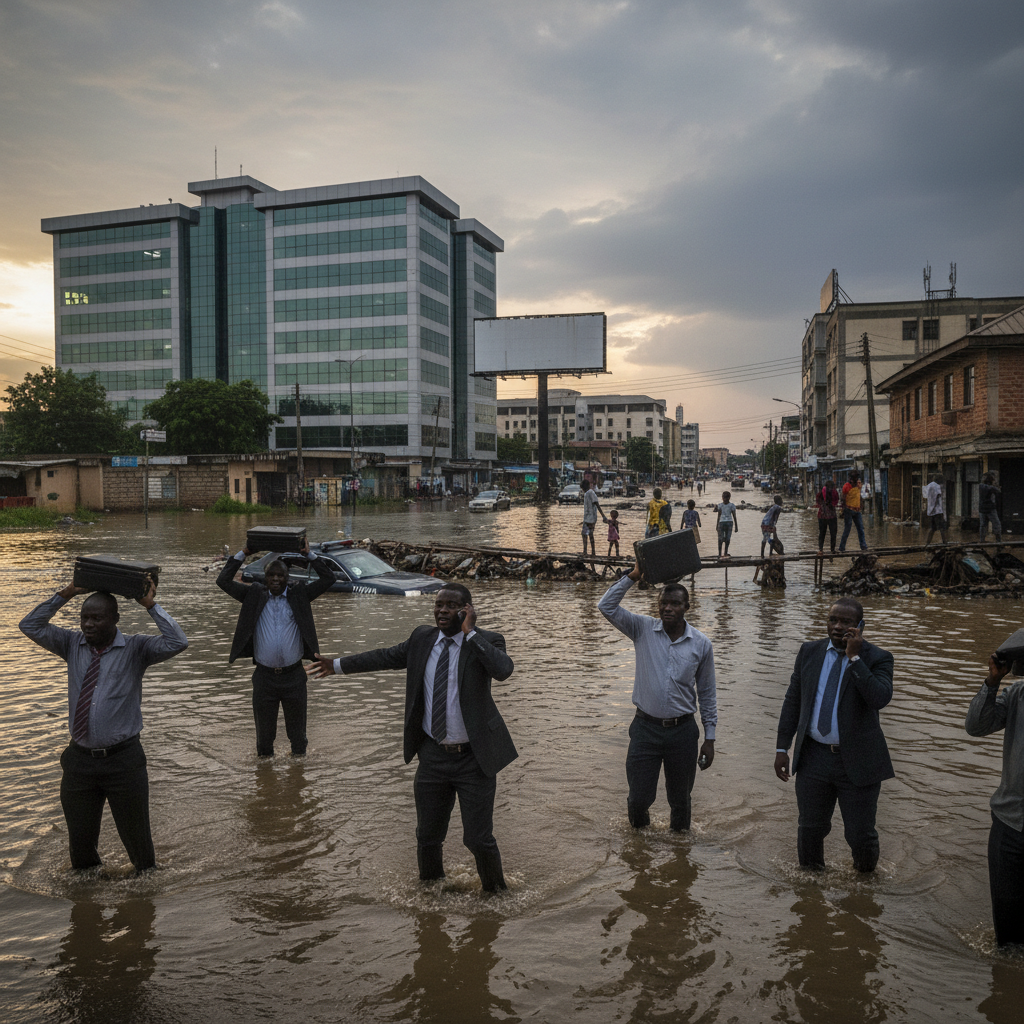
This contradiction has left Ghanaian citizens in a quandary about which explanation to believe. The President's view points towards practical solutions like improved urban planning and waste management. The spiritual explanation, however, offers no clear policy response, raising concerns about the government's strategy for a persistent national issue.
The annual flooding in Accra has become a predictable event, causing widespread property destruction and economic disruption. Despite decades of promises, successive governments have failed to implement lasting solutions. This year's floods submerged homes and turned roads into rivers, reaffirming the urgency of the situation.
President Mahama attributed the problem to residents' poor sanitation habits and indiscriminate dumping of refuse. He noted that drains, designed for stormwater, are often clogged with plastic waste and other debris. Additionally, unauthorised structures along waterways exacerbate the issue, hindering the city's ability to manage heavy rainfall.
However, Naana Juantuah's reported remarks introduced a supernatural dimension to the crisis. She reportedly linked the government's challenges, including the flooding, to spiritual attacks from political opponents. This statement immediately sparked public debate and appeared to undermine the President's more grounded explanation.
The conflicting narratives have created uncertainty, weakening public trust in the government's clarity and leadership. During a crisis, citizens expect coherent, evidence-based explanations that inspire confidence and offer tangible solutions. Mixed messages, however, do the opposite.
This situation gains further significance considering Ghana's recent political history. During the 2024 election campaign, then-candidate John Mahama and the opposition often blamed the previous administration for Ghana's economic difficulties. They argued that leadership must be accountable when citizens suffer. Now, many Ghanaians are applying the same standard to the current administration.
If flooding was evidence of governance failure under a previous government, the same logic should apply today. Accountability should not be selective, applying only when in opposition. The persistent flood problem highlights systemic weaknesses: inadequate drainage, poor urban planning, weak enforcement of building regulations, and ineffective waste management. These issues have been repeatedly identified by experts.
The challenge for Ghana has never been a lack of diagnosis but a failure of implementation. Citizens are now demanding results, not just political explanations. They seek concrete actions, such as new drainage projects and improved policy enforcement, to address an annual disaster that continues to impact lives and livelihoods across Accra.