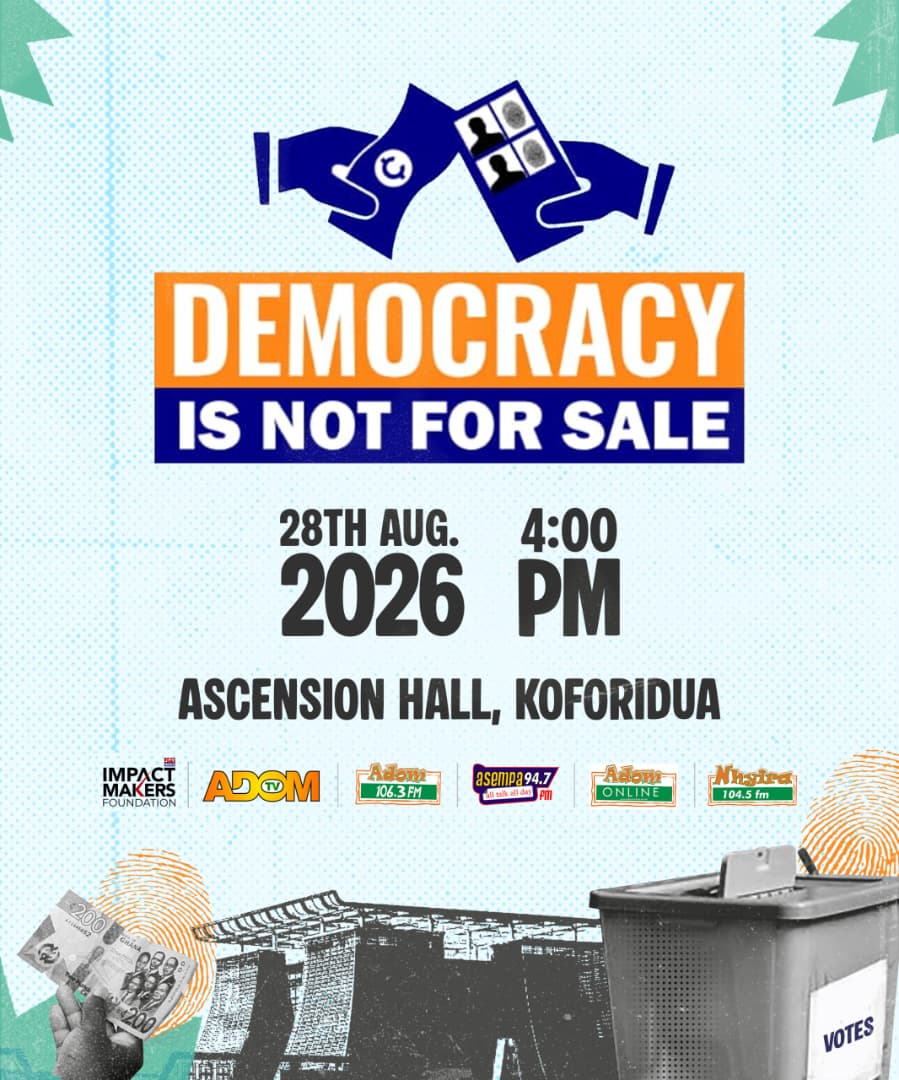
Koforidua is hosting a significant public dialogue today, Friday, August 28, 2026, to address the increasing influence of money in Ghana’s democratic process. The forum, titled “Democracy Is Not For Sale,” aims to tackle critical issues surrounding political financing and its impact on elections.
This event, organised by Adom Brands of the Multimedia Group Limited and the JoyNews Impact Makers Foundation, convenes at 4:00 p.m. at the Ascension Hall. It brings together political actors, civil society organisations, traditional leaders, and youth groups. Discussions will focus on vote buying, the rising cost of political participation, and the use of illicit funds to influence electoral outcomes.
The growing financial demands of Ghanaian politics pose a significant barrier to entry for many aspiring leaders. Securing party nominations, organising campaigns, and mobilising supporters require substantial financial resources. This trend raises questions about whether financial power increasingly dictates who can effectively compete in elections, potentially undermining the principle of equal opportunity.
The organisers, Adom Brands of the Multimedia Group Limited and the JoyNews Impact Makers Foundation, highlight the importance of this dialogue. They aim to provide a platform for citizens to share experiences and contribute ideas. The goal is to strengthen transparency, accountability, and fairness in the financing of political activities across the nation.
The forum will specifically examine vote buying, a practice where money or inducements are offered for electoral support. Critics argue this undermines voter independence and shifts electoral decisions away from policies and competence. The concern extends beyond direct cash payments to include campaign-period distribution of gifts, food, and transportation, which normalises financial inducements.
This focus on money politics is crucial for Ghana’s economic stability and democratic health. Unregulated campaign financing can lead to corruption, distort public policy, and create an uneven playing field. It can also divert resources from essential public services if political gains are prioritised over national development.
The discussions are expected to generate practical recommendations for campaign financing reform and electoral accountability. These recommendations could influence future legislative efforts to regulate political donations and spending. Such measures are vital for ensuring fair elections and maintaining public trust in democratic institutions.
Stakeholders will consider ways to foster a political environment where candidates compete based on ideas and policies, not financial strength. This shift is essential for building a robust democracy that serves the long-term interests of all Ghanaians. The forum challenges decision-makers to create a system where leadership and vision, not wealth, determine electoral success.
The outcomes of this forum will be closely watched by policymakers, civil society groups, and the general public. Any proposed reforms could significantly impact how political campaigns are funded and conducted in future elections. This initiative underscores a collective commitment to safeguarding Ghana's democratic integrity against the corrosive effects of excessive money in politics.