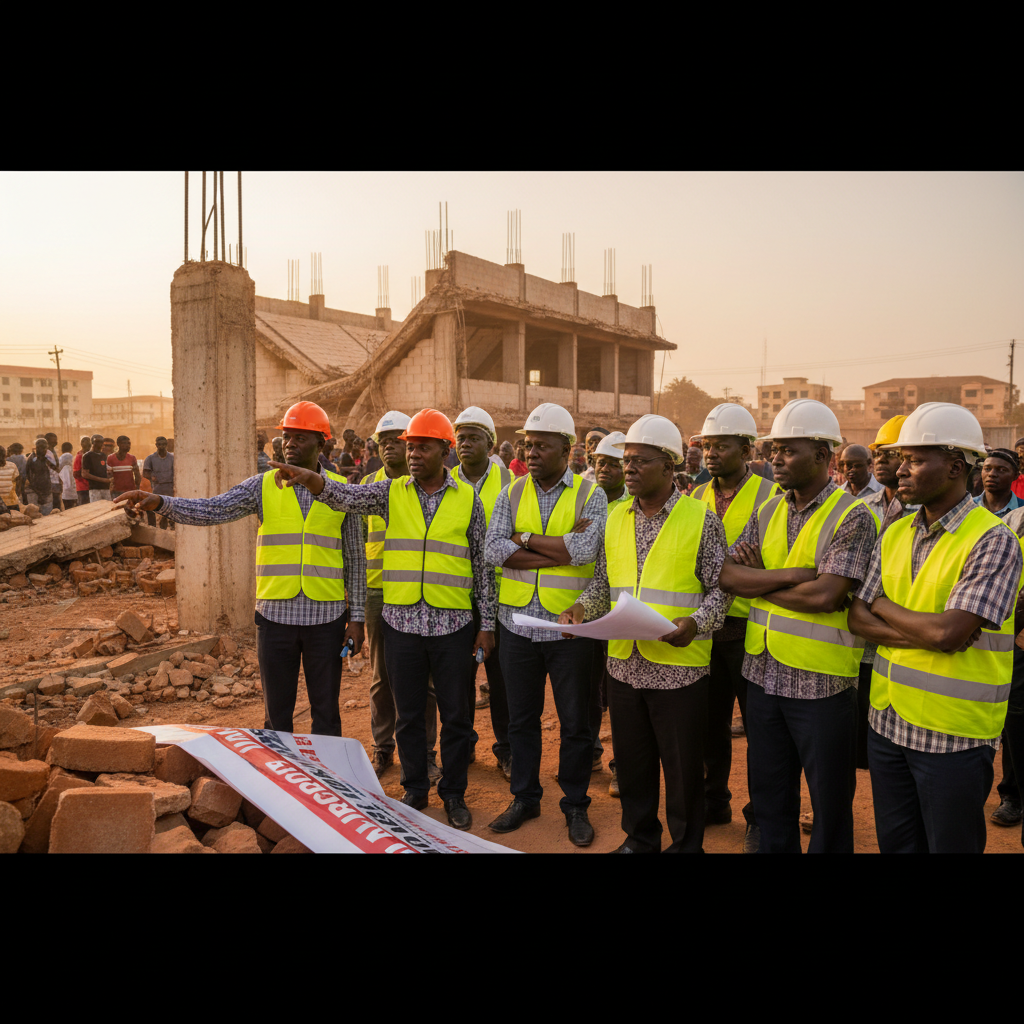
The Ghana Institution of Engineers (GhIE) has identified regulatory failures and unsafe construction practices as the primary causes of widespread building collapses across Ghana. This statement follows a recent three-storey building collapse in Accra's North Industrial Area, which reportedly claimed three lives.
This tragic incident has reignited national discussions on construction standards and enforcement. The GhIE states that unauthorized structural changes, changes in building usage, and using unqualified individuals for vital construction tasks are major contributing factors. These issues undermine the structural integrity of buildings from the initial design to completion.
This assessment comes as Ghana faces increasing urban development and infrastructure demands. The country's rapid growth has sometimes outpaced regulatory oversight, leading to a scramble for affordable housing and commercial spaces. Previous reports from building permit authorities have highlighted significant backlogs and instances of unapproved constructions. Data suggests a rising number of urban structures erected without full compliance with building codes over the last decade.
Ing. Joshua Allotey, Chair of the Structures Sub-Division of the Ghana Institution of Engineers, emphasized that human and regulatory lapses are central to the problem. He noted, “In some cases, we observed what is commonly referred to as ‘pancake collapse,’ where a floor fails subsequently under its own weight and lands on the next floor.” He stressed that many affected structures lacked adequate professional supervision, with developers bypassing approved regulatory processes. Ing. Allotey also criticized weak inspection regimes and delays in acting on violations by state institutions.
The GhIE advocates for crucial reforms to enhance building safety and regulatory compliance. They propose mandatory stage-by-stage inspections for all building projects. They also call for formal certification systems for artisans working in the construction sector. These measures aim to strengthen quality control and reduce the occurrence of avoidable building failures. The implementation of these recommendations could lead to significant changes in construction practices. It will likely impact developers, regulatory bodies, and construction workers across Ghana. The market will closely watch how these proposals are adopted and enforced, potentially affecting project timelines and costs.
Such reforms are critical for public safety and investor confidence in Ghana's real estate sector. Improved regulatory enforcement could lead to higher construction costs initially. However, it promises long-term benefits in terms of structural integrity and public trust. The Ministry of Works and Housing, along with local assemblies, will be key players in driving these changes. Their response will determine the effectiveness of these proposed solutions.
This initiative from the GhIE aligns with broader government efforts to improve infrastructure quality. The 2023 national infrastructure budget allocated GHS 4.2 billion towards improving public works. This includes specific clauses for structural integrity checks in public buildings. Ensuring private construction meets similar rigorous standards is essential for overall national development and safety.