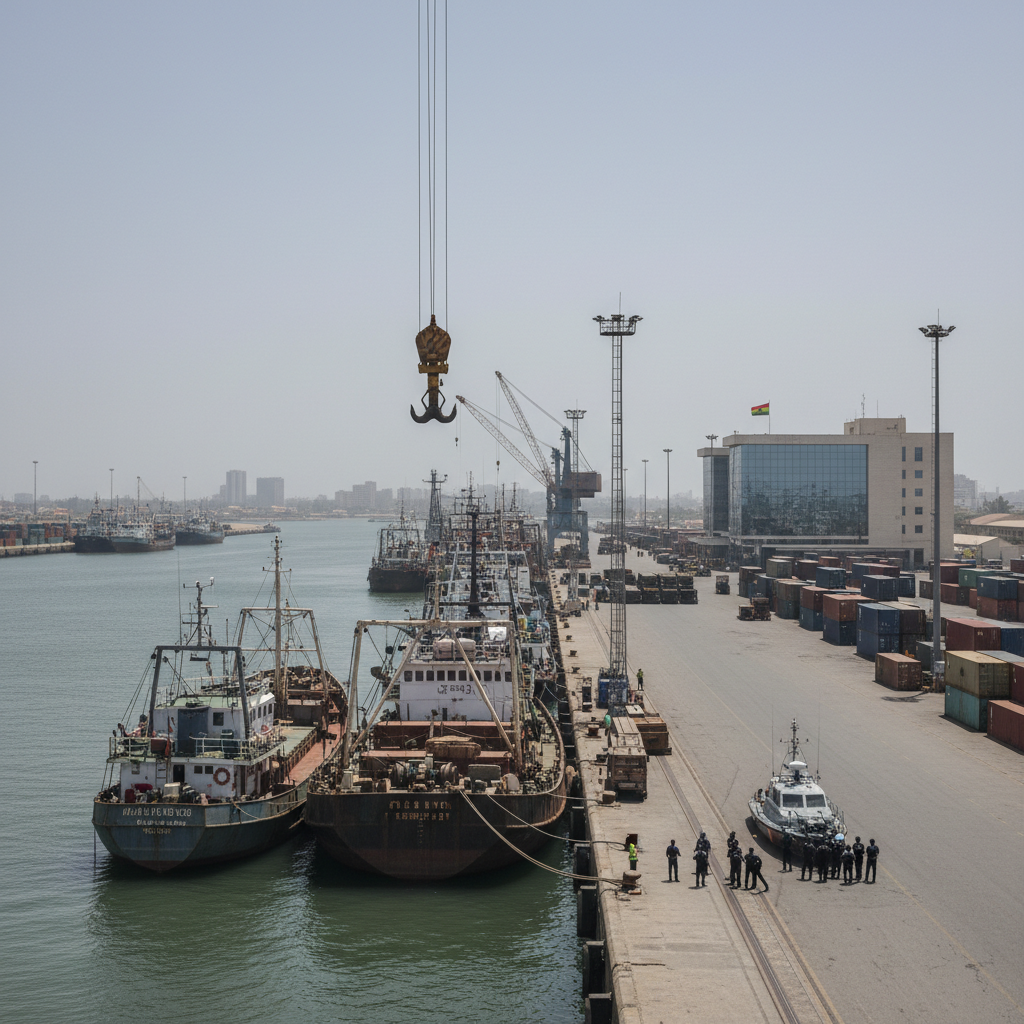
Ghana’s Parliament has passed the Maritime and Other Offences Act, a new law designed to strengthen the nation's capabilities against maritime crime. The Centre for International Maritime Affairs, Ghana (CIMAG) has commended this legislative achievement.
This Act particularly aligns Ghana’s maritime laws with the United Nations Convention on the Law of the Sea (UNCLOS). This global agreement sets rules for seas and oceans. The new law will improve Ghana's ability to fight crimes like piracy and illegal bunkering (stealing fuel). It also promises to enhance confidence in the country's maritime governance system among international partners.
The passage of this Act marks a significant step in Ghana's ongoing efforts to secure its territorial waters and boost its 'blue economy'. The 'blue economy' refers to the sustainable use of ocean resources for economic growth. This push for reform has involved civil society organisations, industry players, and security agencies. Previous reports, like the one on the passage of the Maritime and Anti-Piracy Bill, highlighted similar ambitions to tackle sea crimes. This latest legislation builds on these efforts, aiming for a more robust and internationally compliant legal environment at sea.
Albert Derrick Fiatui, Executive Director of CIMAG, described the Act as the fulfillment of a long-standing call for legal reform. “Today, Ghana has answered a call CIMAG and other stakeholders have made for years,” he stated. He also praised government institutions, including Parliament and the Ghana Maritime Authority, for their roles in advancing the legislation.
The passage of this law is expected to boost investor confidence in Ghana's maritime sector. A clear and predictable legal framework signals stability for shipping lines and port operators. However, Mr. Fiatui stressed that effective implementation is crucial. He urged authorities to prioritise robust enforcement and inter-agency coordination. This will ensure the law leads to tangible improvements in maritime safety and economic development. CIMAG plans to support the Act’s operationalisation through ongoing advocacy and capacity-building initiatives.
The Act will provide greater legal clarity and deter maritime crimes, such as armed robbery at sea. It helps close legal gaps that have historically hindered enforcement. This improved legal framework will allow Ghana to investigate and prosecute offenders more effectively. Enhanced security also protects the livelihoods of Ghanaian seafarers and fisherfolk. It further safeguards marine resources from criminal exploitation, ensuring sustainable management of Ghana’s marine environment and fisheries sector.
Ghana’s commitment to a rules-based legal framework positions it as a more competitive maritime and logistics hub. This is vital for Ghana’s role within the West African sub-region. The new law contributes to the nation's economic stability and regional influence by securing vital trade routes and natural resources.