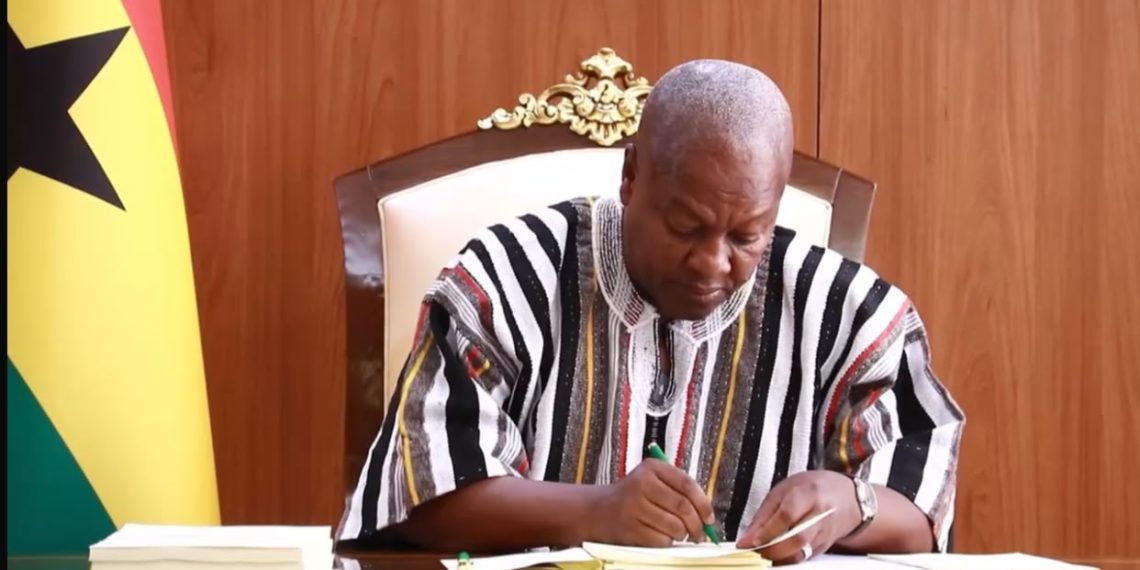
President John Dramani Mahama has formally approved 10 bills passed by Parliament, giving legal force to significant reforms across Ghana's economy and justice system. These new laws cover critical areas such as taxation, revenue mobilisation, and judicial administration.
The presidential assent transforms these approved bills into enforceable laws. This action clears the path for relevant government institutions to begin implementing their provisions. The reforms aim to strengthen public finances and improve the efficiency of legal processes nationwide.
This legislative push aligns with Ghana's ongoing efforts to enhance fiscal stability and improve governance. The new laws are expected to contribute to the nation's economic resilience and regulatory framework. They reflect a strategic focus on sustainable revenue generation and effective public service delivery.
The source material indicates President Mahama assented to these bills. This action followed their passage during the Second Meeting of the Second Session of the Ninth Parliament. The legislative session concluded on July 31, 2026.
These new laws will have wide-ranging implications for various sectors of the Ghanaian economy. They will affect government revenue, trade, and national security. Businesses and citizens alike will experience changes in tax obligations and legal procedures.
Among the newly enacted laws are the Customs Act, 2026, and the Community Service Act, 2026. The Tribunals Act, 2026, and the Maritime and Related Offences Act, 2026, also received presidential assent. Other key legislation includes the National Defence University, Ghana Act, 2026, and the Ghana Cocoa Board Act, 2026.
Crucially, several tax-related bills are now law. These include the Income Tax (Amendment) Act, 2026, and the Energy Sector Levies (Amendment) Act, 2026. The Value Added Tax (Amendment) Act, 2026, and the Excise Act, 2026, are also part of this package. These amendments are designed to influence Ghana’s approach to taxation and revenue collection significantly.
The Income Tax (Amendment) Act, 2026, for example, will likely introduce changes to how individuals and corporations are taxed. This could involve new rates or expanded tax bases. The Value Added Tax (Amendment) Act, 2026, will similarly adjust consumption taxes. These changes aim to broaden the tax net and increase government income.
The Energy Sector Levies (Amendment) Act, 2026, will impact the cost of energy. This could affect businesses and households through adjusted fuel prices or utility tariffs. Such measures are often implemented to fund infrastructure projects or reduce budget deficits. The Excise Act, 2026, will modify taxes on specific goods, potentially influencing consumer prices and industry profitability.
The Tribunals Act, 2026, will streamline certain judicial processes. This could lead to faster resolution of specific disputes. The Maritime and Related Offences Act, 2026, will enhance regulation of Ghana's maritime sector. This supports trade and national security interests.
The Ghana Cocoa Board Act, 2026, will likely update the regulatory framework for the cocoa industry. This sector is vital to Ghana’s economy, providing significant export earnings and employment. The new law could address issues like pricing, quality control, or farmer welfare.
These legislative changes underscore the government's commitment to fiscal discipline and economic development. Analysts will closely monitor their implementation and impact on government revenue targets. The business community will also watch for clarity on new tax obligations and regulatory requirements. The successful execution of these laws is crucial for Ghana's economic outlook.