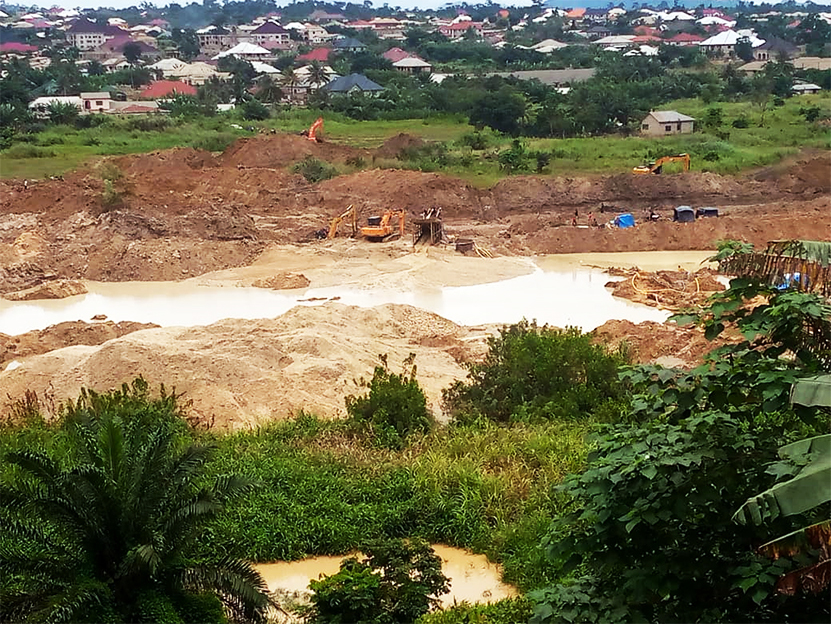
Ghana's government has implemented a new strategy to prevent illegal miners from returning to forest reserves. Military detachments will now remain permanently in areas cleared of illegal mining activities. This decision by President John Dramani Mahama aims to stop the cycle of miners returning after initial security operations.
The new approach addresses the repeated failure of previous systems. Under the old method, cleared reserves were handed back to the Forestry Commission. However, illegal miners often drove away forest guards and resumed their destructive operations. This new strategy seeks to provide a continuous security presence, making it harder for miners to re-establish themselves.
This initiative fits into Ghana's long-standing struggle against illegal mining, or 'galamsey'. The menace threatens Ghana's forests, rivers, and farmlands. Previous efforts, including those by the National Anti-Illegal Mining Operations (NAIMOS), have seen significant enforcement. NAIMOS reported seizing 94 excavators and destroying nearly 3,000 Changfan machines by March. By the first half of 2026, 78 excavators were seized, 90 immobilised, and 2,800 Changfans destroyed, alongside 207 arrests.
President Mahama acknowledged that keeping soldiers in the forests would increase government expenditure. This is due to the need for food, accommodation, and logistics for the deployed personnel. However, he insisted the government would not abandon the fight against illegal mining. His 2024 manifesto promised a "ruthless war" against these activities.
The implications of this strategy are significant for Ghana's environment and economy. A continuous military presence could deter illegal miners, protecting natural resources. However, experts warn against relying solely on military force. Retired military officer Colonel Festus Aboagye advocates for a multi-agency approach. This would involve the Armed Forces, Police, Immigration, and Customs.
Government must also ensure strict oversight to prevent corruption among deployed soldiers. Soldiers must be properly trained, supervised, and regularly rotated. There must be zero tolerance for bribery. Any security operative accepting money to allow illegal mining must face severe disciplinary and criminal consequences. Recent allegations involving security operatives at illegal mining sites highlight this need.
Independent monitoring, surprise inspections, and clear reporting mechanisms are crucial for military deployments. Personnel must also have adequate logistics to prevent resource shortages from becoming an excuse for compromise. Beyond enforcement, the government must pursue the financiers and equipment owners who sustain illegal mining. The fight must also strengthen the Forestry Commission and expand forest surveillance. Supporting local communities and providing viable alternatives for legitimate small-scale miners are also vital steps. NAIMOS has stressed the importance of intelligence from traditional leaders and communities. This comprehensive approach is essential for long-term success against galamsey.