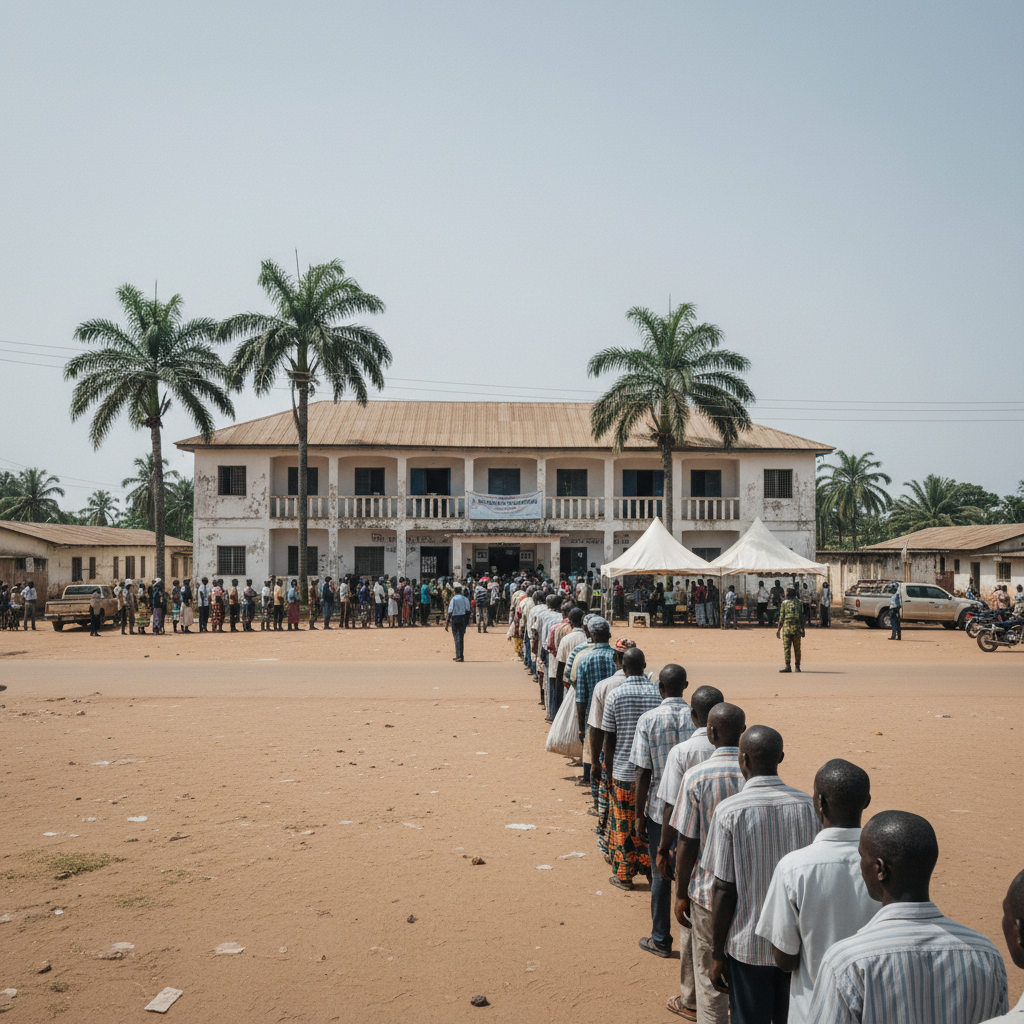
The National Identification Authority (NIA), partnering with the International Organisation for Migration (IOM), will commence a special Ghana Card registration for eligible Ghanaians. This exercise targets selected communities along the Ghana-Burkina Faso border. It will run from Monday, July 13, to Thursday, August 6, 2026.
This initiative aims to bring the national identification system closer to residents in these border areas. The registration will occur in the Sissala West and Lambussie Districts of the Upper West Region. It will also cover the Kassena-Nankana West District of the Upper East Region. This follows a successful pilot registration completed in Pusiga in 2024.
Expanding Ghana Card access to border communities is a strategic move for national security and economic inclusion. The Ghana Card increasingly serves as a primary identity document for accessing essential government and financial services. Its widespread availability ensures more citizens can participate fully in the formal economy. Data from the NIA consistently shows high demand for the card nationwide, highlighting its importance.
The NIA urges all eligible Ghanaians aged six years and above to participate in this exercise. This includes individuals who have not yet registered for the Ghana Card. Registration centres will be established in specific communities such as Gwollu, Fielmon, Happa, and Hamile.
Applicants need to present an original birth certificate, a valid Ghana passport, or proof of naturalisation. Individuals lacking these documents can still register if one eligible relative or two approved community members vouch for them under oath. These vouching individuals must be Ghanaian citizens holding valid Ghana Cards. The NIA has warned against providing false information, which is a punishable offence.
This special registration effort will significantly boost the number of Ghana Card holders. It will enhance border security and improve data collection for national planning. The increased accessibility of the Ghana Card also supports financial inclusion. Citizens can use the card to open bank accounts and access credit facilities. This expansion is crucial for Ghana's broader goal of digitizing public services.
The successful implementation of this exercise could lead to similar initiatives in other hard-to-reach areas. This would further entrench the Ghana Card as a universal identification document. Financial institutions and service providers will closely monitor the expansion to align their services. This will ensure they cater to the newly registered population. The government's push for universal Ghana Card coverage underpins many economic policies.
This registration drive directly supports Ghana's data and research objectives by improving citizen identity records. It contributes to public finance by enabling more efficient tax collection and service delivery. Wider Ghana Card adoption also impacts the regulation and policy landscape, particularly concerning financial transactions and national security.