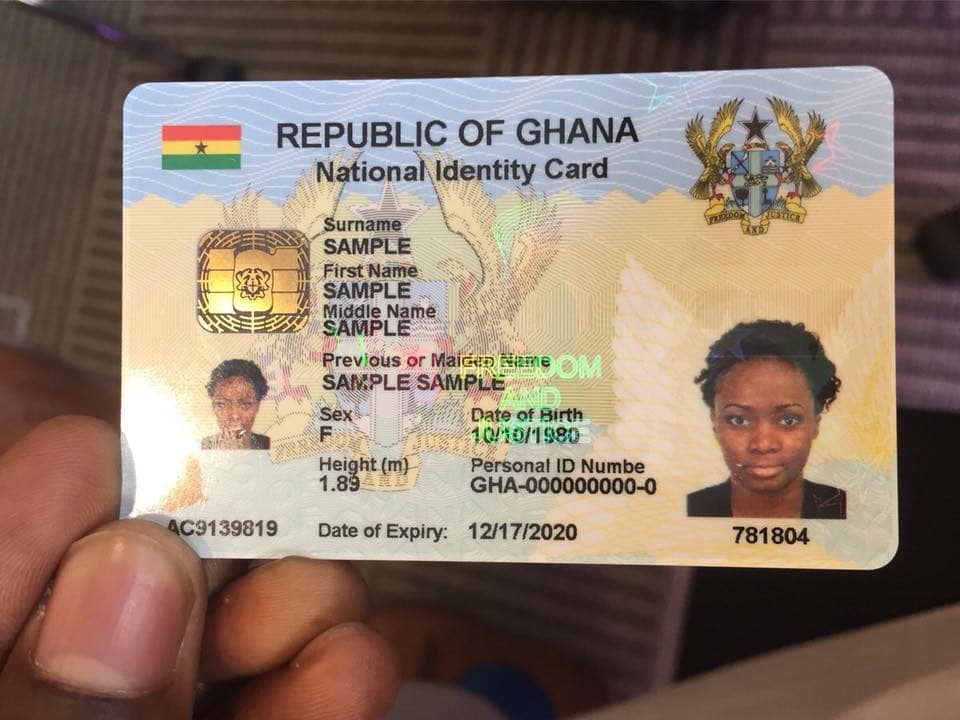
The National Identification Authority (NIA) has affirmed that Parliament approved its revised charges for Ghana Card services. This statement directly addresses growing public concern over the cost of obtaining and updating the national identification document. The Authority's clarification moves the discussion from whether the fees are legally imposed to the broader policy question of financing a critical national identification system.
These revised fees were sanctioned under the Fees and Charges (Miscellaneous Provisions) (Amendment) Regulations, 2025 (L.I. 2512). This legislative instrument was enacted pursuant to the Fees and Charges (Miscellaneous Provisions) Act, 2022 (Act 1080). The new fee structure officially commenced on February 2, 2026, following all necessary statutory and parliamentary procedures. The NIA emphasized that these charges were not introduced unilaterally, countering earlier criticisms.
The Ghana Card has evolved beyond a simple identity document, becoming a central authentication tool across Ghana's formal economy. Banks now require it for customer identification, and telecommunications companies use it for subscriber registration. State institutions increasingly integrate the card into tax, social, and administrative systems. This widespread integration makes the cost of obtaining, replacing, or updating the card a significant economic factor for citizens.
The National Identification Authority maintains 276 regular district offices nationwide, offering the most affordable service channel. At these offices, first-time registration remains free for individuals under 25 years old. Applicants aged 25 and above incur a GHS 30 processing fee for their initial registration. Replacing a Ghana Card costs GHS 200, while renewals are priced at GHS 150. Updating nationality information costs GHS 200. A record update not requiring a new card remains free, but one needing a replacement card costs GHS 200. Card transfers attract a GHS 75 fee, excluding any courier charges.
This pricing structure aims to balance two often conflicting objectives: ensuring broad access to the national identification system and generating revenue for operational costs. Operating the system requires substantial investment in biometric enrolment equipment, secure databases, software, and cybersecurity. These costs are ongoing, even after initial registrations are complete. However, as the Ghana Card becomes more indispensable, the argument for affordable access strengthens.
The tension between cost recovery and universal access becomes more apparent when comparing the NIA's regular services with its Premium and Prestige offerings. The NIA launched its first 24-hour Prestige Centre in Labone, Accra, on August 1. This centre operates seven days a week, catering to users willing to pay more for enhanced speed and convenience. The Authority clarified that using a Prestige Centre is not compulsory.
At the Prestige Centre, first-time registration and renewals each cost GHS 610. Card replacement at this premium facility is GHS 720. A record update without a replacement card costs GHS 400, while an update requiring a new card is GHS 655. Premium Centres offer an intermediate option between the regular district offices and Prestige services. First-time registration and renewals at Premium Centres cost GHS 410, with replacements priced at GHS 520.
This effectively creates a three-tier pricing system for Ghana Card services. Citizens can choose the lower-cost option at ordinary district offices, opt for Premium access at a higher price, or pay significantly more for the speed and convenience of Prestige services. This differentiated pricing model allows the NIA to recover more costs from those who prioritize convenience. However, the success of this model hinges on the continued genuine accessibility of the lower-cost option for the wider population, a point on which the NIA's strategy will ultimately be judged.