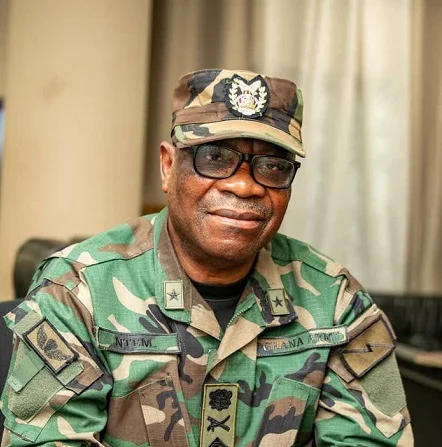
Major General Anthony Ntem, Commissioner-General of the Ghana Boundary Commission (GhBC), has concluded a five-day operational assessment along sections of the Ghana-Togo International Boundary. This assessment, which took place in the Oti Region, focused on enhancing boundary governance, strengthening border security, and promoting sustainable development in border communities.
The comprehensive assessment covered the Kadjebi District, Nkwanta South Municipality, and Nkwanta North District. It formed part of the Commission's ongoing efforts to integrate border communities into Ghana's boundary management framework. The exercise also aimed to evaluate development and human security challenges confronting communities along Ghana's eastern frontier.
During stakeholder consultations, community representatives voiced significant concerns impacting their livelihoods. In the Kadjebi District, residents of Ampeyoo, Ahamansu, and Butabe at Dodi Papaso engaged with the delegation. Nana Amanfo Monfakye I, Dadiase Amankrado, speaking for the Dadiase Traditional Area, appealed for improved mobile network connectivity. He explained that poor telecommunications infrastructure hinders communication with security agencies during emergencies, a concern echoed by representatives from Kue.
Residents of Chillinga in the Nkwanta South Municipality requested the construction of a motorable road linking their community to Nkwanta, the municipal capital. They noted that farmers and beekeepers currently walk for nearly four hours to access transport for their produce. They also called for better road infrastructure, healthcare, educational facilities, market infrastructure, and increased security presence to improve livelihoods and foster sustainable development.
The operational assessment concluded in the Nkwanta North District, where Major General Ntem engaged with traditional authorities, assembly officials, and security agencies at Tinjase. Discussions centered on security along the international boundary, the condition of International Boundary Pillars (IBPs), and cross-border cooperation. Community members there appealed for the expedited construction of the Kpassa-Tinjase road, which leads to the Tinjase border crossing point. This road is crucial for improving accessibility, facilitating economic activities, and stimulating socio-economic development. They also requested improved access to potable water and healthcare infrastructure.
Major General Ntem acknowledged the resilience, patriotism, and cooperation of these border communities in safeguarding Ghana's territorial integrity. He assured them that the Ghana Boundary Commission would continue to engage relevant Ministries, Departments, and Agencies (MDAs), Metropolitan, Municipal, and District Assemblies (MMDAs), and development partners. This engagement aims to facilitate necessary interventions and address the identified challenges.
Beyond community engagements, the Commissioner-General and his team conducted extensive field inspections along sections of the international boundary. They assessed the condition of several International Boundary Pillars to enhance the Commission's operational understanding of the boundary. The delegation also visited selected border posts, interacting with personnel from the Customs Division of the Ghana Revenue Authority (GRA) and the Ghana Immigration Service. These discussions focused on operational challenges and strategies to strengthen border security while facilitating legitimate cross-border movement and trade.
This assessment underscores the Ghana Boundary Commission's commitment to effective boundary governance and the socio-economic development of border communities. Continued collaboration with local authorities, security agencies, and development partners is essential for achieving these goals. The findings will inform future policy decisions and resource allocation to improve conditions along Ghana's eastern border.