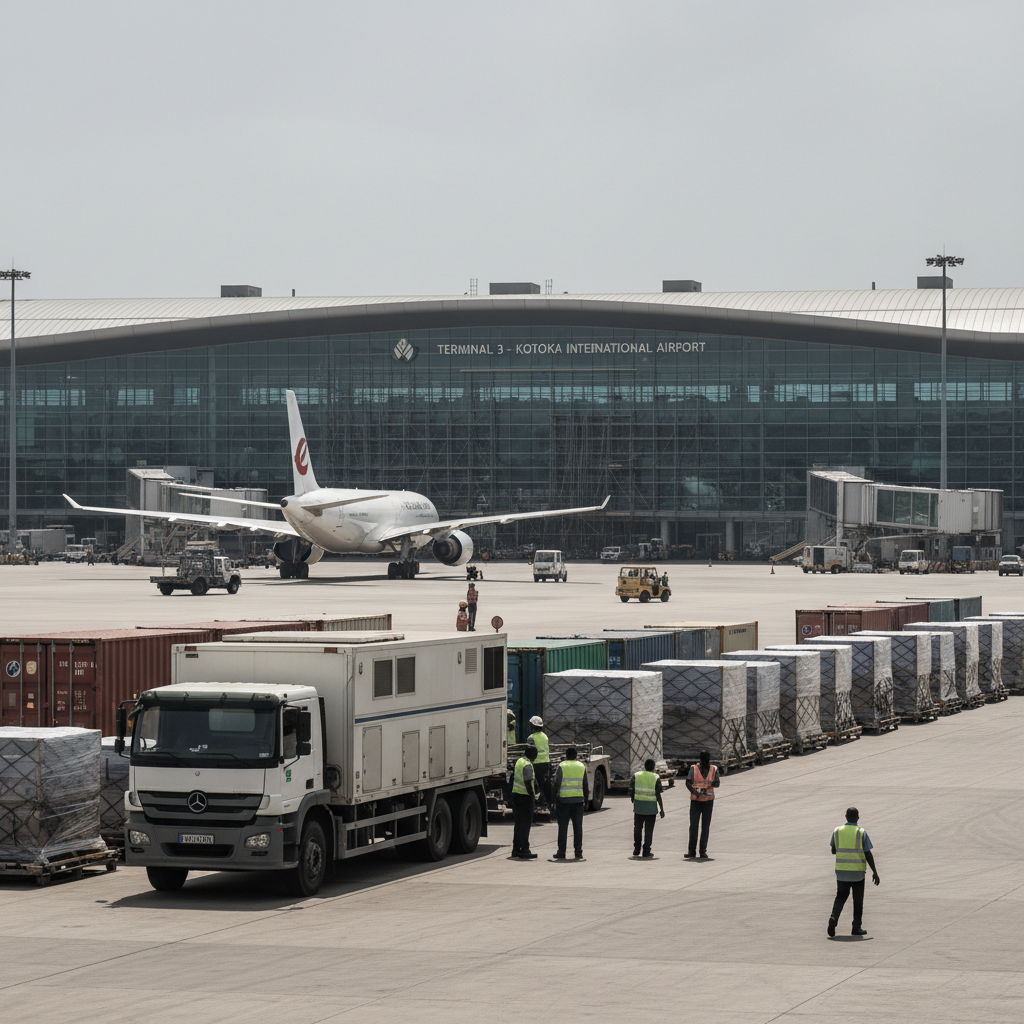
Ghana’s government has provided the Narcotics Control Commission (NACOC) with new mobile drug detection devices. The government is also replacing all body-intrusive scanners at Kotoka International Airport (KIA) in Accra. These measures aim to significantly strengthen the country's fight against drug trafficking.
These technology upgrades are a direct response to the increasing sophistication of international criminal drug networks. The new equipment will improve NACOC’s ability to quickly identify suspected narcotics. It will also enhance passenger screening at Ghana’s main international gateway. This move will help protect Ghana from becoming a major transit point for illegal drugs.
This initiative fits into Ghana's broader strategy to enhance national security and counter transnational organized crime. The government is investing in modern technology and fostering international partnerships to safeguard its borders. This investment reflects a commitment to maintaining economic stability and public safety, critical for investor confidence and national development.
Brigadier General Maxwell Obuba Mantey, Director-General of NACOC, announced these developments on June 26, 2026. He stated, "The government has provided mobile drug detectors to NACOC just yesterday and, in collaboration with the Government of the Kingdom of the Netherlands, is undertaking the full replacement of the body intrusive scanners at the Accra International Airport." This statement highlights the importance of international cooperation in this effort.
The improved detection capabilities will result in more intercepted drug shipments and increased prosecutions of traffickers. Businesses operating in Ghana will benefit from enhanced security and reduced risks associated with illicit trade. The upgraded scanner technology is expected to be fully operational soon, impacting border control and national security strategies. Policymakers will closely monitor the effectiveness of these new tools in the coming months.
The acquisition of mobile drug detectors enables NACOC officers to perform rapid field testing for suspected narcotics. This speeds up investigations and arrests. The new scanners at KIA will detect concealed drugs more effectively, making it harder for traffickers to smuggle illegal substances into and out of the country. This technological advancement directly supports Ghana’s economic well-being by curbing the social and financial costs of drug abuse.
NACOC’s commitment extends to working with both local and international partners. This collaborative approach is vital for combating cross-border crime effectively. The recent dismantling of an international methamphetamine trafficking syndicate, linked to a 320-kilogram shipment in Australia, demonstrates the ongoing threat. These new tools will further boost Ghana’s ability to counteract such threats. The government views these investments as essential for public health and national security.
The partnership with the Kingdom of the Netherlands underscores a shared commitment to global security efforts. This international collaboration provides not only technology but also expertise for training NACOC personnel. Ghana’s proactive stance aims to deter drug networks that might view the country as a weak link. Strong borders and efficient detection systems are crucial for maintaining Ghana's reputation on the global stage. These efforts will also support the ongoing fight against money laundering, often linked to drug trafficking.