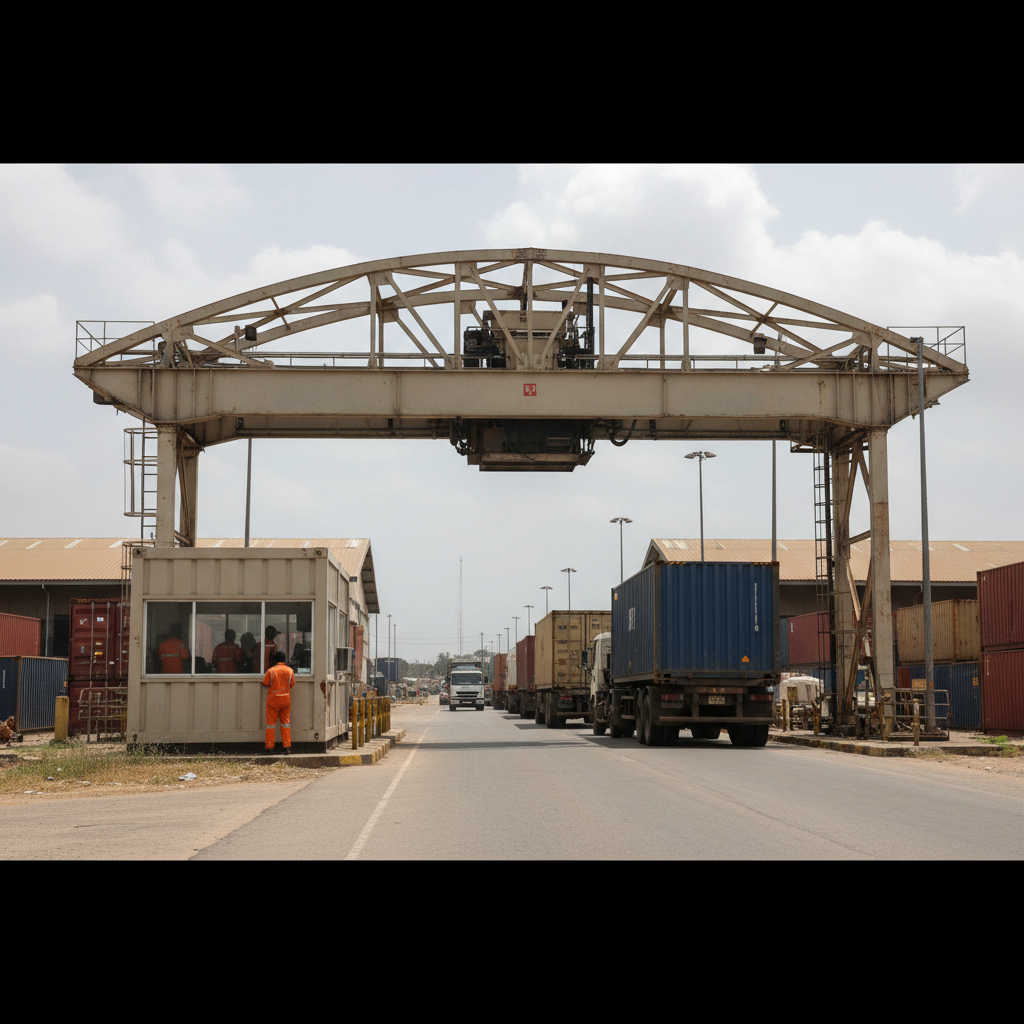
Ghana is deploying advanced intelligence-led border monitoring systems to prevent the country from becoming a major hub for narcotic drug transit. Interior Minister Alhaji Muntaka Mubarak announced this crucial development on Tuesday, July 9, 2026. The new strategy directly addresses the challenge of numerous illegal entry points across Ghana's borders.
The government's plan includes significant international support. The Netherlands has provided funding, estimated at around GHS 44.5 million (based on a current exchange rate of 1 EUR = GHS 14.85 for 3 million Euros), for high-resolution scanners. Singapore has also pledged eight intrusive scanners. These devices will be strategically placed at major ports like Tema and Takoradi, and at key inland borders such as Elubo, Aflao, and Hamile.
This initiative responds to Ghana's vulnerability as a transit point for illicit drugs. Minister Mubarak highlighted that while Ghana has 48 official entry points, the Volta Region alone contains 102 unauthorized crossings. This vast network of illegal routes makes traditional monitoring difficult and less effective. The shift to intelligence-driven surveillance aims to secure these vulnerable areas more efficiently.
The Interior Minister spoke before Parliament’s Assurances Committee regarding these measures. He cited recent successes where intelligence led to the interception of narcotics being transported. One such operation involved an ambulance and a bullion van, demonstrating the effectiveness of intelligence in thwarting smuggling attempts. He emphasized that these new technologies will significantly enhance Ghana's capacity to detect contraband.
The move aligns with Ghana's broader efforts to combat drug trafficking, which have been strengthened by recent legislation. The Narcotics Control Commission (Amendment) Act, 2023 (Act 1100), and the Narcotics Control Commission Regulations, 2023 (L.I. 2475), now permit controlled cultivation of cannabis with low THC levels (≤0.3%) for industrial and medical uses. Recreational use of cannabis remains strictly illegal under these laws. This legal framework provides a clearer path for differentiating legal and illegal activities.
Ghana is also expanding its Narcotics Control Commission (NACOC) operations nationwide. The plan is to increase NACOC offices from 66 to cover all 261 Metropolitan, Municipal, and District Assemblies (MMDAs) within the next five to seven years. This expansion will ensure a wider reach for anti-narcotics efforts. Community sensitisation programs have already engaged over 2,170 groups and reached approximately 500,000 people through radio campaigns. The Ministry of the Interior and NACOC have also started student drug clubs in schools to educate young people.
The deployment of advanced scanners means heightened scrutiny at all major entry and exit points. Businesses engaged in international trade will likely experience more efficient, but also more thorough, customs procedures. The enhanced security measures aim to protect Ghana's reputation and prevent its infrastructure from being exploited by international drug cartels. The successful implementation of these measures will boost investor confidence by demonstrating Ghana's commitment to rule of law and security.
Decision-makers will closely watch the operational readiness and effectiveness of the new scanner systems. The market will specifically monitor reports on drug seizures and changes in smuggling patterns. These outcomes will indicate the success of Ghana's intelligence-led approach and the efficacy of the new equipment. This continued focus on border security also underscores Ghana's commitment to regional stability.