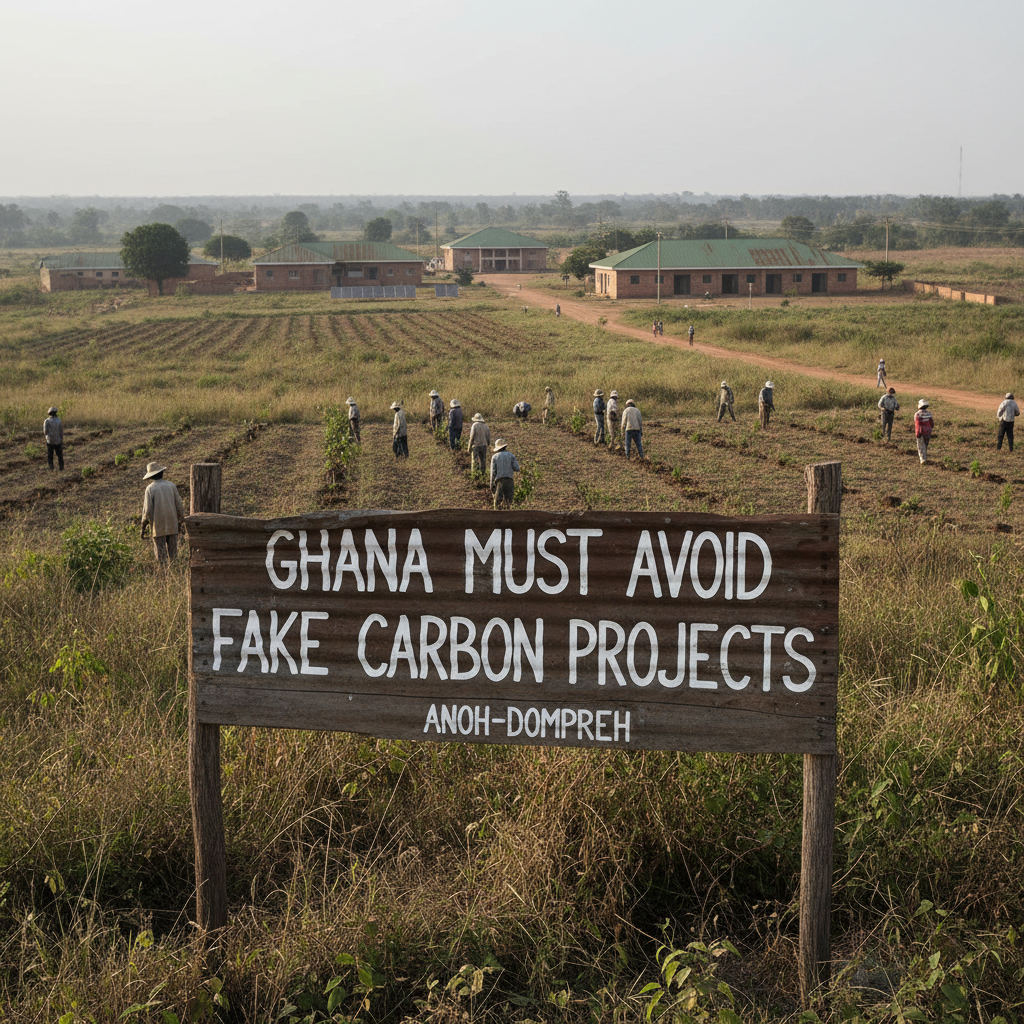
Ghana’s Minority Chief Whip, Frank Annoh-Dompreh, warns the country must not become a refuge for low-quality carbon projects. He calls for tightening oversight as Ghana develops its position in the global carbon market. This statement was made in Parliament on Thursday by the Nsawam-Adoagyiri MP.
Mr. Annoh-Dompreh emphasized that weak projects, inflated claims, and poor community involvement have damaged the global carbon market. He stated every project in Ghana must show genuine environmental benefit and clear sharing of profits. These concerns highlight the importance of careful management in this emerging sector.
Ghana has already established the Ghana Carbon Market Office under the Environmental Protection Agency. This foundation provides an opportunity to build a credible market yielding lasting national benefits. The country aims to use carbon trading as a tool for national development, not just a platform for selling emissions reductions. This integrated approach seeks to ensure real national value, genuine emission cuts, tangible community benefits, and private-sector investment.
“The global carbon market has suffered credibility challenges because of weak projects, inflated claims, double counting, poor community consultation and questionable additionality,” Mr. Annoh-Dompreh stated. He added, “Ghana must not become a destination for low-quality carbon projects. Every project must demonstrate environmental integrity and transparent benefit-sharing.” This highlights the urgency for robust regulatory frameworks.
To attract credible investors and protect Ghana’s long-term interests, Mr. Annoh-Dompreh urges clearer and more predictable regulations. He insists approval processes must be transparent, timelines clear, and fees reasonable. He cautioned against approving carbon transactions that could undermine Ghana’s future climate commitments. Carbon credits are not simple commodities; they are tied to Ghana’s Nationally Determined Contributions (NDCs), international reporting duties, community assets, land rights, and biodiversity. Selling these credits cheaply today might compromise Ghana's ability to meet its own future climate targets.
Community involvement is crucial for any carbon project, as many initiatives rely on land managed by local people. Projects must proceed with proper stakeholder engagement, free and informed local participation, clear ways to resolve complaints, and fair benefit distribution. This approach aims to prevent exploitation and ensure local support for green initiatives. Expanding projects in renewable energy, agriculture, and forest restoration can also create jobs and improve food security.
Mr. Annoh-Dompreh also champions investing in local expertise instead of relying on foreign consultants. He proposed creating a national carbon finance academy connected to the Carbon Market Office and universities. Furthermore, he called for a stronger and more transparent Ghana Carbon Registry and better coordination among institutions. He warned against bureaucratic delays in carbon market decisions, which could hinder progress. While Ghana should attract investors, projects must have sustainable funding and clear implementation plans to avoid confusion and unfair contracts, positioning Ghana as a leader in Africa's green transition.