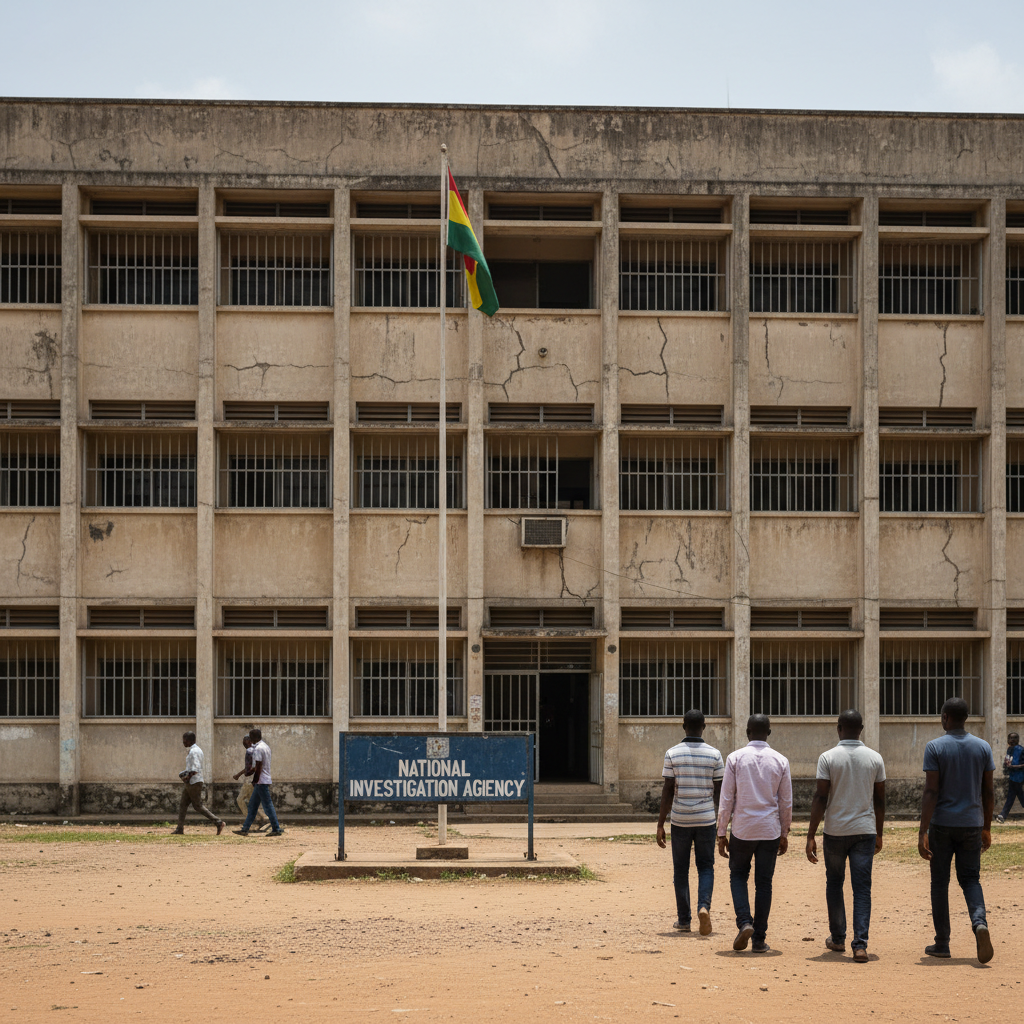
Fidelis Samuel Mensah received a 30-day prison sentence for defrauding Ghana Card applicants. The Gbese District Court handed down the sentence on June 25, 2026. Mensah falsely presented himself as a National Identification Authority (NIA) staff member.
Mensah was found guilty of deceiving the public at the NIA Regional Office in Accra. He impersonated an Authority staff member. He illegally collected cash, mobile phones, and personal documents from victims. This occurred while pretending to assist with Ghana Card registrations and updates.
This case highlights persistent challenges with official document processing and public trust in Ghana. The Ghana Card is a critical national identification document. Its secure issuance and integrity are vital for many public and economic services. Fraudulent activities like Mensah's undermine the system's reliability. They also expose citizens to financial loss and data compromise.
The NIA confirmed Mensah's arrest through a joint operation. The NIA Police Investigation Unit worked with NIA staff. This followed several complaints about his illicit activities. Mensah pleaded guilty to charges of stealing and defrauding by false pretenses. This led to his conviction on his own plea, according to the NIA statement released on Thursday.
The incident serves as a strong reminder for the public to exercise caution. Citizens should only engage with authorized NIA officials at designated service points. Maintaining vigilance remains crucial to protect personal information and assets. Authorities will likely increase efforts to combat such identity-related fraud. They will seek to safeguard the integrity of the Ghana Card system.
The Ghana Card is a gateway to numerous national services. Its importance has grown significantly in recent years. More services now require it as the sole means of identification. This includes banking, voting, and accessing government provisions. Fraudulent schemes targeting applicants could disrupt these essential services. They also pose major financial risks to individuals across the country.
Previous reports indicate that the NIA has cleared a backlog of 640,000 cards. It has also expanded its operations nationwide and in the diaspora. These efforts aim to improve access and reduce opportunities for informal intermediaries. The NIA continually assures the public that the Ghana Card is accepted at over 44,000 airports worldwide as identification. This underscores its global recognition and sensitivity to fraudulent activities.
Government efforts to make the Ghana Card the sole identification document for voting require citizens to remain highly vigilant. Any compromise of the registration process can impact electoral integrity. This incident shows the need for robust security measures and continued public education. The ultimate goal is to ensure the Ghana Card continues to be a reliable and secure national asset.