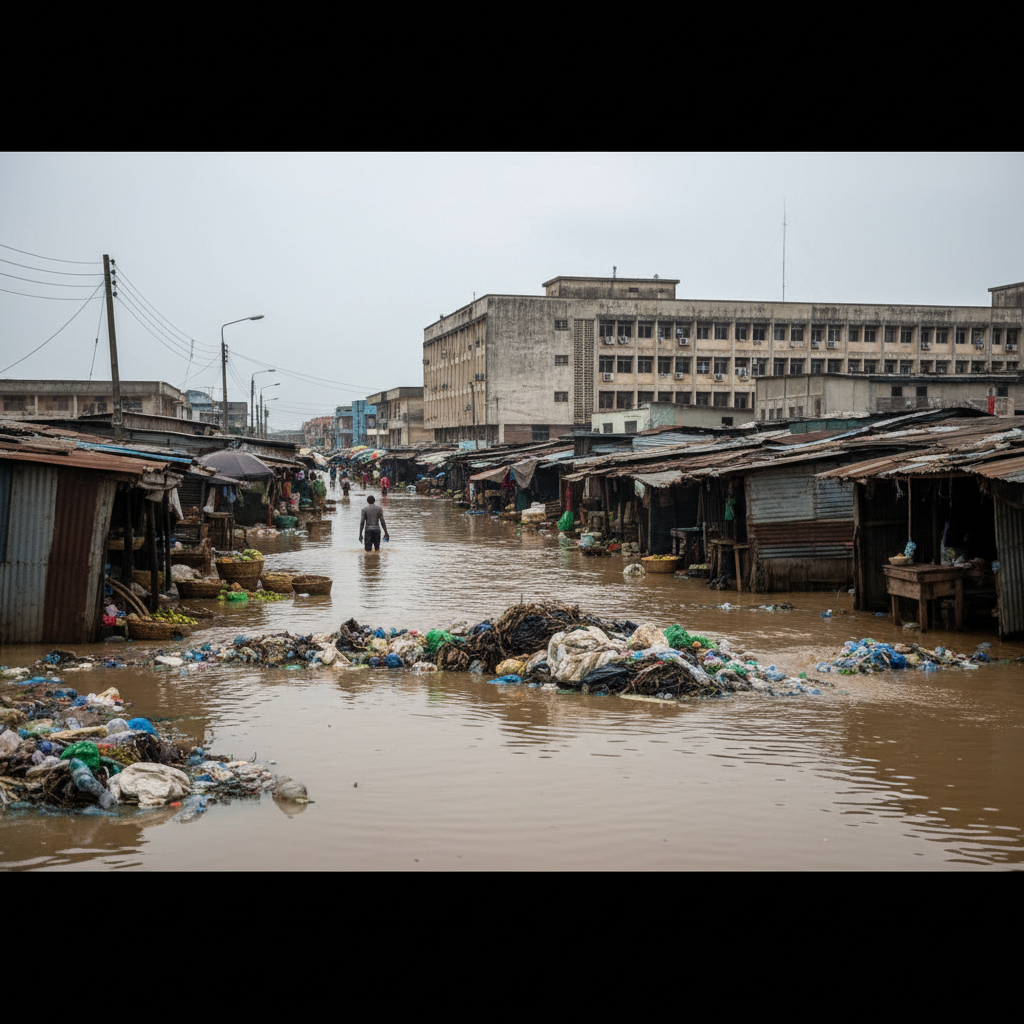
Ghana’s Environmental Protection Authority (EPA) has directly linked the increasing flood disasters across the country to widespread plastic pollution and blocked waterways. Professor Nana Ama Brown Klutse, EPA’s Chief Executive Officer, stated this connection on June 29, 2026. This assessment comes as parts of Ghana, particularly Accra, continue to experience devastating floods.
These floods have led to tragic losses of life, extensive property damage, and the displacement of numerous residents. Professor Brown Klutse highlighted three main factors contributing to the flooding crisis: heavy rainfall, construction obstructing waterways, and the indiscriminate disposal of plastic waste. She emphasized that plastic materials, especially styrofoam containers, are significant threats to drainage systems because they block the free flow of water.
This situation directly impacts Ghana's economic stability and public health. Widespread flooding disrupts economic activity, damages infrastructure, and strains public finances through recovery efforts. The continuous cycle of destruction impedes development goals and disproportionately affects vulnerable communities. Data from previous flood events show billions of GHS in damages and economic losses.
Professor Nana Ama Brown Klutse explained the critical role of waste management in flood mitigation during a visit to the Western Regional Minister. She stated, “If we cannot avoid heavy rain from coming, we can avoid choked gutters and allow waters to flow.” This emphasizes human actions worsen natural phenomena. The EPA, with government support, will push for the enforcement of the styrofoam ban. This ban is the first step towards a broader strategy to address single-use plastics. The EPA will also engage stakeholders for a gradual phase-out of other single-use plastics.
Beyond plastic waste, the EPA is also focused on the health of major rivers, wetlands, and other critical ecosystems. Many river channels suffer from siltation, illegal activities, and developments that alter their natural flow. The Authority plans a comprehensive engineering process to restore rivers, ensuring they flow from their source to the ocean. Wetlands, which are natural storage areas for rainwater, also require protection from encroachment to function effectively within the ecosystem.
The EPA has tested an ionic nano-copper technology to improve polluted water bodies. This technology will be most effective once rivers are restored to allow proper flow. Restoring river flow is crucial before using chemical treatments because blocked waterways reduce the technology's effectiveness in removing heavy metals and improving water quality. Western Regional Minister Joseph Nelson called for a coordinated approach to managing river bodies. He noted that rivers often cross administrative boundaries, meaning upstream activities affect downstream areas. This integrated approach is essential for sustainable flood management and environmental protection across Ghana.