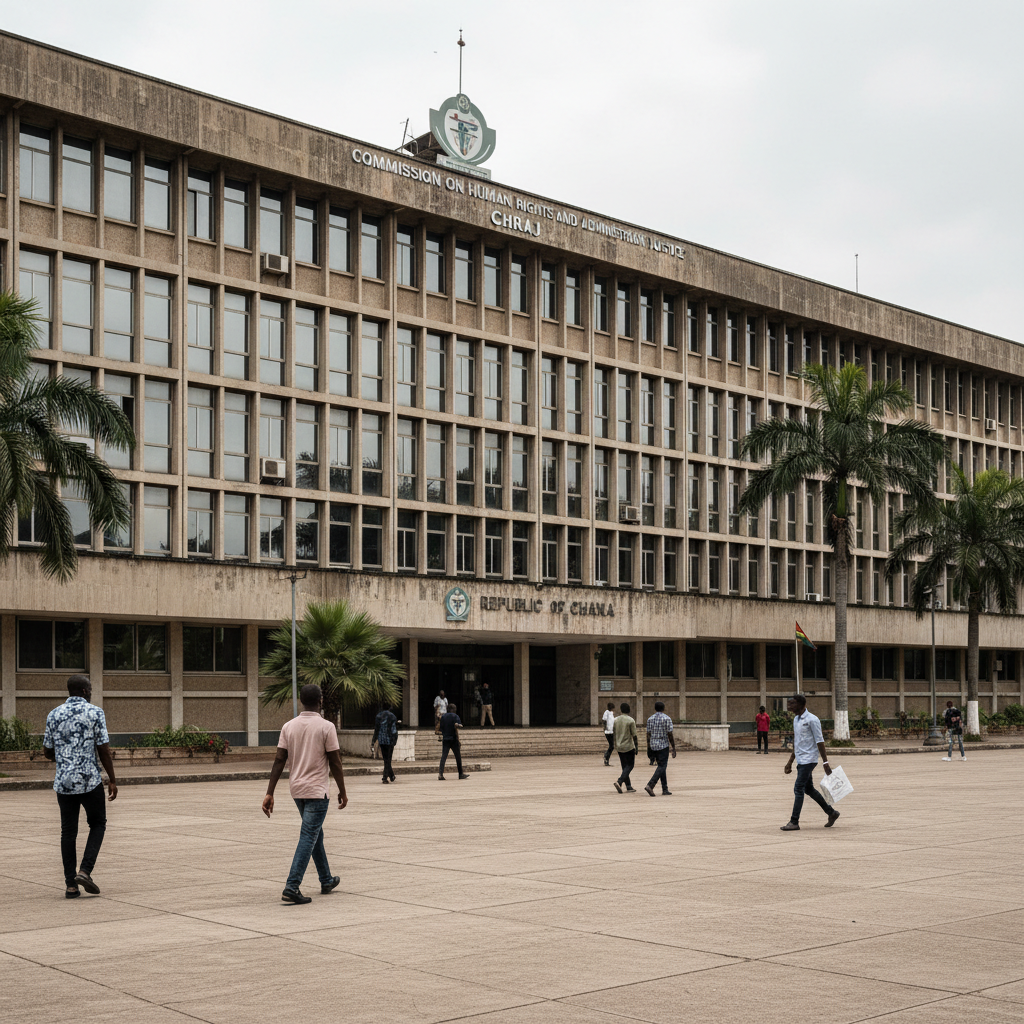
The Commission on Human Rights and Administrative Justice (CHRAJ) has firmly rejected widespread social media claims that its Deputy Commissioner, Mercy Larbi, presided over the High Court proceedings that sentenced Bernard Antwi Boasiako, popularly known as Chairman Wontumi, to 20 years' imprisonment. CHRAJ issued a clear disclaimer, stating that Mrs. Larbi played no role in the case.
These false allegations, circulating on platforms like Facebook and TikTok, wrongly identified Mrs. Larbi as the judge responsible for the sentencing. CHRAJ emphasized that the publication of her photograph in connection with the sentence is misleading and lacks any factual basis. The commission believes these posts aim to deceive the public and damage confidence in Ghana's judicial administration.
This clarification from CHRAJ follows a judgment delivered by Justice Audrey Kocuvie-Tay of the High Court in Accra. Justice Kocuvie-Tay convicted Chairman Wontumi on two counts related to the Akonta Mining illegal mining case. He received a 20-year prison sentence on each count, to run concurrently, meaning he will serve 20 years in total. The court also imposed a fine of 10,000 penalty units on Chairman Wontumi for each count.
The Akonta Mining case has drawn significant public attention, highlighting Ghana's ongoing struggle against illegal mining, known as 'galamsey'. The conviction and sentencing of a prominent political figure like Chairman Wontumi underscore the government's stated commitment to tackling this environmental and economic menace. This case signals a potential shift towards stricter enforcement against individuals involved in illicit mining activities, regardless of their political affiliation.
CHRAJ's statement stressed that the claims appeared designed to undermine public trust in the administration of justice. It also aimed to unfairly expose Mrs. Larbi to public criticism and reputational damage. The commission called on media organizations, bloggers, and the general public to verify information through credible sources before sharing it. This incident highlights the growing challenge of misinformation, particularly concerning high-profile legal cases and public officials in Ghana.
The commission reiterated its commitment to upholding the integrity, independence, and impartiality of the justice delivery system. It affirmed its dedication to discharging its mandate with professionalism, fairness, and fidelity to the rule of law. This denial is crucial for maintaining public confidence in institutions like CHRAJ, which are vital for good governance and human rights protection in Ghana.
The legal proceedings also saw Akonta Mining Limited fined 15,000 penalty units on each of the two counts on which it was convicted. This financial penalty against the company, alongside the custodial sentence for its chairman, sends a strong message to other entities engaged in similar illegal operations. Observers will now watch closely for further developments in the fight against illegal mining and how such high-profile convictions impact future enforcement efforts and public perception of justice in Ghana.