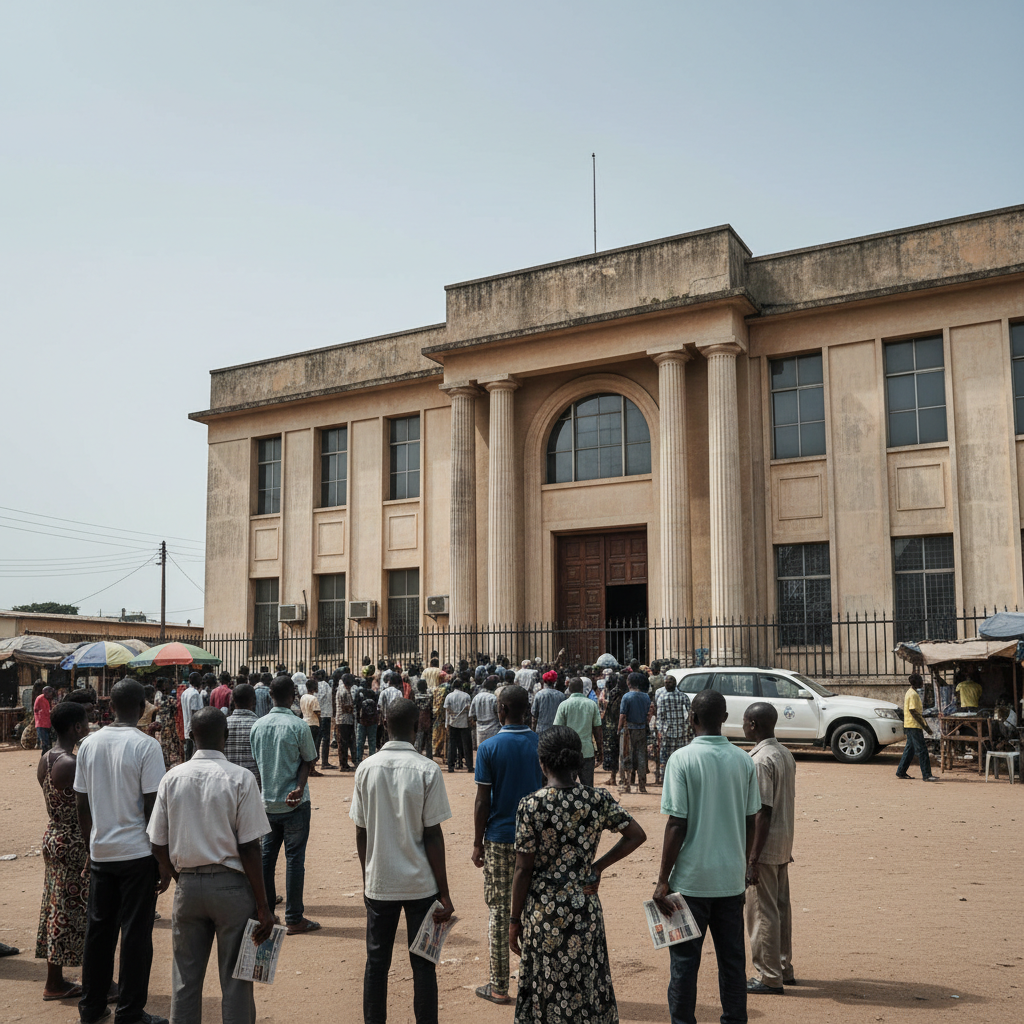
Bernard Antwi Boasiako, widely known as Chairman Wontumi, has been sentenced to 20 years in prison by the High Court. This significant ruling stems from his involvement in illegal mining activities, a practice that has severely damaged Ghana's environment. The conviction represents a critical moment in the nation's ongoing struggle against political impunity.
The judgment, delivered by Justice Audrey Kocuvie-Tay, underscores the judiciary's resolve to apply the law equally to all citizens. This includes individuals with considerable political influence. For years, illegal mining, locally termed 'galamsey,' has led to widespread deforestation, pollution of water bodies, and destruction of livelihoods across Ghana. The court's decision directly addresses public concerns about the lack of accountability for those perceived to be protected by political connections.
This case fits into a broader narrative of Ghana's efforts to curb environmental degradation and strengthen the rule of law. Previous administrations have faced criticism for their perceived inaction against politically exposed persons involved in illegal mining. The public has often questioned the commitment to justice when influential figures appeared to operate above the law. This ruling provides a strong counter-narrative, suggesting a renewed commitment to constitutional duties.
Justice Audrey Kocuvie-Tay has been commended for her courage in delivering this judgment. Her decision demonstrates that judicial competence extends beyond ordinary cases to include those involving high-profile political figures. The ruling reinforces the principle that no political office, party title, or financial influence should exempt anyone from legal scrutiny. This is a vital message for maintaining public confidence in the justice system.
The conviction carries significant implications for future enforcement against illegal mining. It signals that political influence has an expiry date, and accountability does not. Decision-makers and markets will be watching to see if this ruling sets a precedent for consistent prosecution of all alleged illegal mining kingpins. This includes individuals regardless of their wealth, office, or political affiliation. The true measure of this moment will be whether Ghana develops the institutional courage to pursue every such case with equal determination.
Critics of the decision have raised accusations of selective justice. However, proponents argue that equality before the law does not require simultaneous prosecution of every suspect. Criminal investigations mature at different times, and evidence gathering proceeds at varying speeds. The constitutional guarantee is the equal application of the law, not synchronized arrests. Therefore, the focus remains on ensuring that all investigations, regardless of political affiliation, proceed with equal determination.
The environmental impact of illegal mining is non-partisan. Poisoned rivers deny children safe drinking water, and destroyed forests mortgage the country's environmental future. Communities like Samreboi pay the price for unlawful profits. Nature does not discriminate based on political registration when delivering disaster. Floodwaters do not ask about voting preferences. Environmental destruction is ruthlessly non-partisan, affecting all Ghanaians.
This ruling also sends a strong message to political parties. Statements suggesting that a convicted individual could be set free if a particular party returns to power are damaging. Such utterances undermine public trust in due process and the rule of law. If there are legal grounds for appeal, they should be pursued through the courts, which is how the rule of law functions. The electorate ultimately decides based on perceived commitment to justice.
The hard truth is that, whatever the outcome on appeal, one lesson is clear: political influence has an expiry date. Accountability, however, does not. This conviction is a pivotal moment for Ghana, challenging a culture where political power was believed to silence the law. It sets a new standard for justice in environmental crimes.