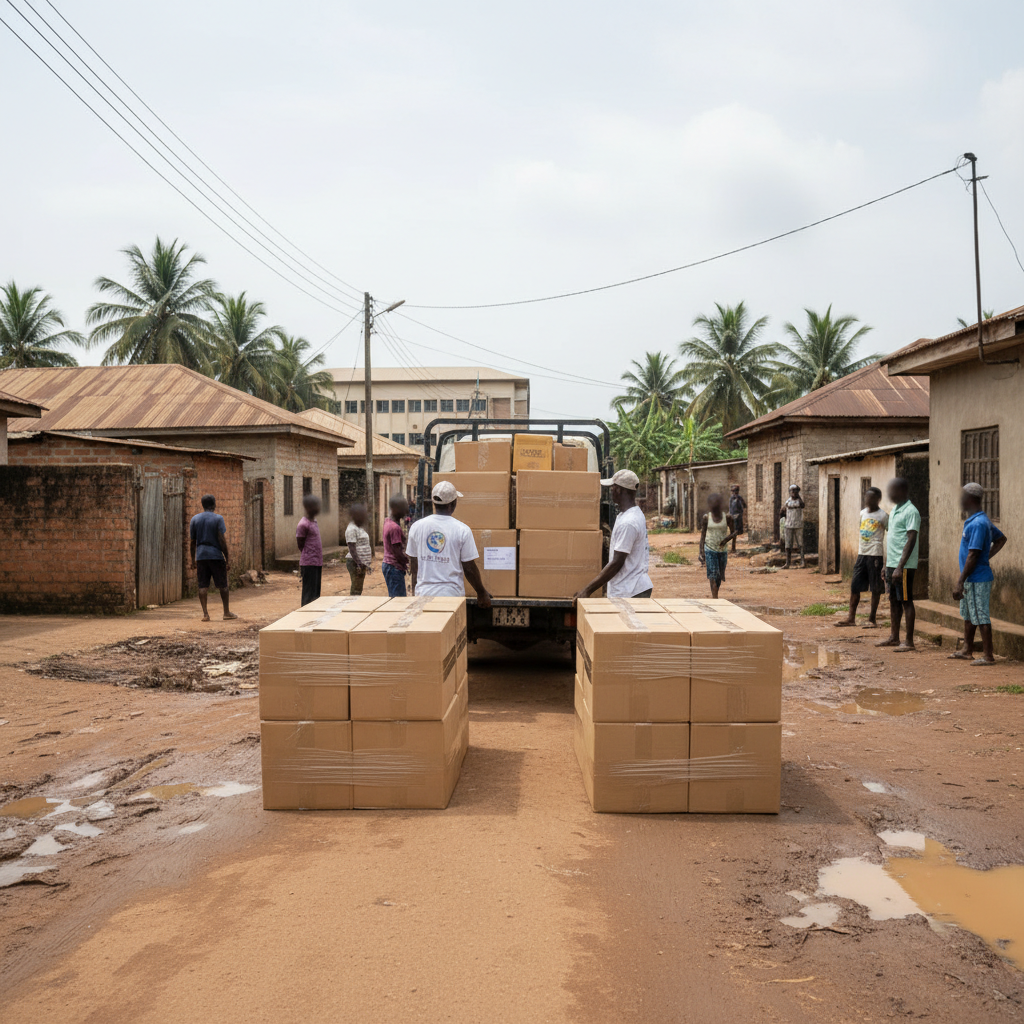
The World Mission Society Church of God has provided 70 food packages to families affected by flooding in the Weija-Gbawe Municipality. This humanitarian effort, conducted on July 30, 2026, aimed to deliver immediate relief to residents impacted by torrential rains.
The initiative, named “Build Hope!”, saw church volunteers distribute essential items. These packages included staples such as rice, cooking oil, tomato sauce, and canned sardines. The church partnered with the Weija-Gbawe Municipal Assembly to ensure effective distribution to those most in need.
This intervention occurs against a backdrop of increasing climate-related challenges in Ghana, particularly in urban areas like Greater Accra. Flooding has become a recurring issue, displacing residents and causing significant economic disruption. The government has previously allocated funds, such as GHS 350 million, for flood relief and mitigation efforts, underscoring the scale of the problem. Such private sector and civil society interventions complement broader national strategies to address disaster preparedness and recovery.
A spokesperson for the Church of God stated the initiative aimed to offer immediate relief and reassurance. “We hope this support brings comfort and strength to the residents suffering from sudden flooding,” the spokesperson said. Felix Odartey Lamptey, the Weija-Gbawe Municipal Chief Executive, commended the church's support. He noted the intervention provided meaningful assistance during the crucial recovery period for affected families.
This relief effort highlights the ongoing need for robust disaster response mechanisms and community resilience building. Decision-makers and aid organizations will continue to monitor weather patterns and urban development in flood-prone areas. The sustained involvement of civil society groups like the World Mission Society Church of God remains vital for supporting vulnerable populations. Their actions help bridge gaps in public services and foster a sense of hope and stability among those facing hardship. This collaborative approach is essential for long-term recovery and adaptation strategies in Ghana.
The church’s “Build Hope!” campaign is part of its broader humanitarian activities. These activities focus on supporting vulnerable communities and helping families recover from difficult circumstances. Church volunteer Robert Yeboah emphasized the campaign's role in restoring hope among people affected by natural disasters. He likened the effort to a “Mother’s heart, who sees to her children’s needs.”
Another volunteer, Harriet Quaye, shared her experience witnessing the direct impact of the support. She observed smiles and gratitude among beneficiaries, reinforcing the value of the donations. Such grassroots efforts are crucial for immediate relief and for fostering community spirit. They demonstrate how collective action can alleviate suffering and promote recovery in the face of environmental challenges. The long-term economic stability of affected households often depends on such timely assistance.
The Weija-Gbawe area, like many parts of Greater Accra, faces significant infrastructure challenges. Poor drainage systems and rapid urbanization exacerbate the impact of heavy rains. This makes community-led initiatives even more critical. They provide a flexible and immediate response that can reach affected individuals quickly. The sustained engagement of organizations like the World Mission Society Church of God helps build a more resilient society. This resilience is vital for Ghana's economic future, protecting livelihoods and property from climate-induced shocks.