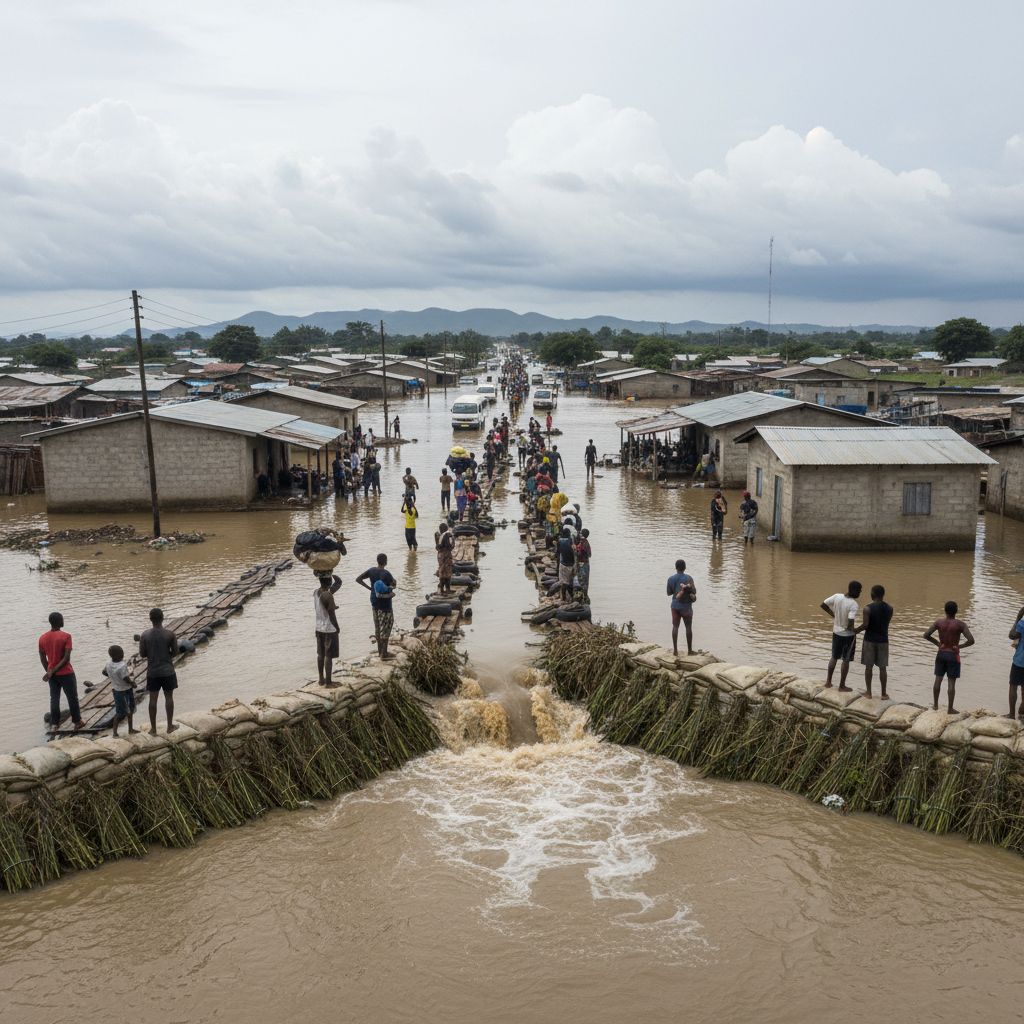
Intense rainfall has caused significant flooding in Sogakope, Volta Region, displacing residents and inundating numerous homes. The severe waters surged into properties along the riverbank after hours of continuous downpour.
This displacement primarily affects communities situated close to the riverbank. Blocked waterways, attributed to certain buildings, prevented water from draining effectively, forcing it back into residential areas. The flooding began early Monday morning, with water levels reaching dangerous heights.
This incident reflects a recurring seasonal challenge for Sogakope South, a low-lying area where rainwater naturally collects. The repeated flooding poses significant economic burdens on affected households, leading to property damage and disruption of livelihoods. Such events often require substantial public funds for relief efforts and infrastructure repairs, impacting the broader regional economy.
Gleku Williams Kofi, the Assembly Member for Sogakope South, described the situation as rapidly escalating. He stated, “The calls kept coming; I think my phone will explode,” underscoring the widespread distress among residents. Mr. Kofi also noted that previous data on flooding in the area had been collected by the National Disaster Management Organisation (NADMO) but immediate, full-scale mobilisation was not yet evident. The District Chief Executive, Victoria Dzeklo, actively responded to the crisis.
The immediate implication is an urgent need for humanitarian aid and temporary shelter for displaced residents. Furthermore, this event will likely intensify calls for permanent solutions to Sogakope’s drainage issues. Local authorities and planning bodies must review urban development near riverbanks and enforce regulations concerning waterway obstructions. This situation also underscores the need for proactive disaster management strategies to protect vulnerable communities.
The economic impact includes potential losses in property value and agricultural productivity in the affected areas. Business disruption further strains local commerce. Investors and public agencies will closely monitor the government's response and any plans to mitigate future flood risks. Effective intervention is crucial to prevent long-term economic instability in the region.
Water levels varied, reaching above knee-level in some parts and up to waist-level in others. No fatalities have been reported so far. This ongoing challenge highlights the critical infrastructure deficits and the vulnerability of communities to climate-related events in Ghana.