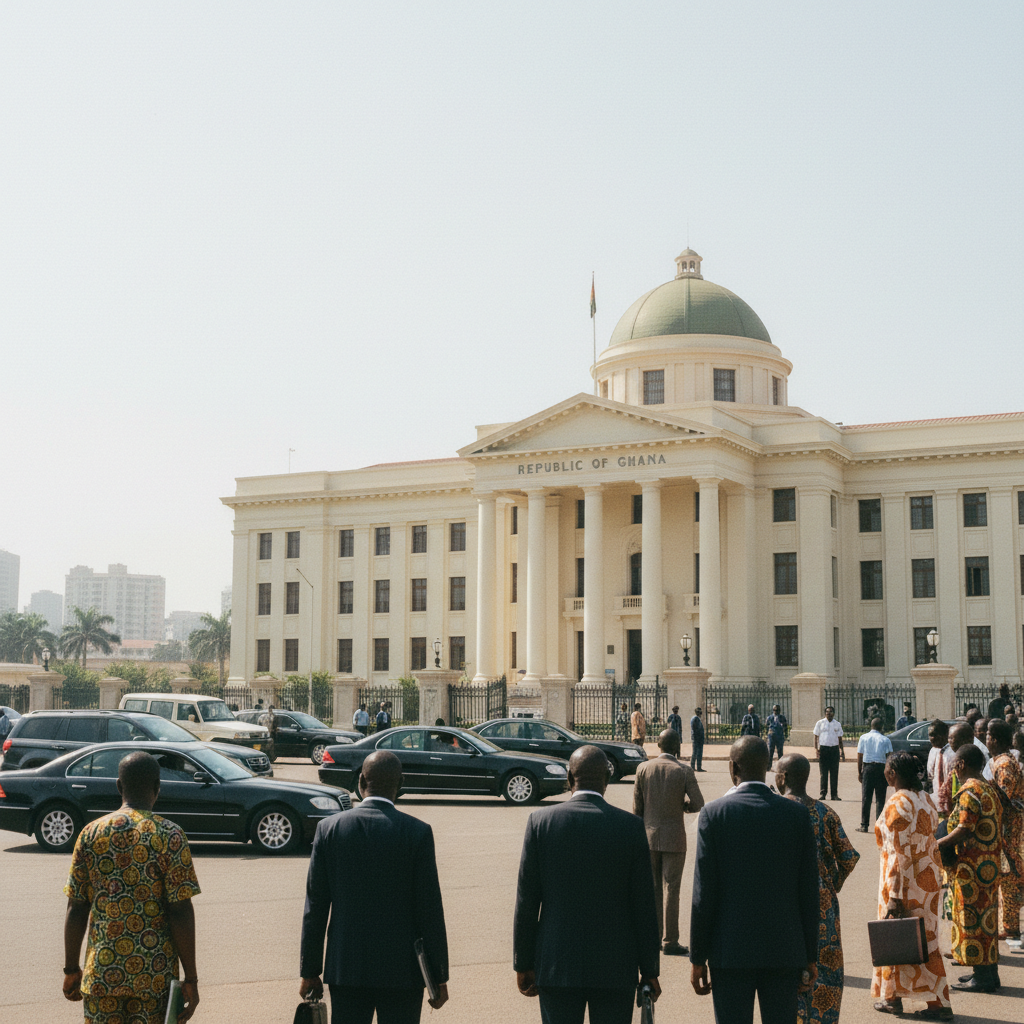
Julius Maada Bio, President of Sierra Leone and Chairman of the Economic Community of West African States (ECOWAS), visited Ghana on a one-day state visit. He came to commiserate with President John Mahama and the people of Ghana following devastating floods. The visit took place on July 3, 2026, after severe flooding hit parts of the country.
The floods caused widespread destruction, displacement, and loss of lives, particularly in the Greater Accra Region. President Bio extended condolences to affected families and expressed solidarity with Ghana's government and citizens. This regional show of support highlights the shared challenges West African nations face from climate change impacts.
Ghana’s economic stability and public health are increasingly vulnerable to such natural disasters. A recent UNDP report showed outdoor air pollution cost Ghana GHS 28 billion and nearly 13,000 lives in 2024. The Institute of Statistical, Social and Economic Research (ISSER) estimates poor sanitation costs Ghana more than GHS 6.2 billion annually. These figures underscore the financial burden of environmental issues and the need for robust infrastructure.
President Bio, speaking during his visit, offered his condolences and support. President Mahama stated the government directed the Ghana Armed Forces and the Joint Task Force to mobilize recovery efforts. Military personnel have been deployed to critical locations to clear clogged waterways and remove debris. These efforts aim to restore normalcy in flood-affected communities quickly.
The government's response highlights the immediate need for effective disaster management and urban planning. Decision-makers must address underlying issues like inadequate drainage systems and informal settlements to prevent future disasters. Continued investment in resilient infrastructure will be crucial to mitigate the economic and human costs of flooding.
Markets will watch how quickly flood-affected areas recover and how the government funds these recovery efforts. The floods could impact short-term economic activity in the Greater Accra Region, Ghana's commercial heartland. Long-term, such events can deter foreign investment if infrastructure vulnerabilities persist.
International aid and regional cooperation, like President Bio's visit, can provide crucial resources and expertise. Ghana’s government will likely prioritize climate adaptation measures and improved urban planning in its national budget discussions. These measures are essential for protecting lives, livelihoods, and the national economy.