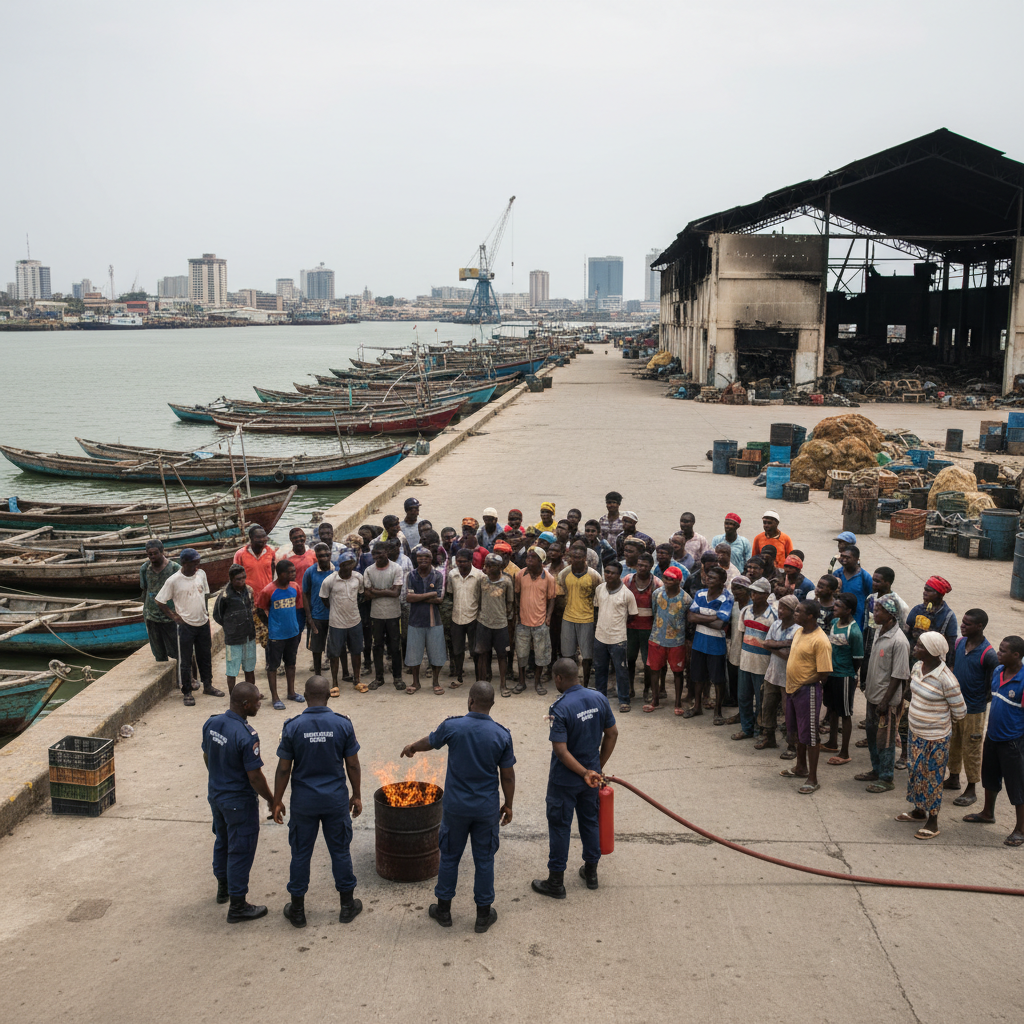
Fisherfolk in Sekondi and Essikado have received essential fire prevention and emergency response training. This initiative by Karpowership Ghana follows a major fire outbreak at the Albert Bosomtwe-Sam Fishing Harbour in June. The training aims to enhance safety and preparedness within the vital fishing community.
The June 21 fire at the Sekondi fishing harbour caused significant damage. It destroyed a premix fuel station and other properties. The incident reportedly occurred after a nearby electricity pole collapsed onto fuel tanks during heavy rainfall and a landslide. This event underscored the urgent need for improved fire safety measures among fisherfolk.
This training fits into a broader national effort to safeguard economic assets and livelihoods. Ghana's fishing industry contributes significantly to the national economy, supporting thousands of families. Protecting infrastructure like fishing harbours and ensuring the safety of workers directly impacts food security and regional economic stability. Data from the Ministry of Fisheries and Aquaculture Development consistently highlights the sector's importance to coastal communities.
Assistant Chief Fire Officer Class One, Edith Dunyo Agbeve, highlighted critical safety deficiencies. She noted discussions with fishermen revealed gaps in basic fire preparedness on their boats. Officer Agbeve urged fishermen to carry dry-powder fire extinguishers, explaining that some previously resorted to overturning burning boats. She stressed the importance of equipment, especially since fishermen often cook while at sea.
The training's practical nature has significantly improved the community's collective response capabilities. Fisherman Emmanuel Gordon stated participants learned how to organize themselves and use correct methods and equipment. He believes this knowledge will enable them to effectively assist in fighting fires before professional firefighters arrive. This proactive approach can minimize damage and protect valuable assets.
Karpowership Ghana's Corporate Communications Manager, Sandra Amarquaye, confirmed this initiative is part of the company’s annual community engagement. The programme extends beyond fire safety to include environmental safety and other interventions. These efforts aim to help fisherfolk build safer and more sustainable livelihoods. This commitment reflects a growing trend among corporate entities to invest in community resilience.
The company previously organized a similar empowerment programme in Sekondi in 2025. That event, themed “Powering Coastal Minds: Building Resilient Fishing Communities,” focused on broader community support. This year's training, however, directly addresses heightened concerns over fire preparedness following the recent blaze. Such targeted interventions are crucial for addressing immediate risks.
The economic implications of such fires are substantial, affecting supply chains and market prices for fish. A disruption at a major harbour can lead to income loss for many families. It can also increase operational costs for businesses relying on the harbour. Therefore, investing in fire prevention and emergency response is an investment in economic stability. It protects both individual livelihoods and the broader regional economy.
Decision-makers and market participants will closely watch the effectiveness of these training programmes. Improved safety standards can reduce insurance premiums and attract further investment into the fishing sector. The long-term success depends on consistent application of learned skills and continued support. This includes ensuring access to necessary safety equipment for all fisherfolk. The goal is to prevent future economic losses from preventable incidents.
The incident in June, which destroyed a premix fuel station, underscores the financial impact of such events. Premix fuel is a critical input for fishing operations, and its disruption affects productivity. The estimated GHS 4.2 billion in damages from the June fire highlights the scale of potential losses. This figure represents a significant economic blow to the local economy. Therefore, ongoing training and equipment provision are vital for mitigating future risks and safeguarding the livelihoods of thousands of fisherfolk in Sekondi and Essikado.