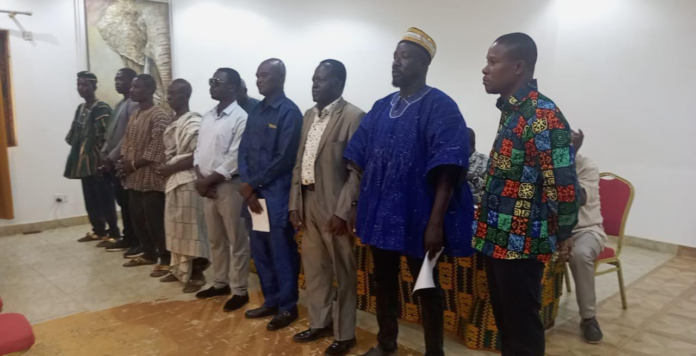
The National Peace Council (NPC) has inaugurated a nine-member Conflict Monitoring and Implementation Committee in the Nkwanta South Municipality of the Oti Region. This committee aims to strengthen ongoing efforts to restore peace and prevent a resurgence of violence in the area.
The new committee will oversee the implementation of conflict resolution strategies. It will also monitor the progress of interventions agreed upon by stakeholders. These actions are designed to ensure sustainable peace in the Nkwanta South Municipality.
This initiative is crucial for the Oti Region, which has experienced communal conflicts. Such conflicts often disrupt economic activities and displace residents. The region's stability is vital for its development and for the broader national peace agenda. Previous attempts to resolve these disputes have faced challenges, making this new committee's role even more significant.
Most Reverend Emmanuel Kofi Fianu, Chairman of the National Peace Council Board, inaugurated the committee. He acknowledged that past peace efforts had limited success. Most Rev. Fianu pointed to weak communication between community leaders and their people as a major setback. He emphasized the need for leaders to effectively communicate peace initiative outcomes to grassroots communities.
The committee's membership reflects a commitment to inclusivity. It brings together representatives from the Adele, Akyode, and Challa communities. These three groups are central to the conflict. The committee also includes members from Christian and Muslim communities, and the Oti Regional Peace Council. This broad representation is expected to enhance mutual trust and encourage collaboration among all stakeholders.
Peterkin Gyinae, Chairman of the Oti Regional Peace Council, expressed confidence in the committee's diverse representation. He believes it will foster greater trust and cooperation. Mr. Gyinae urged members to approach their responsibilities with openness, fairness, and impartiality. He warned against shielding individuals involved in violence or making unsubstantiated accusations.
The immediate commencement of the committee's work signals a serious commitment to addressing the Nkwanta conflict. Effective communication and inclusive representation are key to its success. The committee's ability to bridge communication gaps will be critical. It must ensure that peace messages reach all segments of the population. This effort is part of a larger national strategy to maintain peace and security across Ghana.
The long-term implications for the Nkwanta South Municipality are significant. A successful resolution could unlock economic potential and improve living conditions. It would also set a precedent for resolving similar conflicts in other parts of Ghana. Decision-makers and local communities will closely watch the committee's progress. Its effectiveness will determine the future stability of the region.