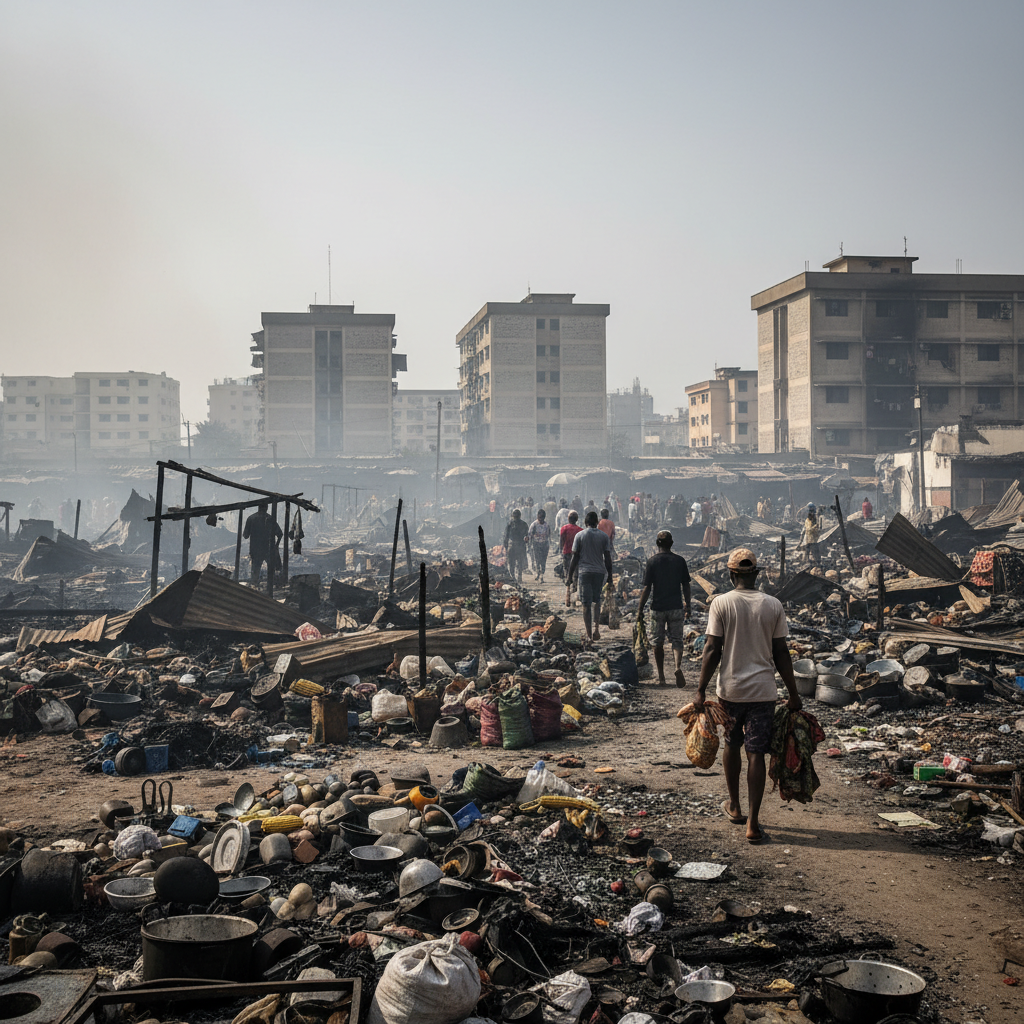
Ghana's National Disaster Management Organisation (NADMO) has formally registered 1,401 individuals as victims of a devastating fire. This fire ripped through parts of the Odawna Rubber Market in Accra. The registration exercise began on June 30, 2026, two days after the blaze.
The inferno erupted in the early hours of June 29, 2026, destroying several market structures. Heavy rainfall on June 28, 2026, caused severe flooding, delaying firefighters' access to the scene. These delays prolonged the fire's impact on traders' livelihoods. The majority of victims, 1,368, registered at a central point. Another 33 directly reported to the Korle Klottey NADMO office.
This market fire underscores the vulnerability of Ghana's informal sector to natural disasters. It highlights critical infrastructure deficiencies in key commercial hubs. Informal markets like Odawna contribute significantly to local economies and employment. The destruction disrupts supply chains and reduces household incomes for thousands. Data shows that small and medium-sized enterprises (SMEs) form a large part of Ghana's economy. They often lack adequate insurance or safety nets against such events.
NADMO stated the registration process is ongoing. The organisation confirmed that the figures allow the government to assess the full extent of the disaster's impact. Officials will cross-check registered victims with market leadership. This prevents duplication and ensures aid reaches only genuine beneficiaries. Such verification is crucial for the transparent allocation of potential relief packages.
The immediate implication is a demand for government and humanitarian agencies to provide timely relief. Affected traders will require financial assistance and support to rebuild their businesses. This event also renews calls for improved urban planning and disaster preparedness. Authorities must address market infrastructure and emergency access routes. Future policies may focus on flood prevention and fire safety measures in dense market areas. Decision-makers will closely monitor NADMO's relief efforts and the long-term recovery of affected traders.