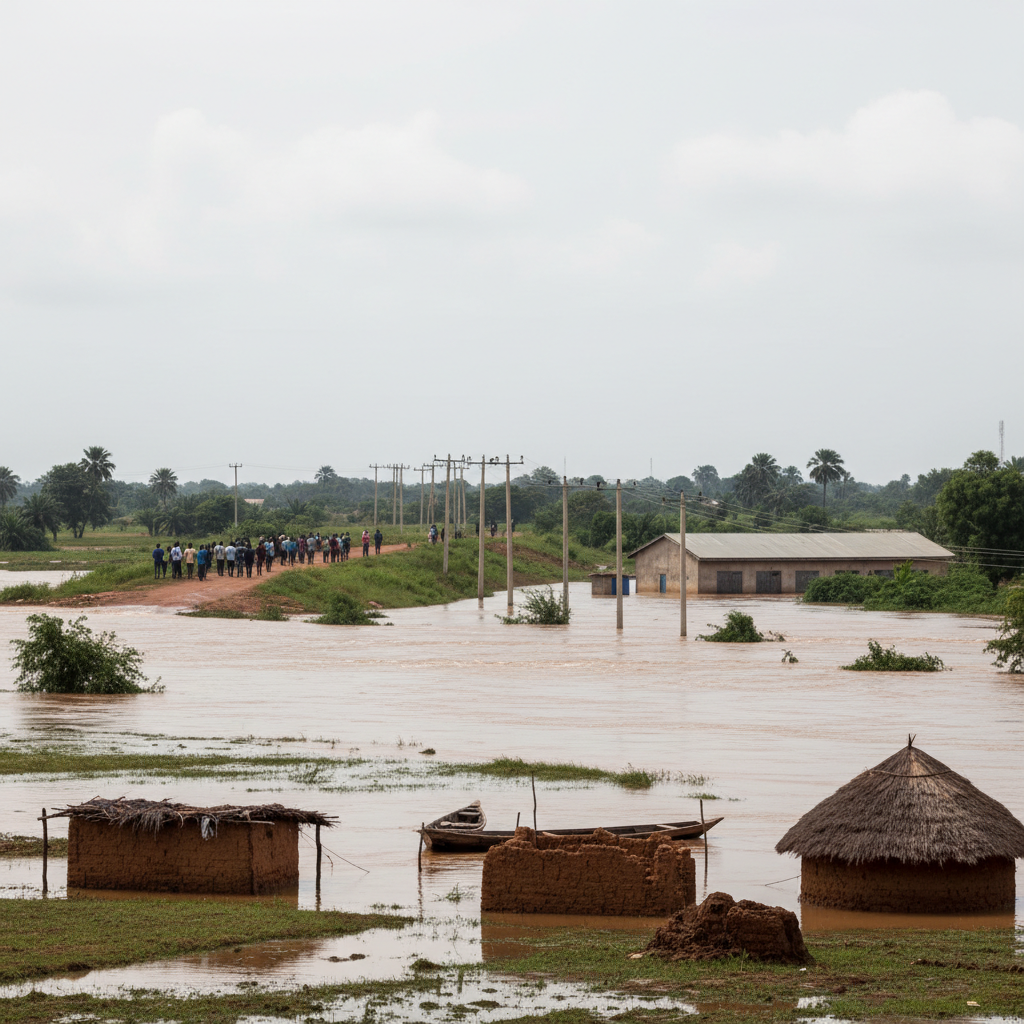
The National Disaster Management Organisation (NADMO) has warned residents near the Nawuni River in the Northern Region about a rising flood risk. Water levels at the Nawuni intake reached 23.85 feet on August 23, placing them within the critical flood range of 20 to 30 feet.
This significant water level increase raises the likelihood of the White Volta overflowing its banks. Communities and farmlands in the Kumbungu District face an elevated threat, particularly if more rainfall occurs. The situation could worsen dramatically with any spillage from the Bagre Dam in Burkina Faso.
Ghana's Northern Region frequently experiences flooding, which disrupts livelihoods and agricultural output. Major floods in past years have displaced thousands and caused extensive damage to crops and infrastructure. This recurring challenge highlights the region's vulnerability to climate change and upstream water management decisions. The economic impact of such events often includes lost income, increased food prices, and strain on public resources for relief efforts.
Chief Disaster Control Officer, Iddrisu Abubakari Ziblim, confirmed NADMO is closely monitoring the situation. He stated, “For now, the situation is okay,” but cautioned about the Bagre Dam. Burkina Faso’s national electricity company, SONABEL, operates the dam. Any spillage from the Bagre Dam could significantly worsen the flood risk across the Northern Region.
NADMO expects notification from SONABEL regarding any spillage date and time. Floodwaters from the dam typically reach the Northern Region within seven days after spillage. The organisation has conducted continuous pre-flood monitoring and public sensitisation since August 4. This early alert came from SONABEL through the Water Resources Commission.
In preparation, NADMO has pre-positioned a Rapid Response Team in Walewale, North East Region. This team will support emergency response and evacuation operations if the situation deteriorates. Residents in vulnerable communities must remain alert and follow official instructions as water levels are continuously monitored. The potential for widespread displacement and agricultural losses remains a significant concern for the regional economy.
The government and aid agencies will likely need to allocate substantial resources for relief and recovery if severe flooding occurs. This could divert funds from other development projects. Farmers, who form a large part of the region's economy, face immediate threats to their crops and livestock. Businesses dependent on local agriculture or transport routes could also suffer. The long-term implications include food insecurity and slower economic growth in affected areas. Therefore, continuous vigilance and preparedness are crucial for mitigating these economic and social impacts.