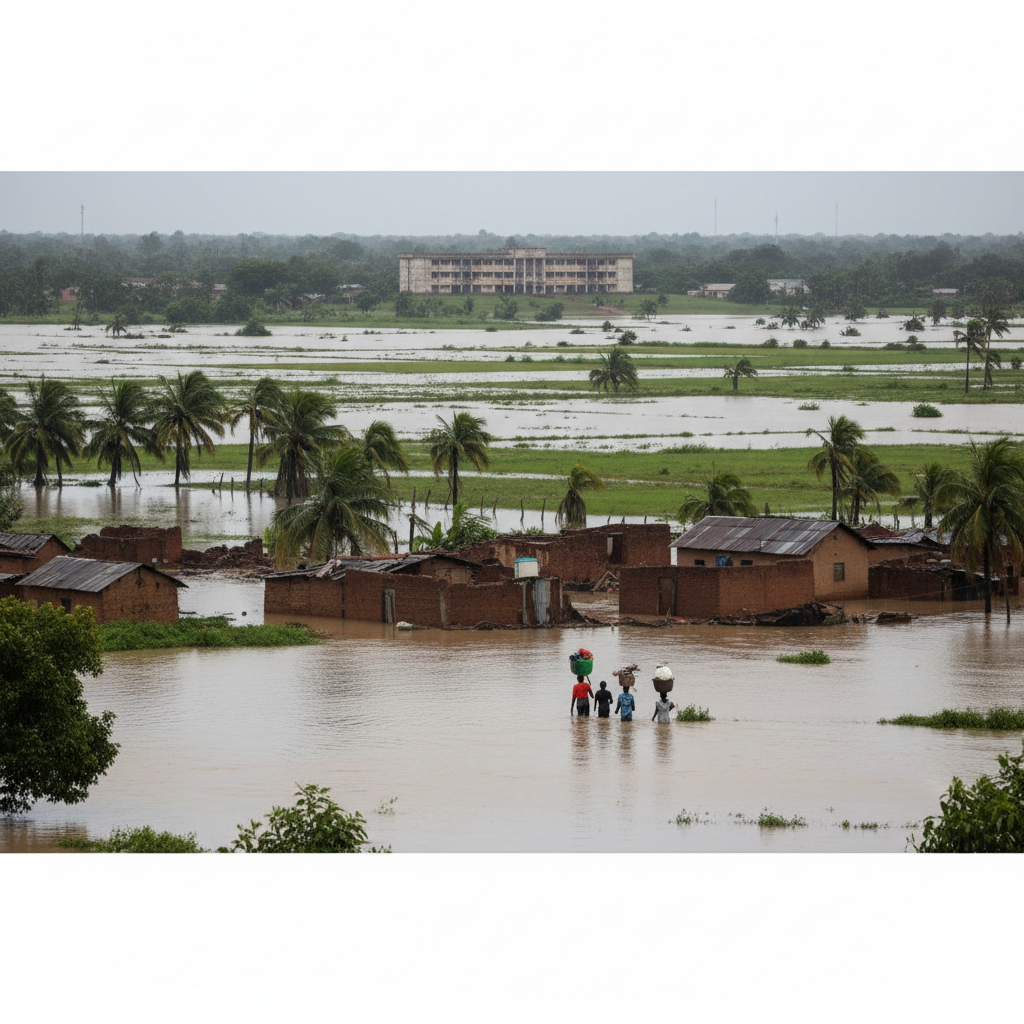
Widespread flooding has ravaged communities across the Keta constituency, submerging homes and destroying farmlands. Keta Member of Parliament, Dzudzorli Kwame Gakpey, has called for immediate and urgent intervention to address the crisis. Mr Gakpey described the current floods as among the worst experienced in the area in recent years.
The devastation is extensive, with many residents still living in water-logged houses. Large portions of farmland, especially in the Shime area, have been washed away. This has severely disrupted livelihoods for many families in Klovi, Anloga, Afiadenyigba, and Keta. The impact also extends to neighbouring constituencies like Anloga, Ketu South, Ketu North, and Akatsi.
This recurring flooding fits into a broader pattern of environmental challenges in Ghana's coastal regions. Data often highlights how coastal communities are vulnerable to rising sea levels and altered weather patterns. Human activities, particularly indiscriminate waste disposal and certain salt mining operations, have exacerbated the problem. These actions block natural water channels, hindering the proper drainage of rainwater into the sea. This ecological imbalance threatens both human settlements and the aquatic ecosystems that local economies depend on.
“We have been having flood issues in the constituency, but this one is very devastating. We haven't seen this magnitude before,” Mr Gakpey stated. He noted that the entire constituency is besieged by both rainwater and lagoon overflow. The MP emphasized the urgent need for a change in behavior regarding waste management. He also stressed the importance of desilting blocked waterways and restoring environmental health.
Emergency measures are now in motion, involving local authorities and stakeholders. Mr Gakpey confirmed engagement with Municipal Chief Executives and the Regional Minister. Equipment from Amandi is being used to cut a sandbar at Kedzi, which will allow water from the lagoon to flow freely into the sea. This intervention aims to reduce pressure on affected communities and help restore the natural balance of the ecosystem. It also seeks to protect vital aquatic resources, such as fish, crabs, and shrimps, which support local livelihoods.
Initially, some residents expressed concerns about opening the control gate due to potential impacts on fishing. However, Mr Gakpey explained that prioritizing lives, homes, and critical infrastructure, including bridges and roads, is essential. He assured residents that measures would be put in place to regulate water flow. This regulation will minimise any negative impact on economic activities. The National Disaster Management Organisation (NADMO) is also engaging with local officials to provide relief assistance.
Beyond immediate relief, long-term solutions are crucial. These include dredging the lagoon, clearing blocked waterways, and restoring natural tributaries. Such investments are necessary to prevent perennial flooding. Without these interventions, the economic and social stability of Keta and surrounding communities will remain at risk. The market for aquaculture and fishing, a significant part of the regional economy, could suffer devastating losses without sustainable flood management.