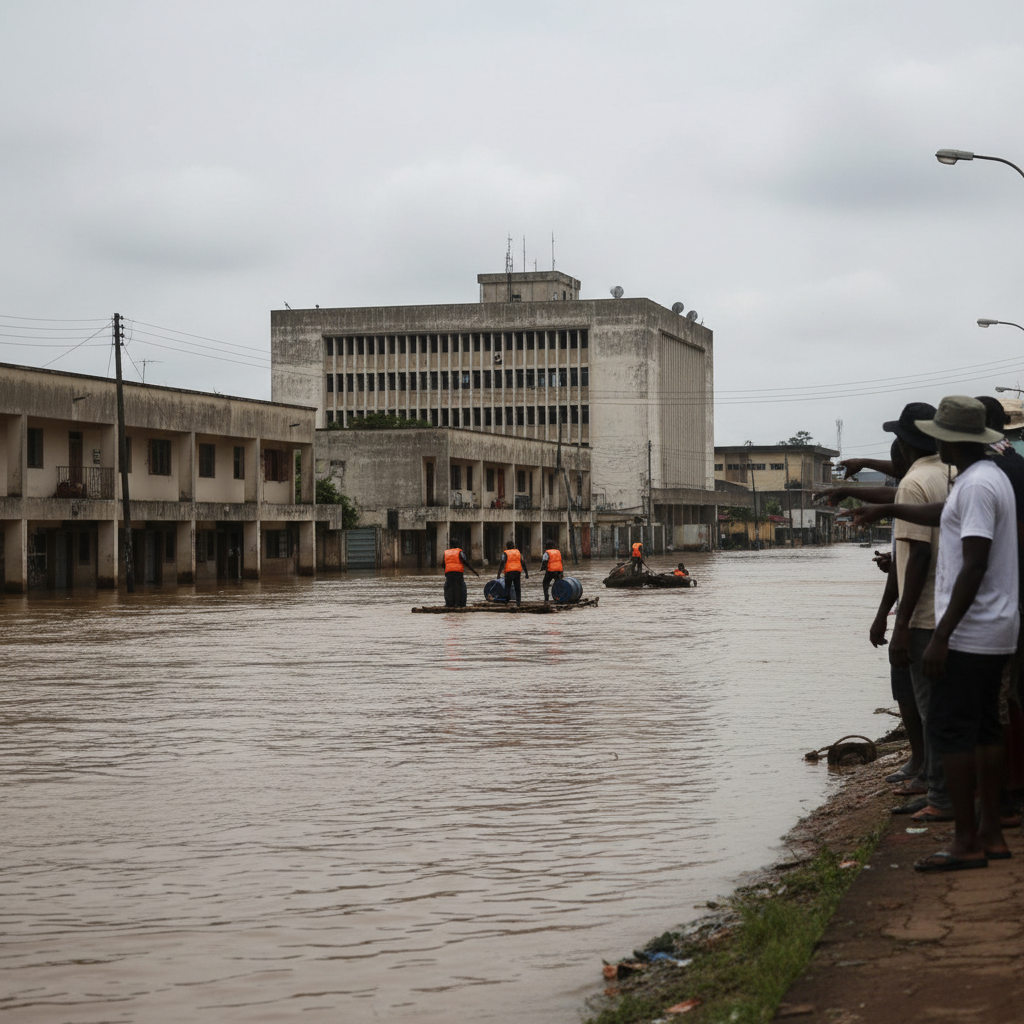
Greater Accra Regional Minister Linda Obenewaa Akweley Ocloo has directed all Metropolitan, Municipal, and District Chief Executives (MMDCEs) to intensify rescue operations following widespread flooding. This directive came after Monday's heavy rains on June 27, 2026, caused significant disruption across the region. MMDCEs must immediately deploy emergency response teams, including personnel from the National Disaster Management Organisation (NADMO).
These teams will evacuate residents trapped by floodwaters and assess conditions on the ground. They will also provide immediate relief to affected households. The Minister expressed deep sympathy to residents affected by the floods. She assured them that the government and emergency agencies are actively working to provide assistance.
Frequent flooding in Accra poses a significant economic challenge for Ghana. The capital city often suffers infrastructure damage, leading to business interruptions and displacement of people. Data from the World Bank indicates that urban flooding costs African cities, including Accra, billions of dollars annually in lost productivity and damage. This highlights the urgent need for sustainable drainage solutions and improved urban planning.
Minister Linda Obenewaa Akweley Ocloo stated, "My heart goes out to all individuals and families who have been affected by this unfortunate incident. I sincerely sympathise with those who have suffered losses, displacement and other hardships." She further assured, "We stand with you during this difficult period." This statement underscores the government's commitment to supporting affected communities.
The current directive signals a reinforced effort to mitigate the immediate impacts of these natural disasters. Decision-makers and markets will closely watch the effectiveness of these intensified rescue and relief operations. The Ghana Meteorological Agency has forecast more rainfall, making continued vigilance crucial for residents and authorities. Effective disaster management and infrastructure resilience remain critical for Accra's economic stability.
The severe flooding has already led to the University of Ghana suspending lectures, affecting thousands of students. Businesses along key routes, like Caprice–Circle, have also faced operational challenges due to submerged areas. This widespread disruption highlights the substantial economic consequences of inadequate flood control. Addressing these issues requires significant investment in infrastructure and proactive urban development strategies. The government's response will be key to minimizing future economic losses.
MMDCEs are expected to remain fully engaged until the flooding situation is under control. This requires decisive leadership and swift action on the part of local authorities. Collaboration between the Greater Accra Regional Coordinating Council, NADMO, the Ghana National Fire Service, and the Ghana Police Service is vital. This coordinated effort aims to protect lives and property across the affected communities. Residents have been advised to remain vigilant and report emergencies to NADMO.