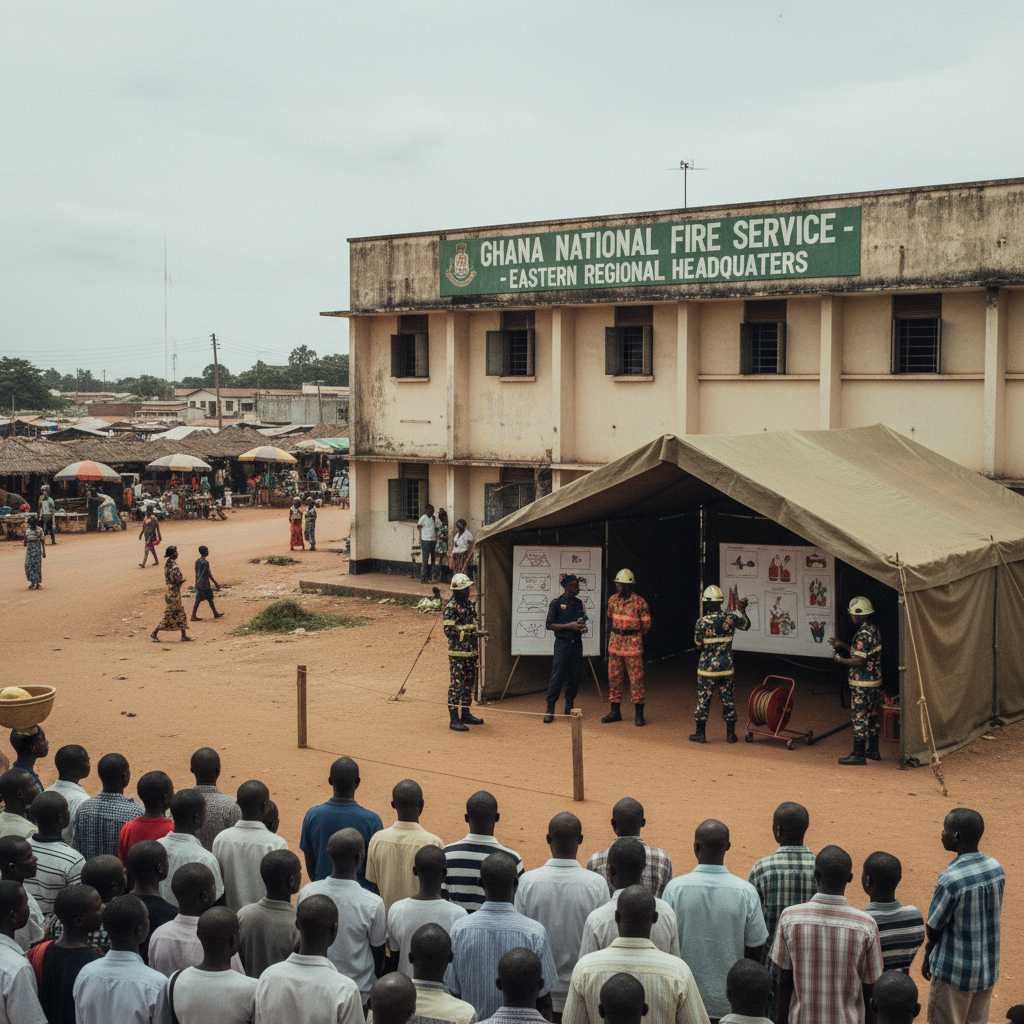
The Ghana National Fire Service (GNFS) has intensified its fire safety education campaigns across communities in the Eastern Region. This initiative aims to reduce fire outbreaks and promote public awareness on prevention measures. Fire service personnel are engaging residents and business owners on crucial safety practices.
This intensified effort comes as part of a broader strategy to mitigate the economic and social costs associated with fire incidents. Uncontrolled fires can lead to significant property damage, loss of livelihoods, and even fatalities, impacting local economies and public safety. The campaigns focus on practical steps individuals and businesses can take to prevent such occurrences.
Ghana's economy, particularly in regions like the Eastern Region, relies heavily on small and medium-sized enterprises (SMEs) and agricultural activities. Fire outbreaks can devastate these sectors, leading to job losses and reduced economic output. Previous data indicates that fire incidents often peak during dry seasons, highlighting the need for continuous public education and preparedness.
Personnel from the Anyinam Fire Station, for example, engaged residents and shop owners in Akyem Anyinam. They provided education on fire prevention, emergency response, and the safe use of fire extinguishers and liquefied petroleum gas (LPG). The team specifically cautioned the public against unsafe practices, including illegal electrical connections, overloading of sockets, and improper storage of flammable materials. Residents were also encouraged to report fire incidents promptly and obtain fire permits before undertaking construction projects.
At Nkawkaw Amanfrom, the Visibility Team of the Nkawkaw Fire Station conducted a doorstep campaign. This campaign targeted shop owners, traders, food vendors, and mobile money operators. The engagement focused on basic fire safety practices, emergency response measures, and ways individuals and businesses can minimise fire risks. These targeted efforts ensure that specific community groups receive relevant safety information.
Meanwhile, the Aduamoa Fire Station, led by Leading Fireman (LFm) Debrah, educated residents, construction workers, and traders at the Kwahu Tafo Bokoruwa Roundabout. Their focus included LPG safety, agrochemical handling, electrical safety, good housekeeping, and basic emergency response. The GNFS reported high public participation in these exercises, with many residents demonstrating improved awareness of fire prevention measures and committing to adopt safer practices. Participants were also encouraged to keep fire extinguishers where necessary and promptly report fire outbreaks to the GNFS to enable quick response and minimise damage.
The GNFS's proactive approach is critical for public safety and economic stability. By reducing fire incidents, the service helps protect property, preserve businesses, and prevent injuries or deaths. This ongoing education will likely lead to fewer fire-related losses, contributing positively to the region's overall economic resilience. Continued vigilance and adherence to safety guidelines will be crucial for sustaining these improvements.