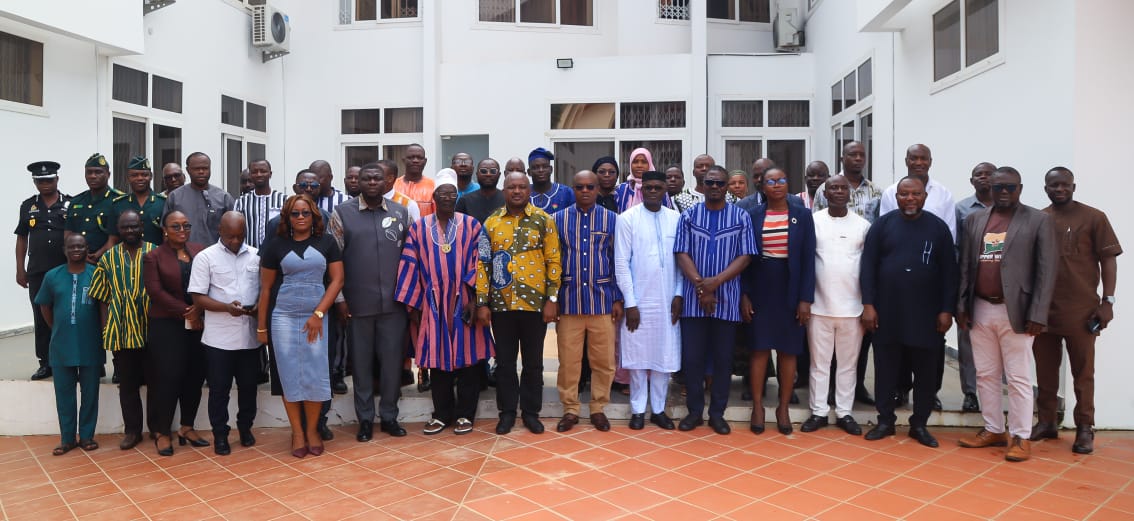
Ghana has commenced a week-long series of meetings with Burkina Faso and Côte d’Ivoire. These engagements are taking place in Wa, located in Ghana's Upper West Region. The primary goal is to harmonise and validate the legal framework for establishing Local Groups for Cross-Border Cooperation (LGCBCs).
This initiative seeks to strengthen cooperation and promote dialogue among border communities. It also aims to facilitate joint action between local-level actors along the common boundaries. The Ghana National Boundary Commission’s Corporate Affairs Unit stated this objective.
The establishment of LGCBCs fits into a broader regional strategy for economic integration and stability. These groups will create robust and sustainable local structures between targeted cross-border districts. This effort reflects a commitment to translating high-level bilateral agreements into tangible community benefits. Such cooperation is vital for regional trade and security, especially in border areas.
Mr. Frederick Somuah Obeng, Deputy Commissioner General of the Ghana Boundary Commission, opened the first bilateral session. He explained that the cooperation framework will improve resilience in border communities. It will also foster shared socio-economic development. Furthermore, it provides a platform for local authorities and security agencies to address challenges jointly. They can also identify opportunities for mutual growth.
Mr. Obeng stressed the potential of LGCBCs. He stated they can become important platforms for identifying common challenges. They can also develop joint solutions and strengthen community resilience. These groups will promote local development and deepen social cohesion among border communities. This applies to both sides of the common boundary.
The Upper West Regional Minister co-chaired the meeting. He urged participants to contribute actively. He described the bilateral validation phase as critical. This phase is essential for establishing sustainable cross-border cooperation. Such cooperation can unlock new avenues for local economies.
Camarade Siaka Baro, Governor of the Djoro Region and leader of the Burkina Faso delegation, expressed appreciation. He thanked the Ghana Boundary Commission and Burkina Faso’s National Boundary Secretariat. He also acknowledged the political leadership of both countries for their commitment. This commitment aims to strengthen cooperation.
Mr. Mamoudou Tapily, West Africa Regional Coordinator of the African Union Border Programme Support Project, highlighted the importance of LGCBCs. He called them powerful institutional levers. These levers grant legal personality and capacity for direct action to neighbouring local authorities. This empowers local governance and economic initiatives.
The success of the workshop depends on participants’ technical rigour. It also requires a spirit of conciliation and a shared vision of cross-border cooperation. This collaborative approach is crucial for effective implementation. The initiative is expected to boost local economies through improved trade and shared resources. It will also enhance security through coordinated efforts.
The formalisation of these groups could lead to more structured cross-border trade. It could also facilitate joint infrastructure projects. These projects might include roads, markets, and shared services. Such developments would directly benefit residents in the Upper West Region and adjacent areas. This strategic move aims to create a more integrated and prosperous border region for all involved nations.