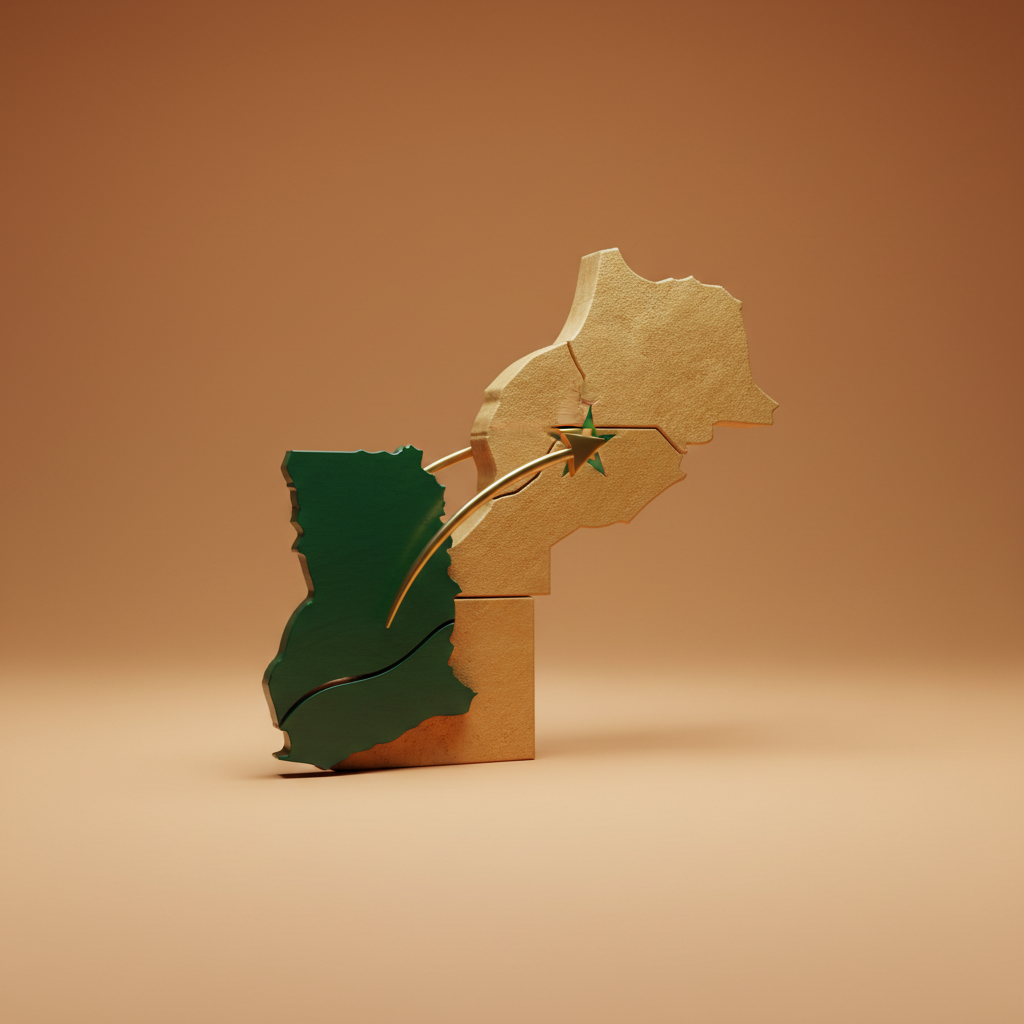
Ghana has officially declared its support for Morocco's autonomy plan as the only realistic and lasting foundation for resolving the Sahara issue. This significant diplomatic position emerged from a Joint Communiqué issued after talks in Accra between Ghana's Minister of Foreign Affairs, Samuel Okudzeto Ablakwa, and Morocco's Minister of Foreign Affairs, African Cooperation and Moroccan Expatriates, Nasser Bourita, on Tuesday.
The communiqué highlighted Ghana's view that the autonomy plan offers a mutually acceptable solution to the long-standing dispute. This endorsement follows a working visit by Minister Bourita to Ghana, where he co-chaired the second session of the Joint Cooperation Committee with his Ghanaian counterpart. The discussions underscored a deepening of strategic partnership between the two African nations.
Ghana's stance also welcomed the adoption of UN Security Council Resolution 2797. This resolution expresses full support for the UN Secretary-General and his Personal Envoy in facilitating negotiations based on Morocco’s autonomy proposal. The goal is to achieve a just, lasting, and mutually acceptable resolution in line with the United Nations Charter. This aligns Ghana with international efforts to find a peaceful resolution.
This reaffirmation by Ghana's head of diplomacy fits within a continuous international momentum driven by King Mohammed VI of Morocco. The King has actively promoted the autonomy plan and the Kingdom’s sovereignty over its Sahara territory. This diplomatic push has seen several nations express similar support, contributing to a broader international consensus.
The decision by Ghana carries significant weight in regional diplomacy and could further solidify Morocco's position on the Sahara issue. It signals a potential shift in the diplomatic landscape surrounding the dispute, encouraging other African nations to consider similar endorsements. This move also strengthens Ghana's bilateral relations with Morocco, potentially leading to increased cooperation in various sectors.
Ghana's foreign policy has historically sought to promote peace and stability across the African continent. This endorsement reflects a pragmatic approach to resolving complex regional conflicts through dialogue and mutually agreeable solutions. The focus on an autonomy plan, rather than other options, suggests a belief in its viability for long-term peace.
The implications extend beyond the immediate diplomatic statement. Enhanced cooperation between Ghana and Morocco could lead to economic benefits, including trade and investment opportunities. Both countries are key players in West Africa, and a stronger alliance could foster greater regional integration and stability. This diplomatic alignment is a development to watch for its broader impact on African geopolitics.
The joint statement did not specify any immediate economic figures or direct financial implications. However, the strengthening of diplomatic ties often precedes or accompanies increased economic engagement. The 11 accords signed between Ghana and Morocco earlier indicate a broader intent to deepen strategic partnership. This diplomatic move is a foundational step for future collaborations.