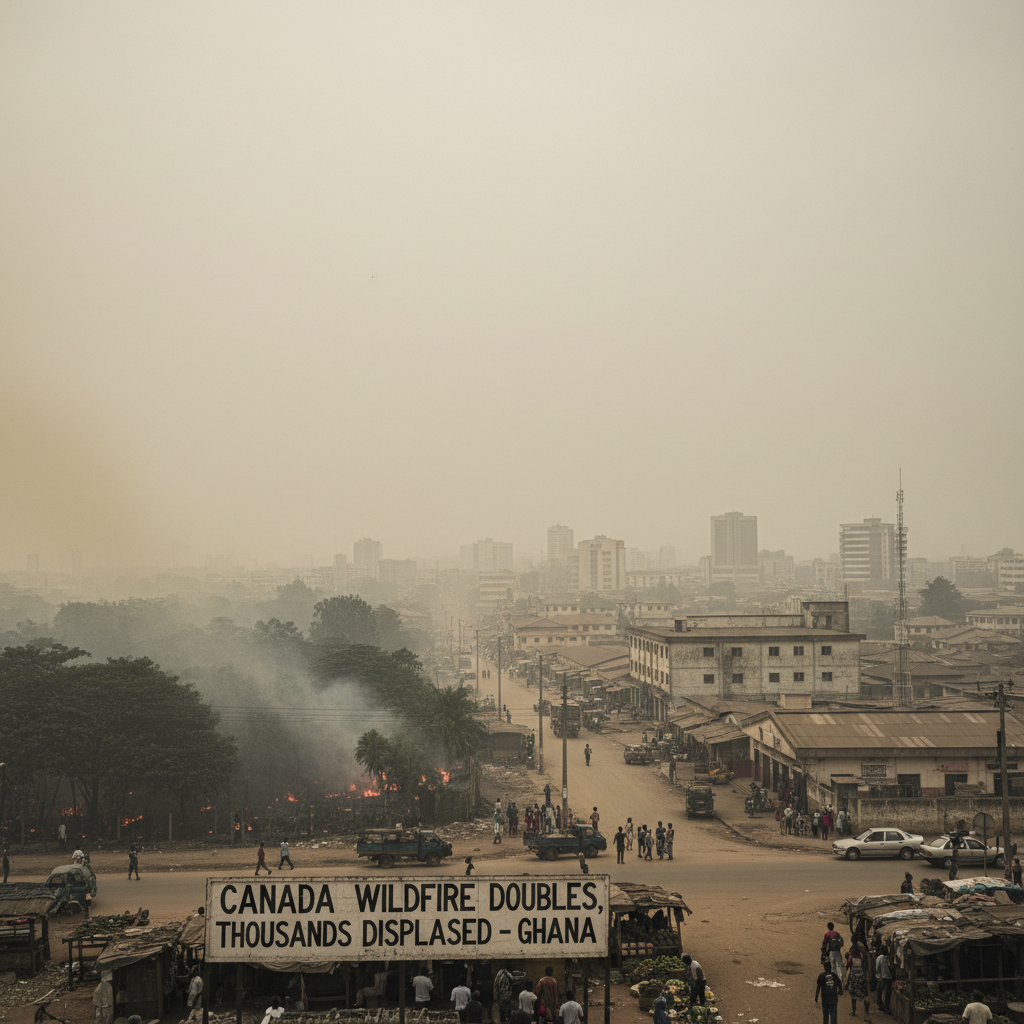
A fast-moving wildfire in western Canada has doubled in size since Friday, forcing thousands of residents to flee their homes. The Bald Range fire now covers more than 95 square kilometers across the Summerland and Okanagan-Similkameen districts of British Columbia.
Emergency officials have described this as one of the "quickest-moving, largest fires in such a short time" in the fire-prone region. The fire remained "out of control" as of Saturday morning. This rapid expansion has led to widespread evacuation orders and power outages, significantly disrupting local communities.
This incident fits into a broader pattern of increasing wildfire activity across Canada. Hundreds of wildfires have raged across the country this summer. In July, nearly 200 fires burned in Ontario alone, causing air quality in Toronto to reach some of the worst levels globally. These events underscore the growing environmental and economic challenges posed by climate change in Canada.
Erick Thompson, an emergency official with the Regional District of Okanagan-Similkameen, highlighted the fire's unprecedented speed. He stated that he had to leave the emergency operations centre to evacuate his own family. This personal account underscores the severity and immediate threat posed by the blaze to residents.
The immediate implication is continued displacement and potential property damage for affected communities. Decision-makers will focus on containing the fire and supporting evacuated residents. The long-term implications include increased pressure on emergency services and a need for enhanced wildfire prevention strategies. The economic impact will include costs for firefighting, rebuilding, and potential losses in tourism and agriculture.
The district of Summerland, with a population of around 12,000, received an evacuation order. Hundreds of residents in care facilities, including senior housing, were relocated to safer areas. The nearby districts of Okanagan, Peachland, and Okanagan-Similkameen also issued evacuation orders or alerts. Power outages affected the entire area, according to officials.
BC Premier David Eby acknowledged the tireless efforts of first responders and emergency teams. He stated that they "continue to do everything possible to protect people and communities." The full extent of structural damage from the blaze is not yet clear. This situation demands a coordinated response from various levels of government and emergency services.
The broader economic impact of such wildfires extends beyond immediate damage. Smoke from Canadian wildfires has previously drifted into parts of the United States, affecting air quality in cities like Minnesota and New York. Such environmental events can have cross-border economic and health implications. The frequency and intensity of these fires are a significant concern for Canada's economy and public health.
Local residents in Okanagan faced challenges evacuating animals, particularly horses. Some owners left gates open hoping animals would find safety, while others marked their animals for later identification. This highlights the personal and logistical difficulties faced by those in affected areas. The ongoing wildfire season presents a substantial challenge for Canada's disaster preparedness and response systems.