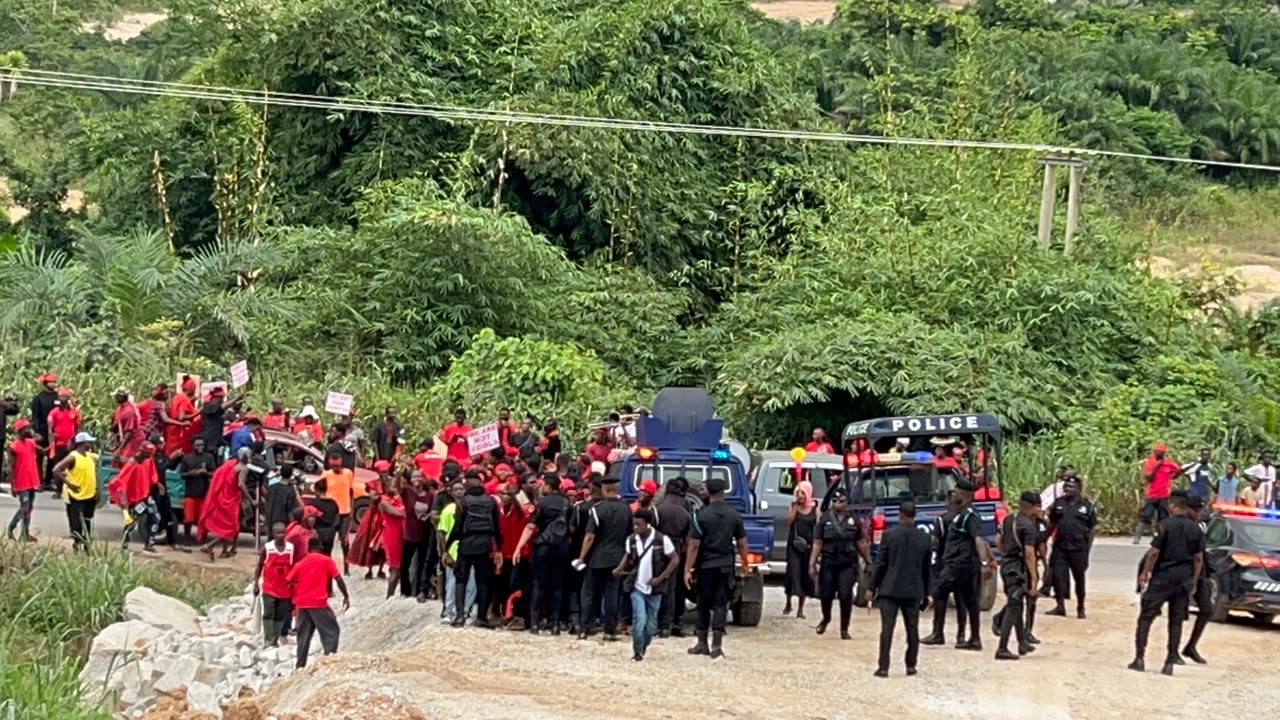
Hundreds of residents from four communities in the Bekwai Municipality of the Ashanti Region have staged a demonstration against Day Shine Quarry. They allege the company's operations cause significant damage to property and pose serious health risks. The protest involved residents from Amoamo, Anwiam, Adankragya, and Amenase, who wore red and black to signify their distress.
The demonstrators claim the quarry's activities have destroyed farms, buildings, and other household properties. They also state that affected residents have not received any compensation for these alleged damages. Nhyiraba Abigail, the Assembly Member for the Adankragya Electoral Area, led the protest. She highlighted the constant blasting, which has left cracks in buildings and rendered farmlands unproductive. She also noted the excessive dust from operations, which poses serious health risks and contributes to respiratory illnesses.
This protest reflects a broader national challenge of balancing industrial growth with environmental protection and community welfare. Ghana's mining and quarrying sectors are vital for economic development, contributing significantly to the nation's Gross Domestic Product (GDP). However, such operations often lead to environmental degradation and social conflicts if not managed responsibly. Similar disputes have arisen in other regions, underscoring the need for stricter regulatory oversight and corporate accountability.
Nhyiraba Abigail confirmed that previous complaints to the company and relevant authorities, including the former local assembly administration, yielded no meaningful results. She called on Day Shine Quarry management to suspend operations immediately. She demanded they engage with affected communities within one week, warning of further protests if they fail to comply. A representative from Day Shine Quarry, Isaac Padi, received the residents' concerns and promised steps to address the issues.
The Bekwai Municipal Assembly and the Adankragya Traditional Council also received the petition. They assured residents that measures would be taken to protect their health and the environment. This situation underscores the importance of effective grievance mechanisms and corporate social responsibility. The intervention of traditional leaders, such as the Asantehene, Otumfuo Osei Tutu II, is often sought in such disputes. Their involvement can help mediate conflicts and ensure fair outcomes for affected communities. This incident will likely prompt closer scrutiny of quarrying permits and environmental impact assessments in the region.