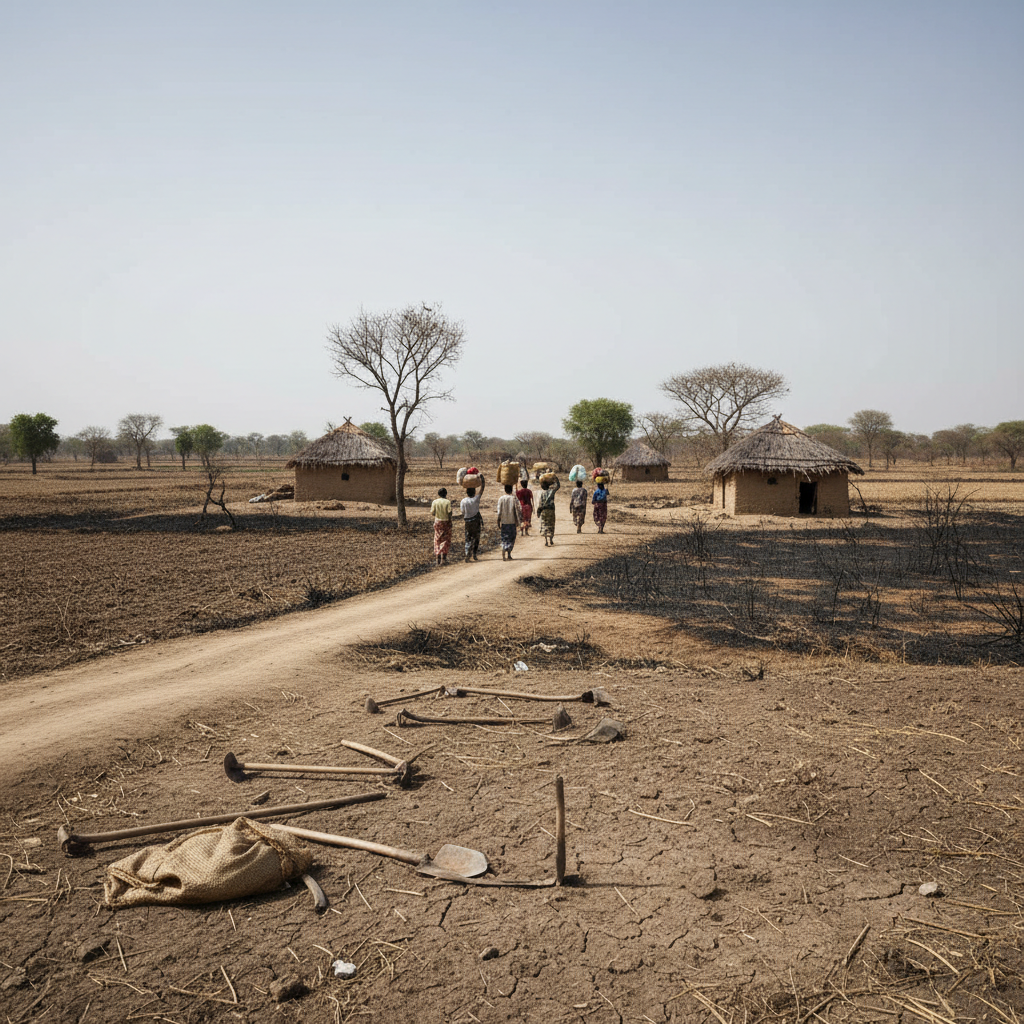
Armed bandits riding motorcycles killed at least 24 farmers and wounded several others in an attack on remote farming villages in northwest Nigeria's Zamfara state. Residents reported the incident to Reuters on Thursday, detailing a violent assault that occurred on Tuesday afternoon.
The attackers stormed communities in the Sauna district of the Talata Mafara local government area around 1300 GMT. They opened fire on people working on their farms, causing significant casualties. This act of violence severely impacts the agricultural sector in the region, which is a primary source of livelihood for many.
This incident fits into a broader pattern of insecurity plaguing Nigeria's northwest. Armed gangs, locally known as bandits, frequently raid villages, kidnap residents for ransom, and steal livestock. These activities disrupt economic life, displace communities, and undermine food security across several states, including Zamfara.
Resident Auwal Sani confirmed the fatalities, stating, "They killed at least 24 innocent farmers. We are still counting the losses." Another resident, Bello Aliyu, noted the attack lasted about three hours. He added that the bandits rustled an unspecified number of livestock, leaving several wounded individuals receiving medical treatment.
The gunmen reportedly travelled nearly 50 kilometres along the Mayanchi-Anka highway, a key trade route, before reaching Sauna. They encountered no security forces during their journey or the attack. This raises concerns about the effectiveness of security measures in protecting vulnerable rural communities and vital economic corridors.
The ongoing security crisis in Zamfara state has profound economic implications. Farmers, who are the backbone of the local economy, face constant threats, leading to reduced agricultural output. This reduction can contribute to food shortages and increased prices, affecting both local markets and the broader Nigerian economy.
Furthermore, the disruption of key trade routes by bandit activities impedes the movement of goods and services. This increases transportation costs and reduces market access for farmers and traders. The lack of security also deters investment in the region, hindering economic development and job creation.
The government's ability to ensure the safety of its citizens and protect economic activities remains a critical challenge. International organisations and economic analysts frequently highlight insecurity as a major impediment to Nigeria's economic growth. Addressing this issue is crucial for stabilising the region and fostering sustainable development.
What happens next will depend on the response from Nigerian security forces and government authorities. Increased security presence and more effective intelligence gathering are vital to prevent future attacks. Decision-makers will need to address the root causes of banditry, including poverty and lack of opportunities, to achieve lasting peace and economic stability in the northwest.