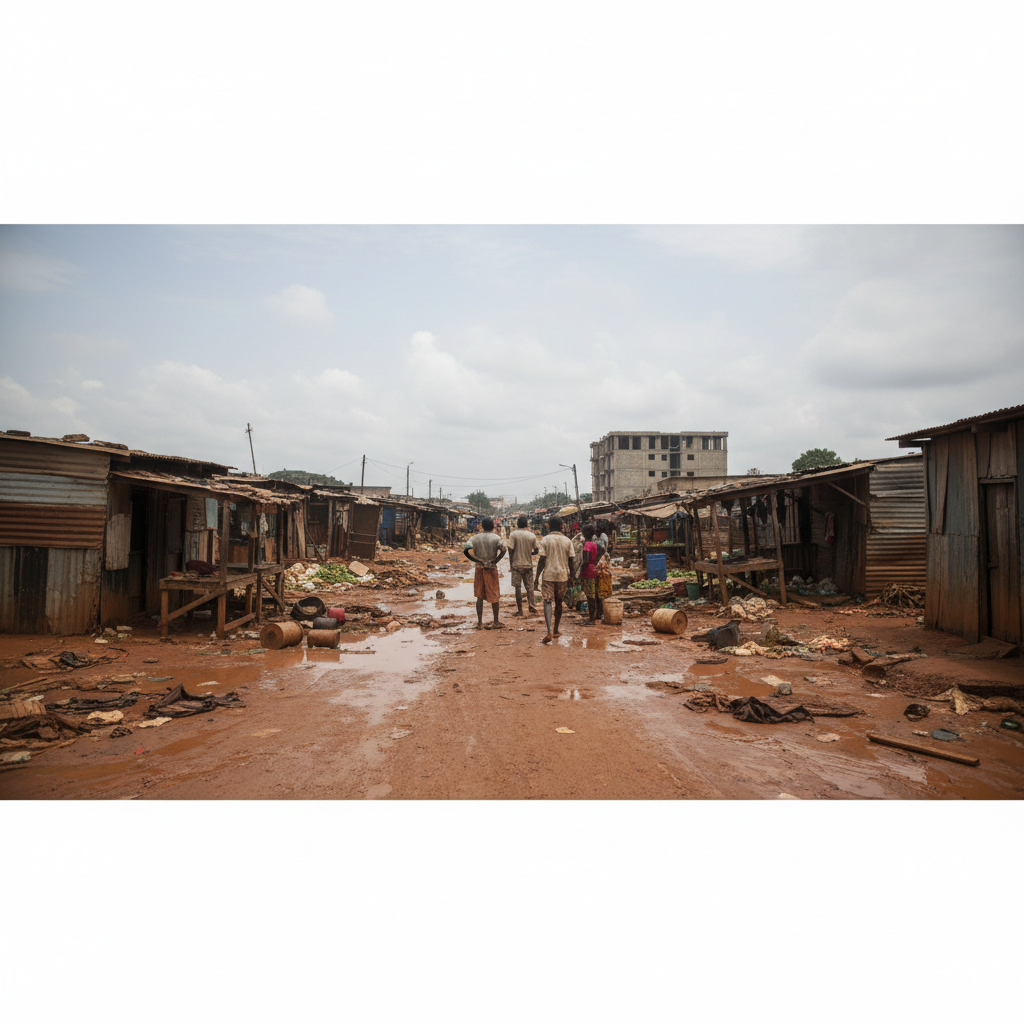
Dozens of residents in Avenor, Accra, continue to face harsh living conditions and sleepless nights, with no assistance nearly a week after the devastating floods on Monday, July 1, 2026. These families remain stranded in mud-filled homes, lacking essential items like bedding, mosquito nets, food, and any meaningful relief support. The situation highlights a severe gap in immediate disaster response.
Many victims, including women and children, lost virtually all their belongings during the intense flooding. They are forced to sleep on rubber mats laid directly on cold, muddy floors as they struggle to clean their homes. The rapid rise and intensity of the floodwaters prevented them from salvaging personal possessions, leaving many with nothing. This displacement disrupts daily life and poses significant health risks for the vulnerable.
This lack of immediate post-disaster aid in Avenor reflects broader challenges in Ghana's urban flood preparedness and response. Accra frequently experiences severe flooding, leading to significant economic losses and displacement. The absence of timely intervention for affected communities impacts livelihoods and exacerbates social inequalities. Data consistently shows that vulnerable populations bear the brunt of these recurring climatic events.
A resident, speaking to JoyNews, described the impossible living conditions. "With the room conditions, we are not able to sleep," the resident said, highlighting the pervasive mud and cold. Another resident lamented the complete loss of items, stating, "Since Monday, we've not received any form of help. We’ve lost a lot of items. You just have to leave everything behind and run for your life." These direct accounts underscore the severity of their plight.
The floods have not only displaced families but also severely disrupted children's education and parents' livelihoods. Many children cannot attend school because their uniforms and school materials were destroyed. Parents must now choose between finding food, replacing essential household items, or trying to send their children back to school. This creates a difficult cycle of recovery for affected households.
Affected residents are urgently appealing for immediate assistance from government agencies like NADMO, benevolent individuals, and corporate organizations. They specifically request food, bedding, mosquito nets, clothing, and temporary shelter. Support for clearing damaged items and rebuilding their homes is also critical to restarting their lives. Without this aid, communities face a prolonged period of hardship and uncertainty.
The ongoing struggle for survival was evident late Thursday night, when several affected residents remained outside their homes, uncertain about where they would sleep. JoyNews' Naa Morkor reported from the scene, noting the severe humanitarian crisis. "It’s already past 11 p.m., and residents in this house are already outside thinking of where to sleep tonight," Morkor stated. The lack of basic needs poses a significant public health risk as well as an economic burden on the affected families.
The continued neglect of these essential needs increases the long-term economic and social costs of the disaster. Prompt and coordinated relief efforts are crucial to mitigating further suffering and enabling community recovery. The government's planned nationwide flood recovery operations, including drain-clearing exercises, must integrate rapid humanitarian aid for affected individuals. This proactive approach supports both immediate relief and long-term resilience against future flood events.