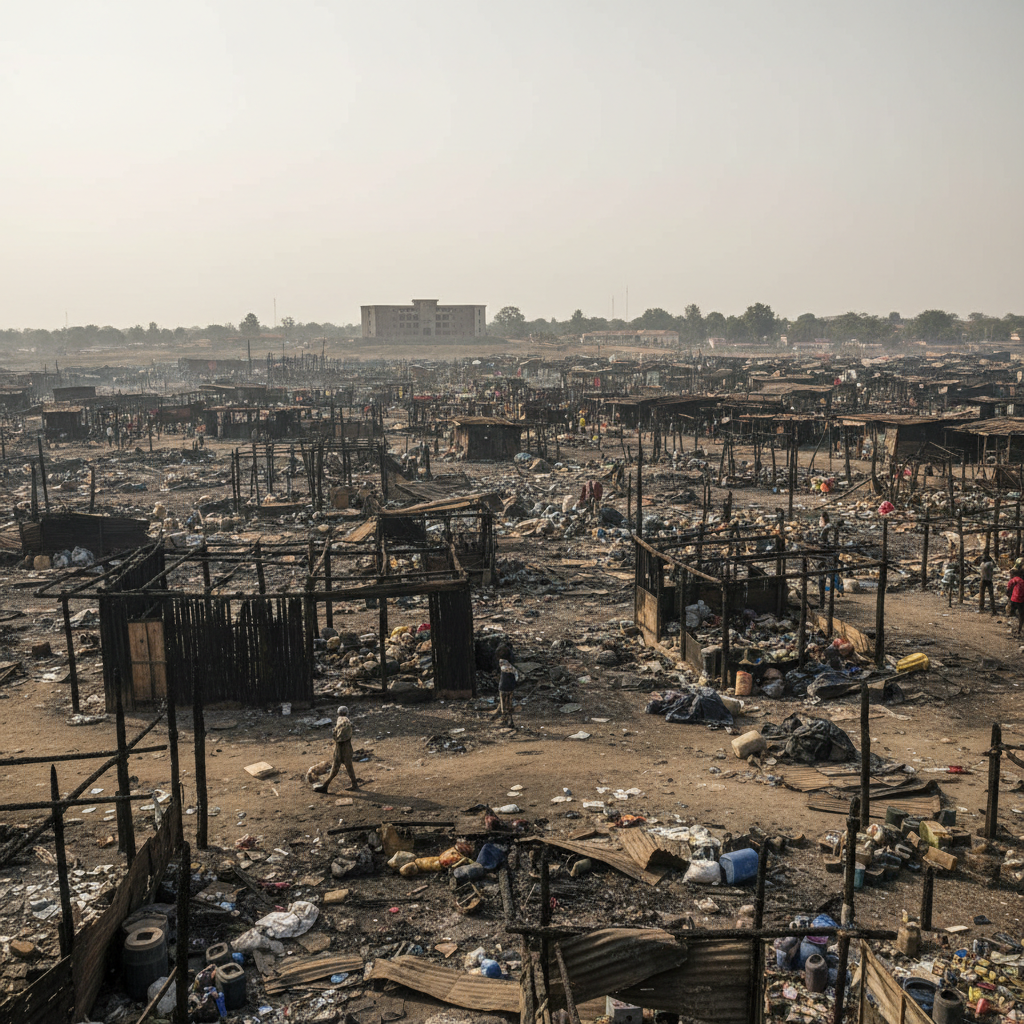
A fire outbreak on Thursday, August 27, 2026, destroyed approximately 300 wooden structures in Asawase, located in the Asokore Mampong Municipality of the Ashanti Region. This incident displaced numerous families and resulted in significant property damage, including homes, shops, and personal belongings.
The blaze, which started in the early hours, caused a provision store owner to lose goods valued at GHS 60,000. This substantial loss highlights the immediate economic impact on affected individuals and small businesses. While no casualties were reported, the destruction of so many structures represents a major setback for the community.
This event underscores the persistent challenges of urban planning and informal settlements in Ghana. Densely packed wooden structures, often lacking proper access routes, increase fire risks and hinder emergency response. Such incidents frequently lead to significant economic disruption and humanitarian crises in urban centres across the country.
DO III Wikana Daniel, the Fire Commander for Asokore Mampong, confirmed that firefighters faced difficulties accessing the affected area. He stated that the wooden structures had blocked available routes, complicating their efforts. Preliminary investigations suggest a heater plugged in by a resident to boil water might have triggered the fire, though official inquiries are ongoing.
The immediate implications include a pressing need for humanitarian aid and shelter for the displaced families. The incident also calls for a critical review of urban development policies and fire safety regulations in informal settlements. Decision-makers will likely face pressure to implement better planning and infrastructure to prevent similar future disasters.
The destruction of GHS 60,000 worth of goods for one small business owner alone points to a much larger cumulative economic loss for the community. The affected residents have already begun rebuilding their structures, appealing for urgent assistance. This rapid rebuilding often occurs without formal planning, potentially perpetuating the same risks. The National Disaster Management Organisation (NADMO) is expected to assess the full extent of the damage. This fire serves as a stark reminder of the economic fragility faced by many Ghanaians living in such conditions.
The incident also brings into focus the broader issue of fire safety education and enforcement. Many urban fires in Ghana are attributed to electrical faults or improper use of heating appliances. Improving public awareness and ensuring compliance with safety standards could significantly reduce these occurrences. The long-term economic recovery of the Asawase community will depend on coordinated efforts from government agencies, NGOs, and community leaders.