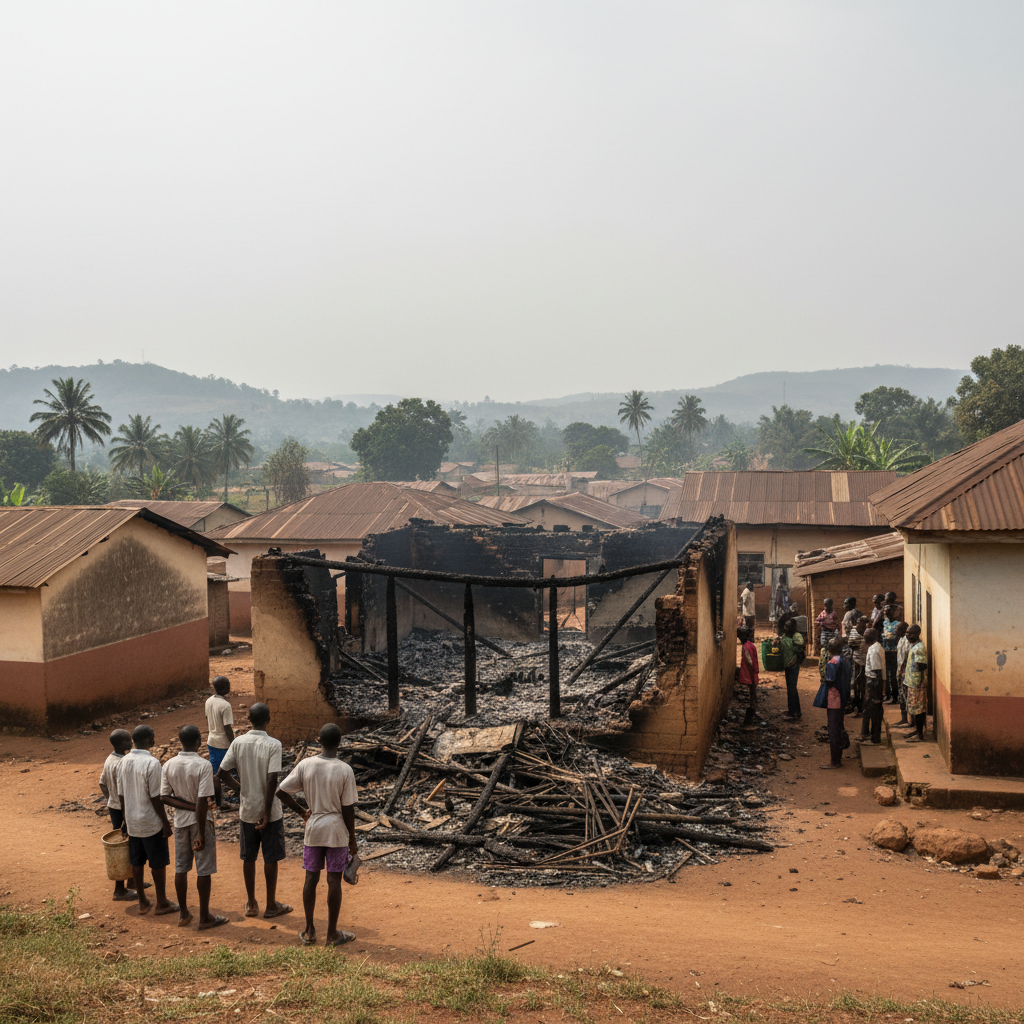
An 89-year-old man, Kwaku Opoku, died after being trapped in a house fire at Aputuogya in the Ashanti Region. The incident, which occurred on August 8, 2026, destroyed parts of a five-bedroom house. Firefighters responded to the emergency, but Mr. Opoku could not escape the blaze.
The fire affected two out of four self-contained bedrooms within the property. The house, located near God’s Way Maternity Clinic, has the digital address number AT-1140-4270. Mr. Ernest Boateng owns the property, which was occupied by Mr. Enoch Amoah Appiah and his family, alongside Madam Abena Mansah and her family.
This tragic event underscores persistent issues with fire safety and emergency preparedness in Ghana's residential areas. Ghana recorded 6,173 fire outbreaks nationwide in 2023, according to the Ghana National Fire Service (GNFS). A significant portion of these incidents involved residential structures, often leading to substantial property damage and, in some cases, loss of life. The Ashanti Region frequently reports a high number of such incidents, reflecting broader challenges in urban planning and infrastructure.
A combined team from the Regional Sub-Station and the KNUST Fire Station successfully brought the blaze under control using water. However, the crew discovered the lifeless body of Mr. Opoku, who had been trapped during the incident. The inability of an elderly individual to escape highlights the particular risks faced by vulnerable populations during emergencies.
Authorities will likely conduct an investigation into the exact cause of the fire. This incident may prompt renewed calls for improved fire safety education and enforcement of building codes, especially in older residential properties. Decision-makers and local government officials will face pressure to review existing emergency response protocols and community awareness campaigns. The focus will be on preventing similar tragedies and ensuring the safety of all residents, particularly the elderly and those with mobility challenges.
The economic implications of such fires extend beyond immediate property loss. They can displace families, disrupt livelihoods, and place additional strain on public services. The cost of rebuilding and supporting affected families can be substantial, impacting local economies. Effective fire prevention strategies and rapid response mechanisms are crucial for mitigating these broader economic and social consequences.