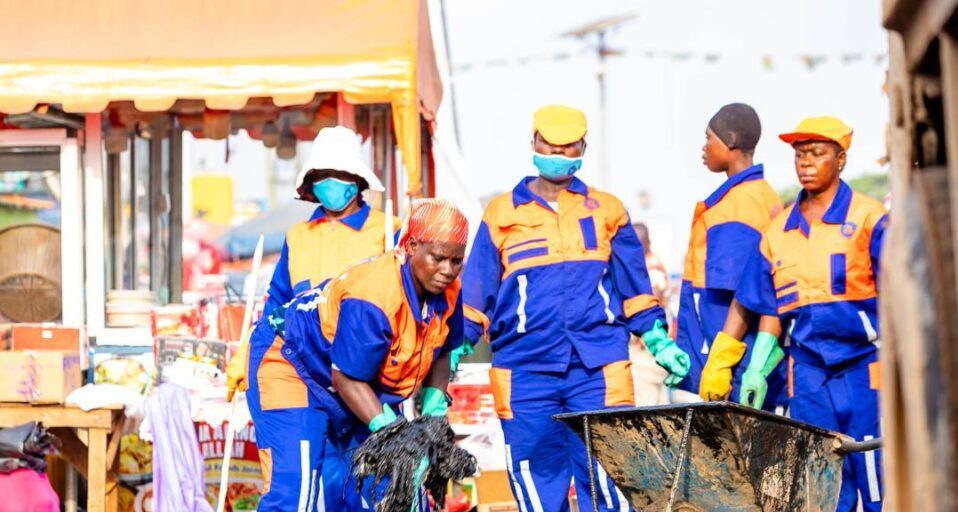
Accra is experiencing severe flooding during the current rainy season, significantly impacting areas like Kaneshie Market, Agbogbloshie, and Madina. The Minister of Local Government, Chieftaincy and Religious Affairs, Ahmed Ibrahim, stated that the termination of sanitation contracts with Zoomlion has worsened these conditions.
This admission by a sitting government minister highlights a critical failure in public service provision and policy implementation. The cancellation of contracts for street cleansing and drain dredging has directly contributed to the current sanitation crisis. Flooding has become more destructive, directly affecting residents and businesses across the capital.
The current situation reverses progress made over 15 years in urban sanitation, raising concerns about the effectiveness of local assemblies. Previous efforts involving private sector participation had improved city cleanliness and reduced flood impact. This setback reflects broader challenges in Ghana's urban management and public finance allocation.
Minister Ibrahim publicly stated on June 6, during an event marking World Environment Day, that the termination of Zoomlion's contract under the Youth Employment Agency (YEA) made sanitation issues worse. He confirmed that Zoomlion had efficiently managed city cleanliness, dredging, and street sweeping. The Minister criticised local assemblies for failing to take over these responsibilities after the contract cancellation.
The immediate implication is a continued deterioration of public health and urban infrastructure if corrective measures are not taken. Decision-makers must address the failed decentralisation of sanitation services. The market will react to the reduced operational efficiency for businesses affected by flooding, potentially increasing costs and reducing productivity. There is a pressing need to re-evaluate how public services are contracted and overseen.
The Minister also revealed the significant human and economic cost. Following the contract termination, 45,000 young people employed by Zoomlion under the YEA program lost their jobs. These funds were redirected to local assemblies, which have not engaged new personnel to perform the essential sanitation duties. This has led to both increased urban filth and widespread youth unemployment.
This situation underscores a broader issue of policy execution and accountability within local governance. The promise that local assemblies could manage sanitation more effectively has not materialised. The failure affects both the urban environment and the livelihoods of a substantial number of Ghanaian youth. Urgent action is needed to restore sanitation services and provide employment opportunities.
The ongoing rains will exacerbate the problems without effective drain dredging and waste management. This puts immense pressure on Accra's infrastructure and public services. Reversing the current trend requires clear policy direction and efficient resource allocation. The impact on social stability, public health, and long-term economic development is significant.