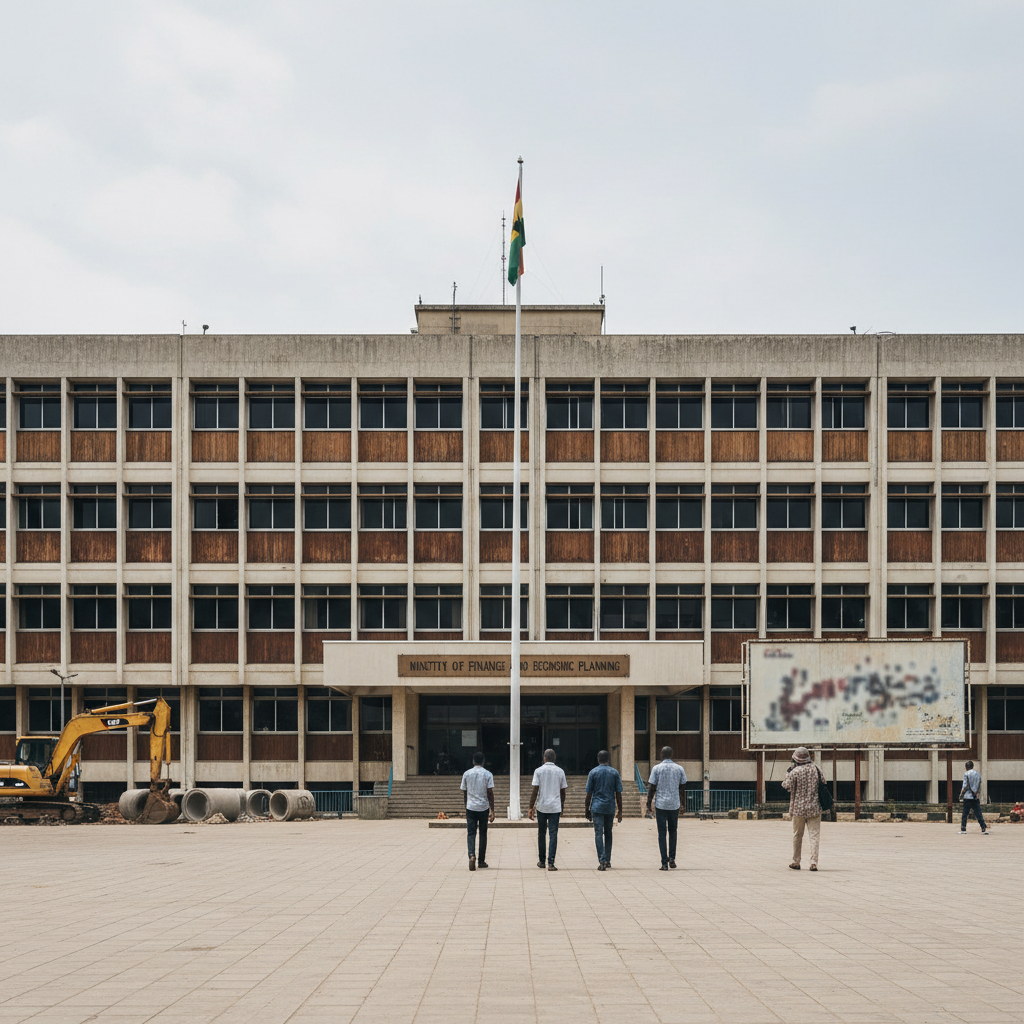
The World Bank stated that fiscal controls implemented by Ghana's Ministry of Finance significantly delayed the Greater Accra Resilient and Integrated Development (GARID) Project. The Bank downgraded the project's implementation to "Moderately Unsatisfactory" in its May 2026 update, citing persistent funding constraints despite full financing availability.
These fiscal measures, introduced by the Ministry of Finance during 2025, imposed a ceiling on project disbursements and temporarily swept GHS 13.8 million from the project's designated account. This created severe cash flow shortages, leading to unpaid contractor certificates and slower execution of crucial civil works. The GARID Project, valued at $350 million, aims to strengthen flood risk management and improve solid waste management in Accra.
This situation highlights broader challenges in government project funding and fiscal management within Ghana. The country's economic context has seen a push for fiscal discipline, which at times impacts essential development projects. Prior instances of budget constraints and delayed payments to contractors have also hampered public infrastructure initiatives. The recent devastating floods of June 29, which claimed at least 12 lives, underscore the urgent need for effective flood control measures in Accra.
According to the World Bank's report, "The implementation of GARID has been significantly constrained by fiscal measures introduced by the Ministry of Finance during 2025." The Bank warned that these funding disruptions created broader risks, including cost overruns, contractor claims, and delays. Finance Minister Dr. Cassiel Ato Forson's ministry introduced these controls during a period of heightened fiscal prudence.
Moving forward, the project faces continued short-term cash flow shortages despite having committed financing. The Project Coordination Unit estimates a 2026 funding requirement of $40.8 million, but the Ministry of Finance has allocated only $17.5 million. A request for commitment authorization covering $79.8 million in civil works contracts also awaits approval. The Ministry of Finance indicated that additional fiscal space will be considered during the 2026 Mid-Year Budget Review. Renewed efforts to restore predictable funding flows are critical to avoid further undermining project delivery and achieving its development objectives before the project closes.
Project disbursements illustrate the impact of these delays. As of April 14, 2026, only $137 million, approximately 40% of the total $350 million financing, had been disbursed. The project experienced virtually no disbursements for about 16 months, from November 2023 to March 2026. Disbursements only resumed in April 2026 after the government took corrective actions.
These actions included processing a $10.5 million withdrawal application in February 2026, the first since November 2023. Additionally, the GHS 13.8 million swept from the account was returned in March 2026. However, the Bank noted that while these measures partially eased liquidity constraints, they have not fully resolved the ongoing financing gap affecting project implementation. A more comprehensive review of the project may become necessary once predictable funding is fully restored.