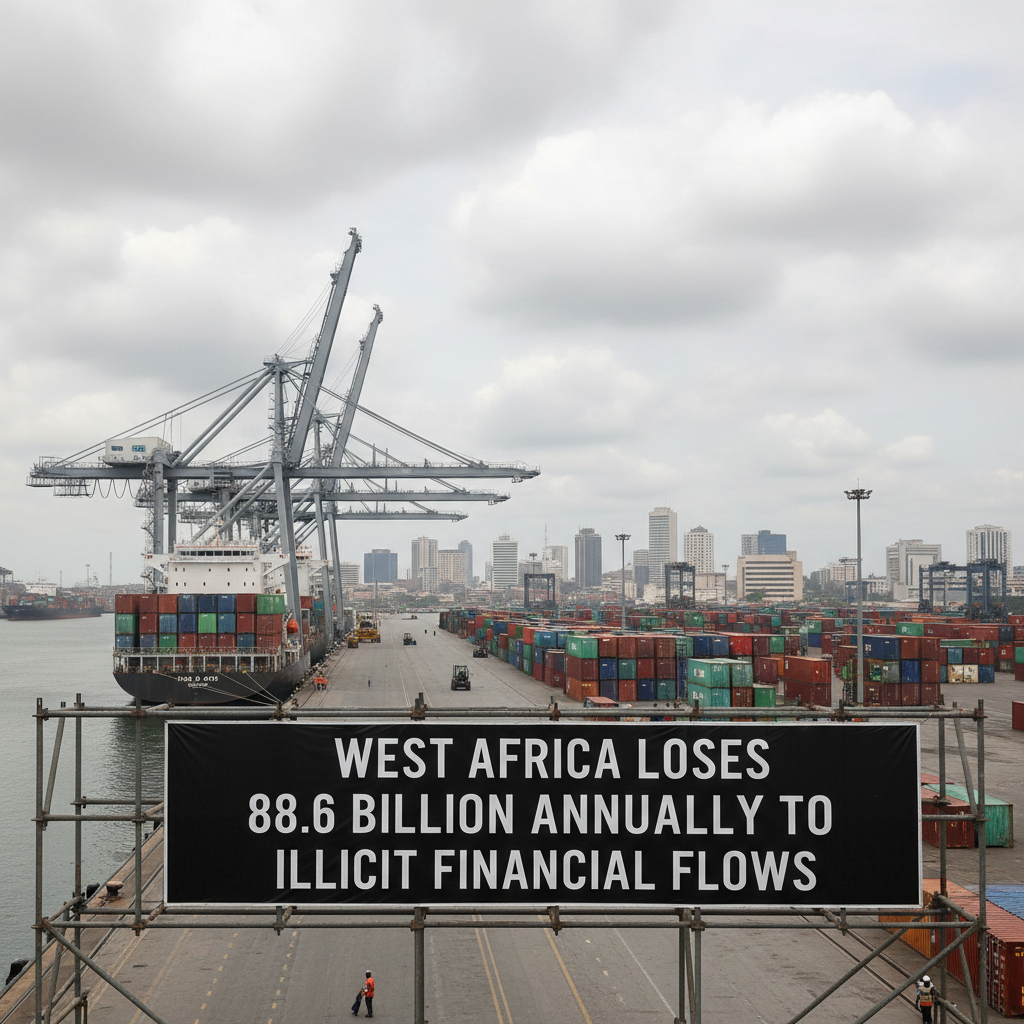
West Africa loses an estimated $88.6 billion every year due to corruption and illicit financial flows. This staggering amount represents a major obstacle to the continent's development.
This annual loss of funds means fewer resources for critical areas such as education, healthcare, and infrastructure. These funds could otherwise significantly improve the lives of millions across the region. Leaders are urging Public Accounts Committees (PACs) from the Economic Community of West African States (ECOWAS) to work together more closely. They aim to find practical ways to stop corruption, illicit financial flows, and other financial crimes.
This issue fits into Ghana’s broader economic narrative of fighting corruption and improving public finance management. Ghana, like many West African nations, is constantly working to plug financial leakages. Data from reports highlight a persistent challenge in retaining capital that could drive domestic growth. This context makes the call for stronger parliamentary oversight particularly relevant for Ghana's economic stability and development goals.
Dr. Cassiel Ato Forson, Ghana's Minister of Finance, stated that Africa continues to lose an estimated $88.6 billion annually to these outflows. He described this situation as a major setback to the continent’s progress. Mr. Edwin W. Harris, the Director-General of the Inter-Governmental Action Group against Money Laundering in West Africa (GIABA), confirmed this figure. He added that the loss is about 3.7% of Africa’s Gross Domestic Product. These findings show how much these crimes hurt public services.
The seminar, organised by GIABA, aims to develop recommendations. These recommendations will focus on strengthening parliamentary oversight and improving how public funds are managed. Increased collaboration between financial intelligence units and law enforcement agencies will be crucial. This strengthened oversight could lead to more robust financial systems. Decision-makers and markets will watch for concrete reforms implemented by ECOWAS member states. These reforms could signal a stronger commitment to financial accountability and economic stability in the region.
Mr. Kwadwo Twum-Boafo, Chief Executive Officer of the Financial Intelligence Centre (FIC), through his representative, emphasized the critical role of parliamentary oversight. He noted that PACs face challenges such as weak enforcement of audit recommendations and political interference. Overcoming these challenges will be essential. Strengthening PACs will not only help prevent financial crimes but also improve public financial management. This improvement will come through greater transparency and accountability. The fight against financial crime needs intelligence-led and coordinated actions. This requires cooperation among oversight institutions, anti-corruption bodies, civil society organizations, and the media. Mr. Clarence Gahr, Secretary-General of the West African Association of Public Accounts Committees, highlighted PAC members as constitutional guardians of public resources.