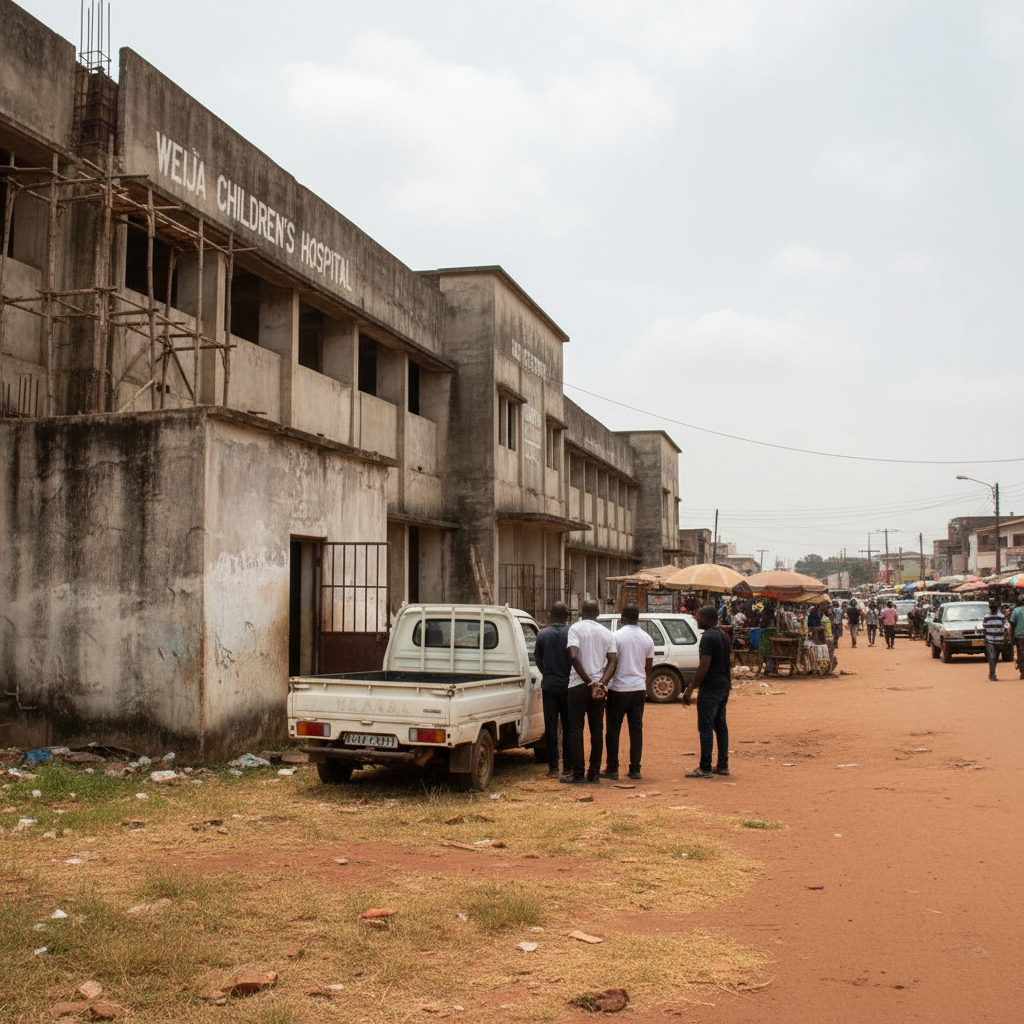
The Economic and Organised Crime Office (EOCO) has arrested the contractor for the Weija Children's Hospital. Authorities are investigating alleged procurement irregularities related to medical equipment for the 120-bed facility. This significant development occurred on Friday, July 8, as investigations into the hospital project intensify.
The arrest follows concerns raised by the World Bank, a key financier of the hospital project. The World Bank flagged what it termed "misprocurement." Officials suspect wrongdoing in the purchase of medical equipment. Felix Kwakye Ofosu, Minister of State in charge of Government Communications, confirmed the arrest. He stated the contractor was picked up to assist inquiries into the procurement process.
This incident fits into a broader pattern of scrutiny over public project execution and financial management in Ghana. The government has pledged to combat corruption and ensure value for money in state-funded initiatives. Previous reports have highlighted issues with contract transparency and inflated costs in several public sector projects. This ongoing investigation underscores Ghana's commitment to fiscal rectitude and accountability.
Minister Ofosu explained that the World Bank identified major discrepancies in pricing. He said, "specific items intended for use in that hospital were bought at prices that were highly inflated and far above their market value." He further noted that these allegations point to possible corruption. State officials believe it is their duty to investigate such financial malpractices involving public funds.
The arrest constitutes an initial step in a detailed investigation. Authorities aim to understand the full extent of the alleged malpractices. This case will likely influence future procurement processes for large-scale government projects. Decision-makers and the public will be watching closely for further developments and potential charges. The outcome could set a precedent for holding contractors accountable in World Bank-funded projects.
This case also highlights the role of international financial institutions like the World Bank in overseeing project funds. Their vigilance can uncover potential misuse of resources and trigger necessary investigations. Such oversight is crucial for maintaining donor confidence in Ghana's project implementation. It reinforces the importance of robust procurement systems to prevent financial leakage.
Ghana's government has introduced reforms to tighten public procurement laws in recent years. These measures aim to enhance transparency and reduce opportunities for corruption. However, incidents like this suggest that enforcement remains a critical challenge. The resolution of this case will test the effectiveness of these reforms. It will also demonstrate the state's capacity to prosecute economic crimes.
The funds involved are significant, given the scale of a 120-bed hospital project. Any misprocurement directly impacts the quality of healthcare infrastructure provided to Ghanaian children. The investigation's findings will be crucial. They will determine the impact on the hospital's operational readiness and the financial implications for the state. The public expects swift and decisive action.